What a monogram redraw does for your brand
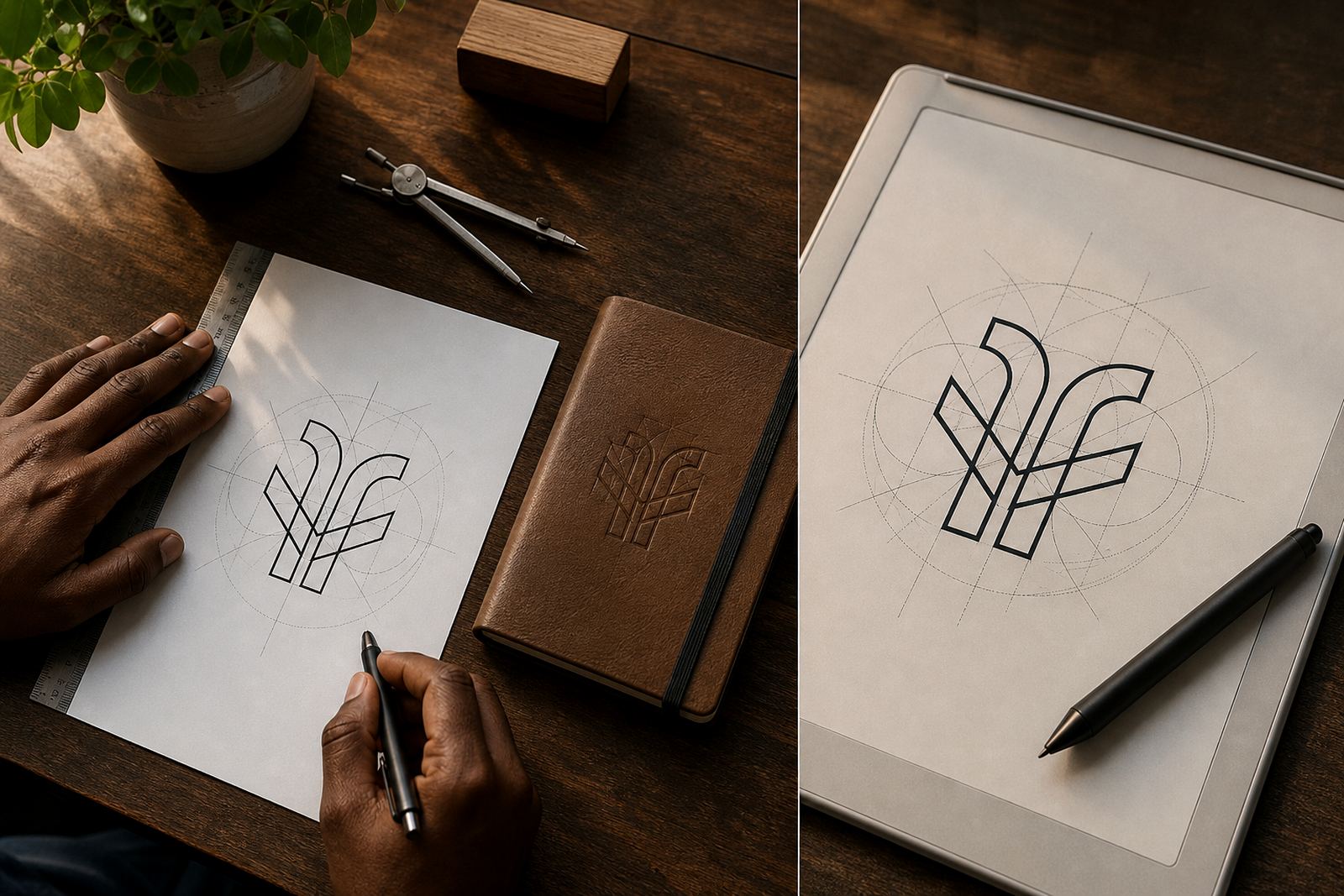
A monogram redraw takes handwritten, scanned or low-resolution initials and rebuilds them as precise vector artwork. The aim is not only to trace the shape, but to improve spacing, line weight and symmetry so the initials hold together at small sizes and still read clearly on a board, label or digital profile image.
For many businesses, a monogram is the first mark people see on invoices, packaging, uniforms or a vehicle door. If the artwork came from an old scan, a JPEG, or a photo taken on a phone, the edges can look soft and uneven. We clean that up by redrawing the structure from scratch, then setting the curves and overlaps properly so the final mark feels finished and usable.
Vector monograms suit companies that want a simple, memorable mark without losing the character of the original initials. We work with clients in Cape Town, Johannesburg, Durban, Pretoria and Bloemfontein, as well as surrounding areas like Stellenbosch, Paarl and Port Elizabeth, and the same file can be used across print and digital without quality loss.
Hand redraw or bitmap tracing, which route suits your artwork
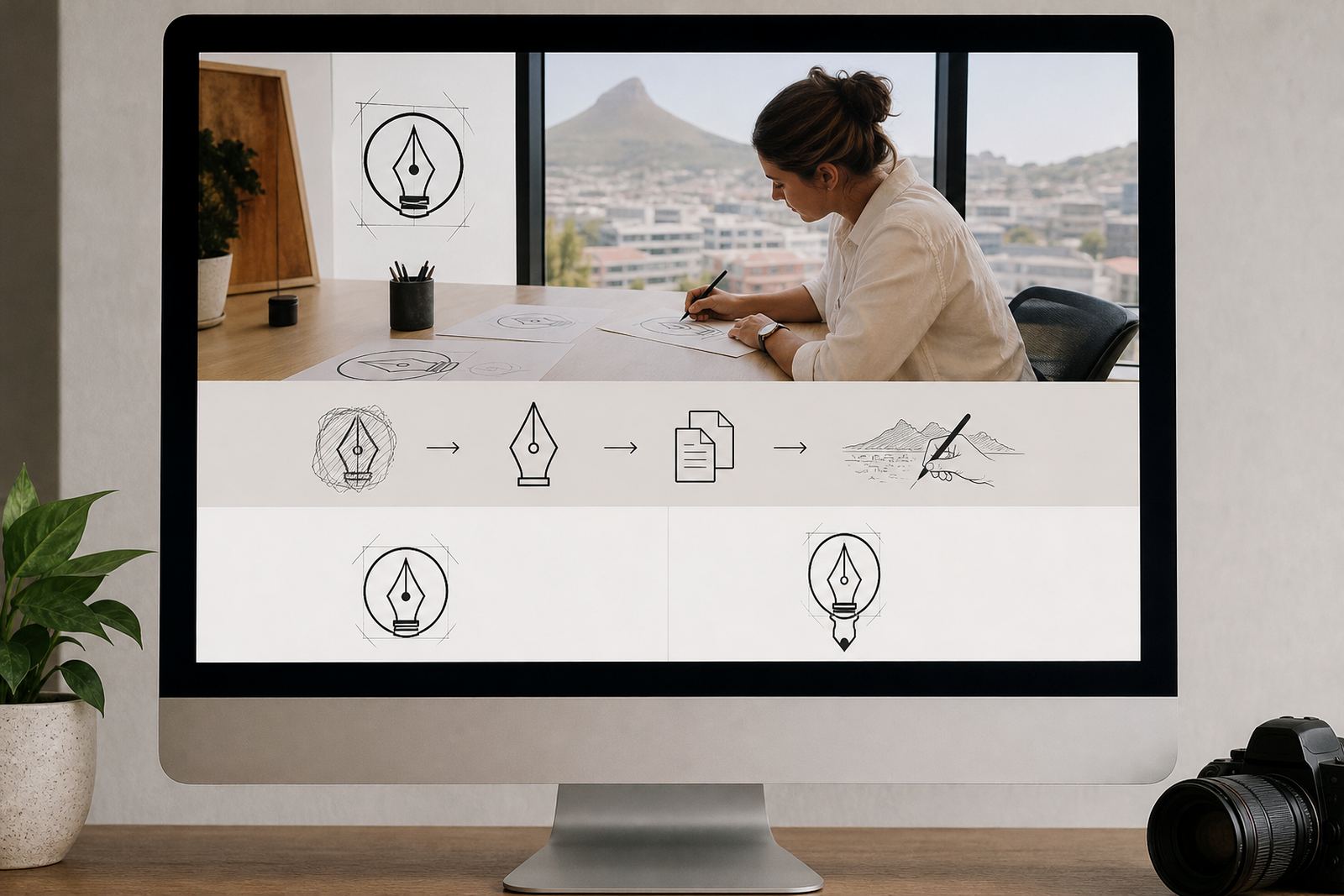
There are two common ways to rebuild initials. Bitmap tracing follows the outer edges of a raster image, which can be useful for a very simple mark. A hand redraw gives more control, especially when the original is uneven, fuzzy or built from overlapping strokes that need judgement rather than a straight trace.
We choose the method based on the source artwork and how the monogram must perform. If the original initials need cleaner joins, more even curves, or small fixes to letter balance, a hand redraw is usually the better option. If the mark is basic and the source is clean, tracing may be enough, but we still refine the result so it is fit for business use.
- Best for blurry scans, old letterheads and low resolution files
- Useful when initials overlap and the spacing needs careful correction
- Helps when the monogram must scale to tiny labels or large signage
- Suitable for brands that want the same mark across print, web and vinyl
Customers must own the artwork they send or have permission to use it. If there is a trademarked or inherited design involved, it is important to check that the rights are in order before asking for a redraw.
File formats and sizes that work in the real world
We supply monogram redraws in vector formats that suit designers, printers and sign makers. The usual files are SVG, EPS, PDF and AI, with colour versions and single colour versions where needed. That makes it easier to send the same mark to a litho printer in Cape Town, a signage shop in Pretoria or a packaging team in Durban without converting it over and over.
Because vector artwork is built from points and curves rather than pixels, it can be scaled from a small stamp to a large fascia sign. If the monogram needs to sit on a cap, a foil label, a wax seal or an embroidered patch, we can adjust line thickness and spacing so the art still holds up at that size.
- SVG for web, apps and flexible digital use
- EPS for professional print workflows and sign production
- PDF for easy sharing and proofing
- AI for design teams that need editable source artwork
Where needed, we can also prepare flat artwork in black, white or a single brand colour. That helps when the monogram must print on textured stock, dark fabric or coastal packaging that may face humidity in storage or transit.
Where monogram redraws suit best
Monograms work well for businesses that want a neat, compact identity piece. They are common on stationery, packaging, menu covers, product stickers, presentation folders and social media avatars. A strong monogram also helps where space is tight, such as the corner of a label or the front of a short-run promotional item.
They are a practical fit for brands in hospitality, beauty, property, fashion, legal services and small manufacturing. In South Africa, many clients also use monograms for event items, wedding collateral, small business packaging and vehicle branding where a full logo would feel too busy.
- Wedding and event monograms
- Hospitality and menu branding
- Product labels and packaging seals
- Corporate stationery and presentation sets
- Social graphics and profile images
If you already have a fuller logo system, the monogram can become a secondary mark for repeat use. That is useful when the main logo is too detailed for small spaces or when you need a simpler version for laser cutting, embossing or one-colour print.
Ordering the redraw and preparing your source artwork
When you place an enquiry through our contact page, include the clearest version of the monogram you have, plus any notes on where it will be used. If there is a rough sketch, old printout or photograph, send that too. The more context we have, the easier it is to decide whether the artwork needs a tidy vector rebuild or a fuller illustration treatment.
It helps to confirm the initials, preferred proportions, colour references and any production limits before work begins. If the monogram must fit a round stamp, a square social frame or a narrow label, say so early. That saves time and avoids a redraw that looks fine on screen but struggles in use.
- Send the best source file you have, even if it is low resolution
- State the intended use: print, web, signage or embroidery
- Confirm the exact initials and any spacing preference
- Tell us if you need black only, reversed white, or full colour versions
We have been working from Observatory, Cape Town, and we keep the process practical. If the artwork is not suitable for a straight trace, we will say so and redraw it properly instead of forcing a poor result.
Care, servicing and what to check before you approve
Vector files need little care, but the production side still matters. Before approving a monogram redraw, check that the lines are clean, the letter joins look intentional and the spacing works at the smallest size you expect to use. Also check that the file is supplied in the formats your printer, embroiderer or sign maker actually wants.
If the monogram will be used outdoors, on packaging or on fabric, ask for a version that suits the medium. Very fine hairlines can disappear on rough stock or stitch badly on soft goods. In coastal areas like Cape Town, moisture and salt air can also affect the end product, so the final output should match the application, not just look good on a monitor.
- Check small-size legibility before approving
- Ask for a single-colour version if the mark must be flexible
- Confirm whether the final use is print, signage, engraving or embroidery
- Keep a master file in a safe place for future reprints
There is no physical requirement for the service itself, as this is a digital artwork process. What matters is having the rights to the source artwork and a clear idea of where the monogram must be used.
Key facts
| Service type | Monogram redraw and vector rebuild |
|---|---|
| Artwork methods | Hand redraw, vector tracing, refinement of overlaps and spacing |
| Deliverables | SVG, EPS, PDF and AI |
| Use cases | Print, signage, labels, social graphics, embroidery and engraving |
| Coverage | Observatory, Cape Town and nationwide across South Africa |
| Source requirement | Client must own or have permission to use the artwork supplied |