What a signage logo redraw changes
A logo that looks fine on a screen can fall apart when it is scaled for a sign. Small text, thin strokes, gradients and rough bitmap edges often become hard to read once the artwork is enlarged for aluminium composite, acrylic, vinyl or illuminated signage. A signage logo redraw cleans up those problem areas so the mark reads properly from the pavement, the parking area or across a street.
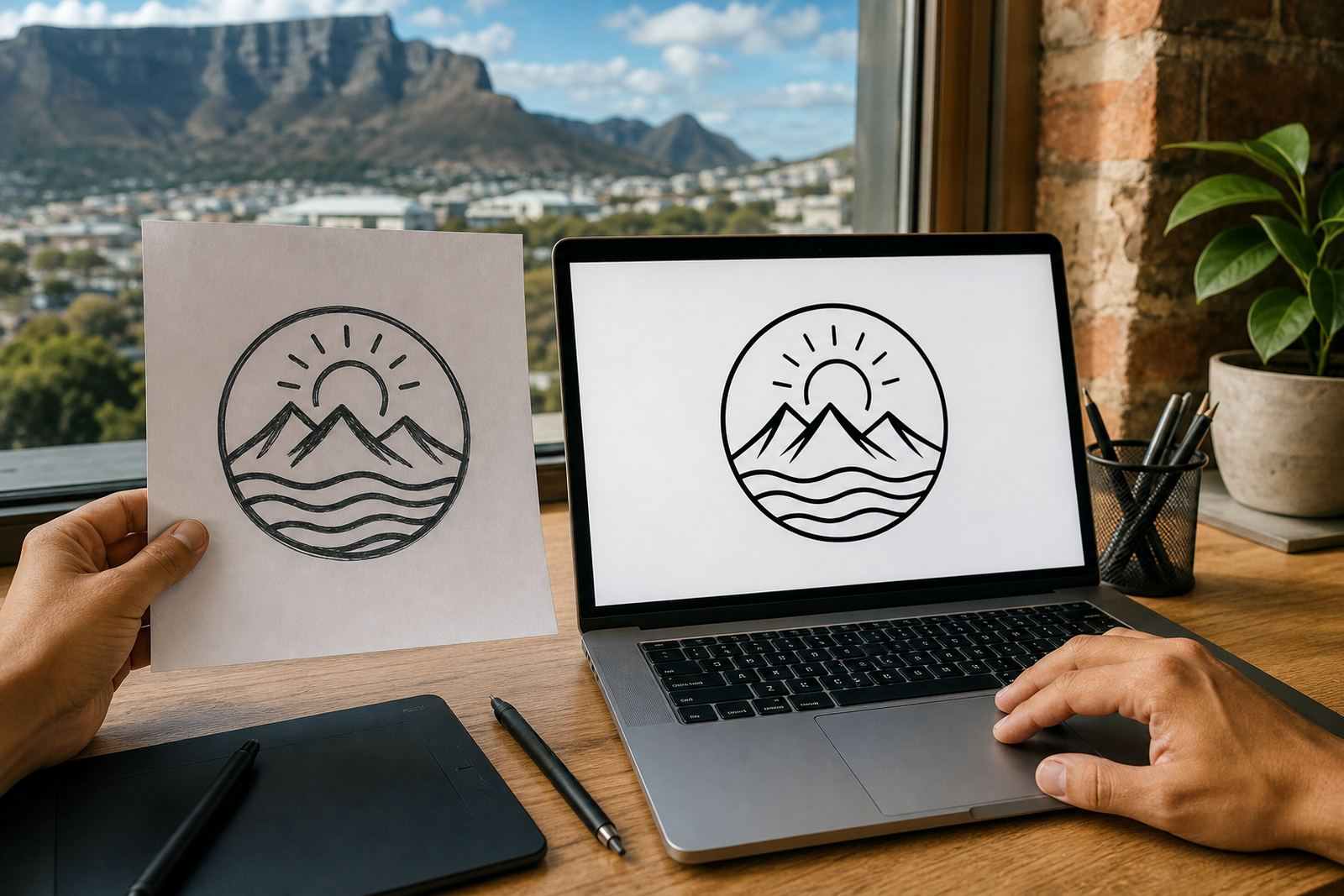
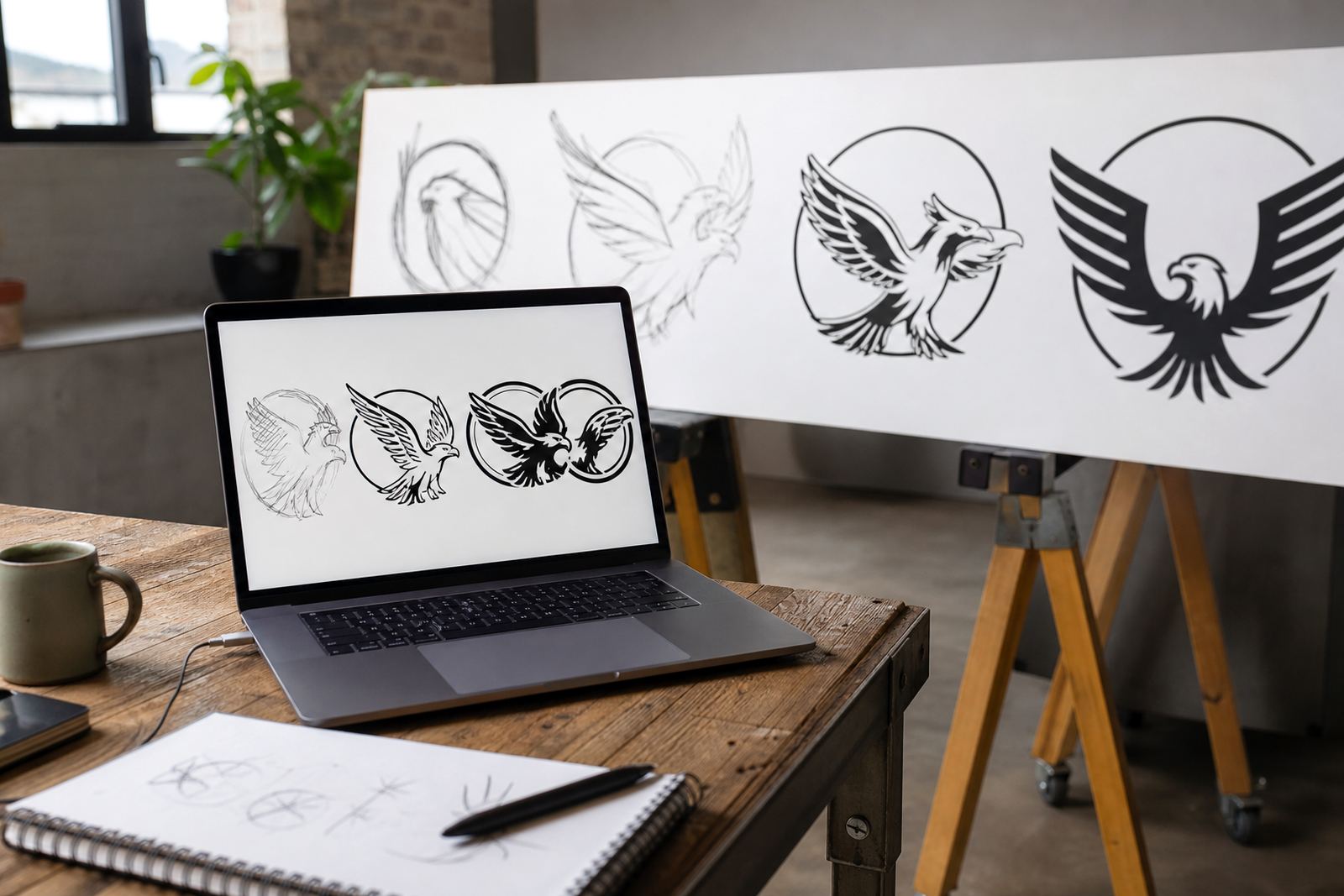
We work from artwork you supply and rebuild it as proper vector artwork. That may mean tracing a bitmap where the source is limited, but for signage we often redraw the logo by hand so the letter shapes, spacing and corners are more exact. This gives you cleaner outlines, simpler shapes and a file that can be scaled up without losing quality.
- Cleaner outlines for larger format use
- Simplified shapes for cutting, printing or routing
- Vector files suitable for fabricators and signwriters
- Better legibility for storefronts, pylon signs and vehicle panels
Where this service suits best
This product is suited to businesses that need a logo ready for physical signage, whether the final sign is printed, cut from vinyl or built in layers. It works well for retail shops, offices, clinics, restaurants, warehouses, schools and trade counters. It also helps when a logo needs to be used across several branches in Cape Town, Durban, Pretoria or Bloemfontein, because everyone works from the same tidy artwork.
It is especially useful where the sign will be seen in strong sun, coastal humidity or night lighting. In places like Stellenbosch and Paarl, outdoor signs take a fair amount of heat and dust. Around the coast, salt in the air can make poor finishes look tired quicker, so clear artwork and sensible material choices matter from the start.
- Shopfront signs and fascia boards
- 3D lettering and flat cut vinyl
- Pylon signs and directional signs
- Reception signs and wall branding
- Vehicle decals, bakkies and trailers
Hand redraw or bitmap tracing
Not every source file is fit for signage. A low-resolution JPEG from a social media profile may look acceptable on a phone, but it will show jagged edges when enlarged. Bitmap tracing can be useful when the source is limited, but tracing alone does not always fix awkward proportions, broken curves or weak lettering. In those cases, a hand redraw gives a better result.
Our team checks the source, then chooses the right method. For a simple wordmark with straight lines, a careful vector trace may be enough. For an old logo with uneven letters or a mascot with lots of detail, hand redraw and illustration is often the better option. This is the practical difference: tracing copies what is there, while redraw work improves the artwork so it behaves properly at sign size.
- Trace when the source is clean and simple
- Redraw when the source is faded, pixelated or distorted
- Illustrate when the sign needs a character, icon or scene
- Keep details that matter, remove details that do not
File formats and sign production specs
We supply sign-ready vector files in common production formats including SVG, EPS, PDF and AI. These are the formats sign shops, print rooms and fabricators usually need for clean scaling and accurate output. If artwork must also be supplied for a printer or a council submission, we can keep the files organised so the right version is used each time.
Signage artwork is prepared with practical production in mind. That means checking line weight, closed shapes, colour separations and any small details that may disappear when cut or welded. Where needed, we can prepare artwork for flat colour use, one-colour vinyl, spot colour output or layered builds.
- SVG for web, cutting and flexible production workflows
- EPS and AI for professional vector editing
- PDF for sharing, approval and print handover
- Single-colour or multi-colour sign versions
What to check before you order
Before we start, please make sure you own the artwork or have permission to use it. If the logo belongs to your business, send the clearest file you have and any notes about colours, spelling or layout changes. If the artwork is old, blurry or missing parts, send the best reference you can find so the redraw can match it properly. A good starting file saves time and avoids guesswork.
It also helps to tell us how the sign will be made. A fabricated acrylic sign needs different artwork from a printed banner or a vinyl cut. If you already know the final size, the viewing distance, and whether the sign will be lit from behind or from the front, we can prepare the redraw with that in mind. When in doubt, send a photo of the space and the installer’s measurements.
- Confirm you have the rights to the artwork
- Send the highest quality source file available
- Share the final sign size and viewing distance
- Note the material, colour and lighting setup
Care, servicing and long-term use
A good logo redraw should make the sign easier to service later. Clean vector artwork helps when a panel needs to be re-cut, a panel replaces after storm damage, or a branch opens in another town and needs matching signage. If a sign is installed outdoors, regular cleaning with mild soap and soft cloths will keep the finish looking better for longer. Harsh chemicals can dull some plastics and films, so they should be avoided unless the installer recommends them.
If the sign is backlit, the installer should be able to reach the fittings for service, especially where access is needed in a working shopfront or busy site. For specialist sign systems, always follow the fabricator’s instructions and local requirements. We focus on the artwork, but the artwork should support safe production and practical use, not make the job harder.
- Wipe gently with a soft cloth and mild cleaner
- Avoid abrasive pads and strong solvents
- Keep spare artwork files for future branch use
- Ask for simplified versions if the sign will be serviced often
How Vectorization Studio handles sign artwork
Vectorization Studio works from Observatory in Cape Town and supports businesses across South Africa, including Cape Town, Johannesburg, Durban, Pretoria, Bloemfontein, Port Elizabeth, Stellenbosch and Paarl. The team handles the redraw, then checks the artwork for clean edges, spacing and production fit before it is supplied to the client. That practical check matters when a sign has to fit a fasica, a pylon, a window or a tight corner wall.
Luyanda Mthembu leads the studio, with Ayesha Mafokeng on vector work, Pieter Skosana on illustration, Zanele Kajee on client handling, Teboho Molefe on prepress and Megan Khoza on quality control. The process is straightforward: send your logo, confirm the intended sign use, and we prepare the files your sign maker can work with. If your business needs a badge, mascot, map, menu graphic or social graphic as part of the same brand set, those can be handled too.
Key facts
| Service type | Signage logo redraw and vector artwork preparation |
|---|---|
| File formats | SVG, EPS, PDF, AI |
| Artwork methods | Manual redraw, bitmap tracing, illustration |
| Typical use | Shopfront signs, vehicle graphics, office and industrial signage |
| Regions served | Cape Town, Johannesburg, Durban, Pretoria, Bloemfontein and elsewhere |
| Client requirement | You must own or have permission to use the artwork supplied |