Artwork that holds up on labels, cartons and sleeves
Food packaging gets handled, chilled, stacked and moved through busy production areas, so the artwork has to stay clear at small sizes and on curved surfaces. A logo that looks fine on a screen can break up on a jar label, bleed on a carton crease, or lose detail when printed on a kraft sleeve or clear film.
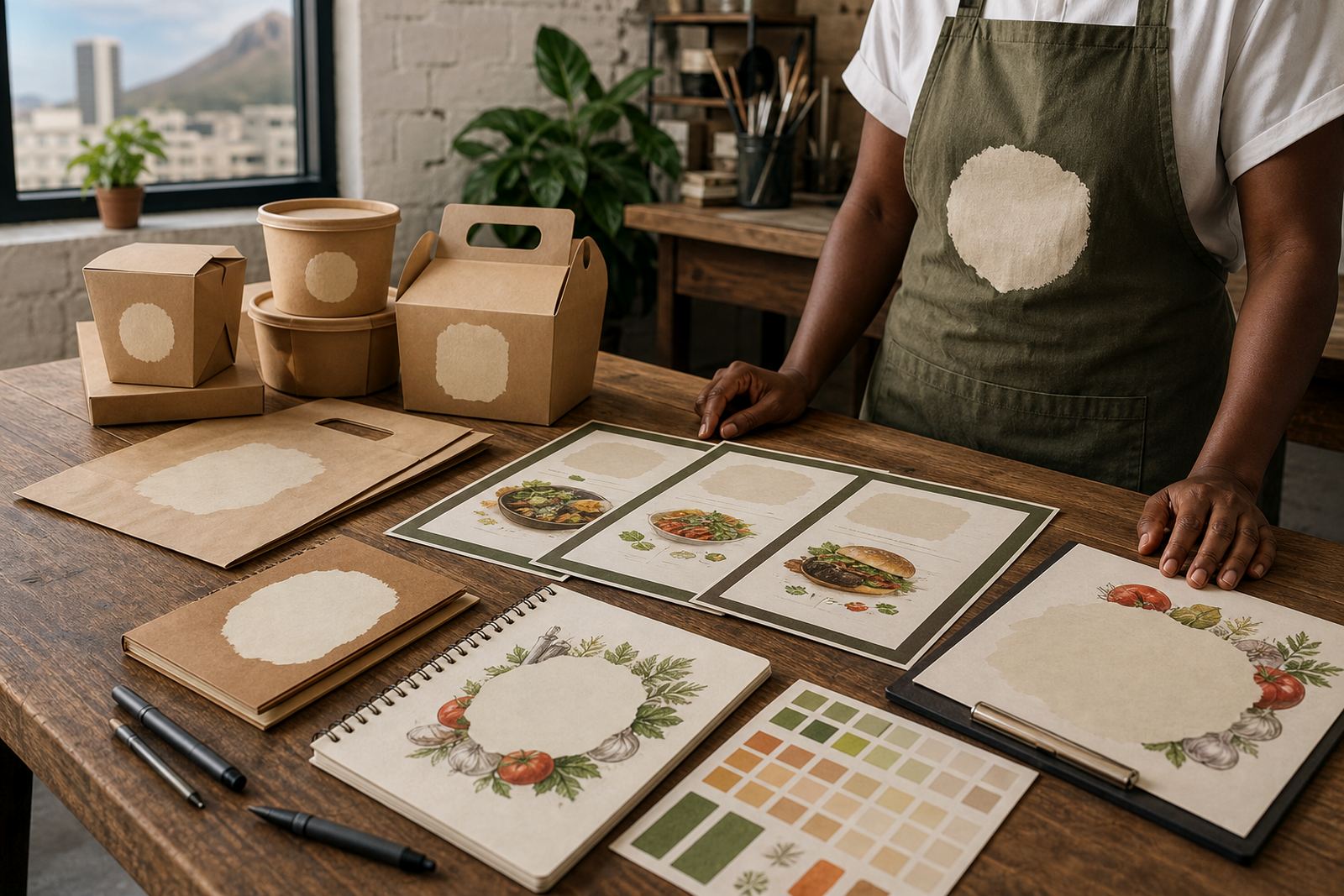
For food producers in Cape Town, Johannesburg, Durban, Pretoria and Bloemfontein, we redraw brand marks so they print properly across jars, pouches, cartons, lids and market display boards. If your artwork exists only as a low resolution image or a photo from an old label, we can rebuild it into clean vector artwork that is easier to scale and separate for print. It helps when the files need to go to a printer, label converter or packaging supplier without extra cleanup later.
- Jar labels and tamper seals
- Cartons, sleeves and folding boxes
- Market stall signage and price boards
- Shipping labels and product stickers
- Menu boards, recipe cards and promo graphics
Bitmap tracing or hand redraw: what suits food packaging
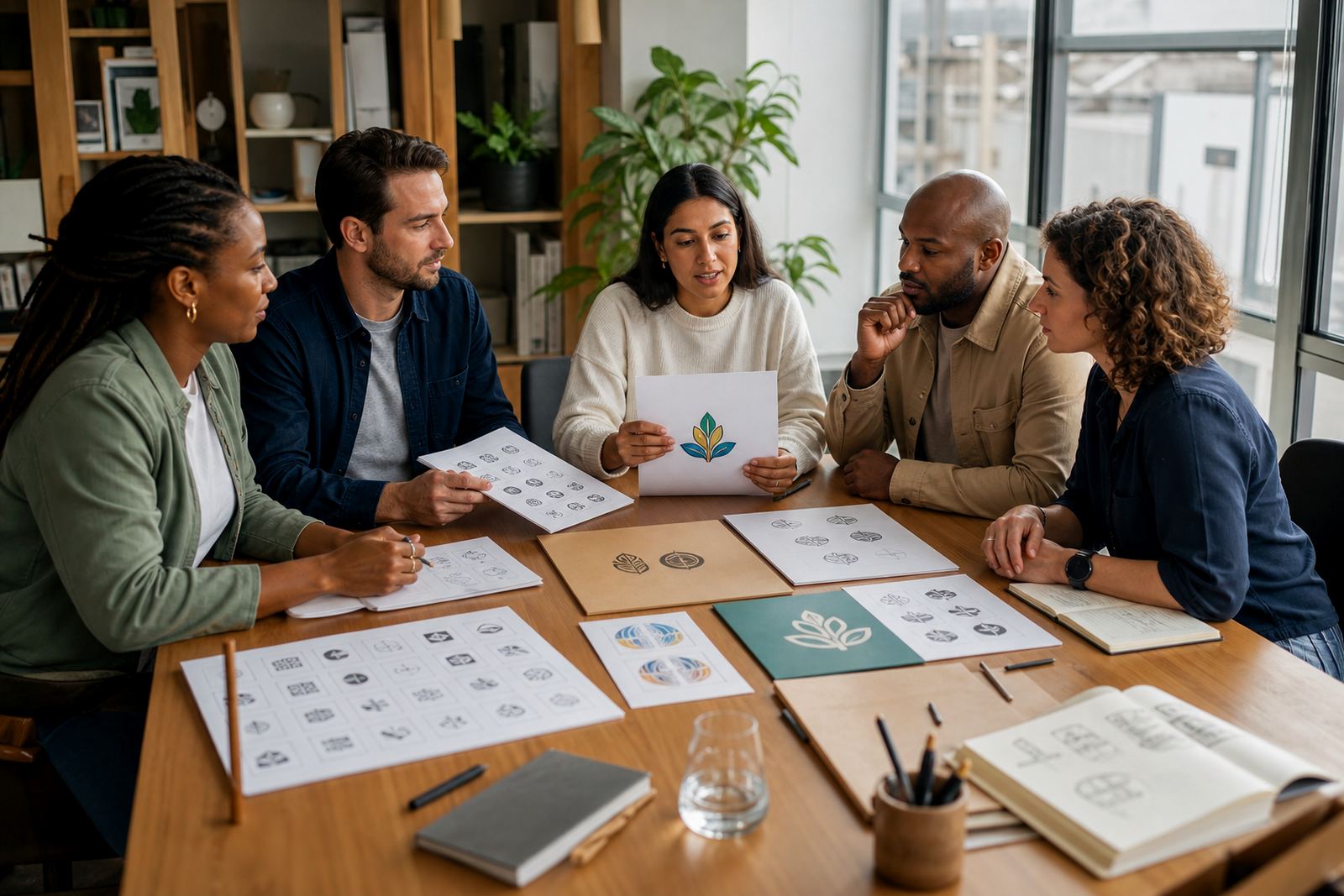
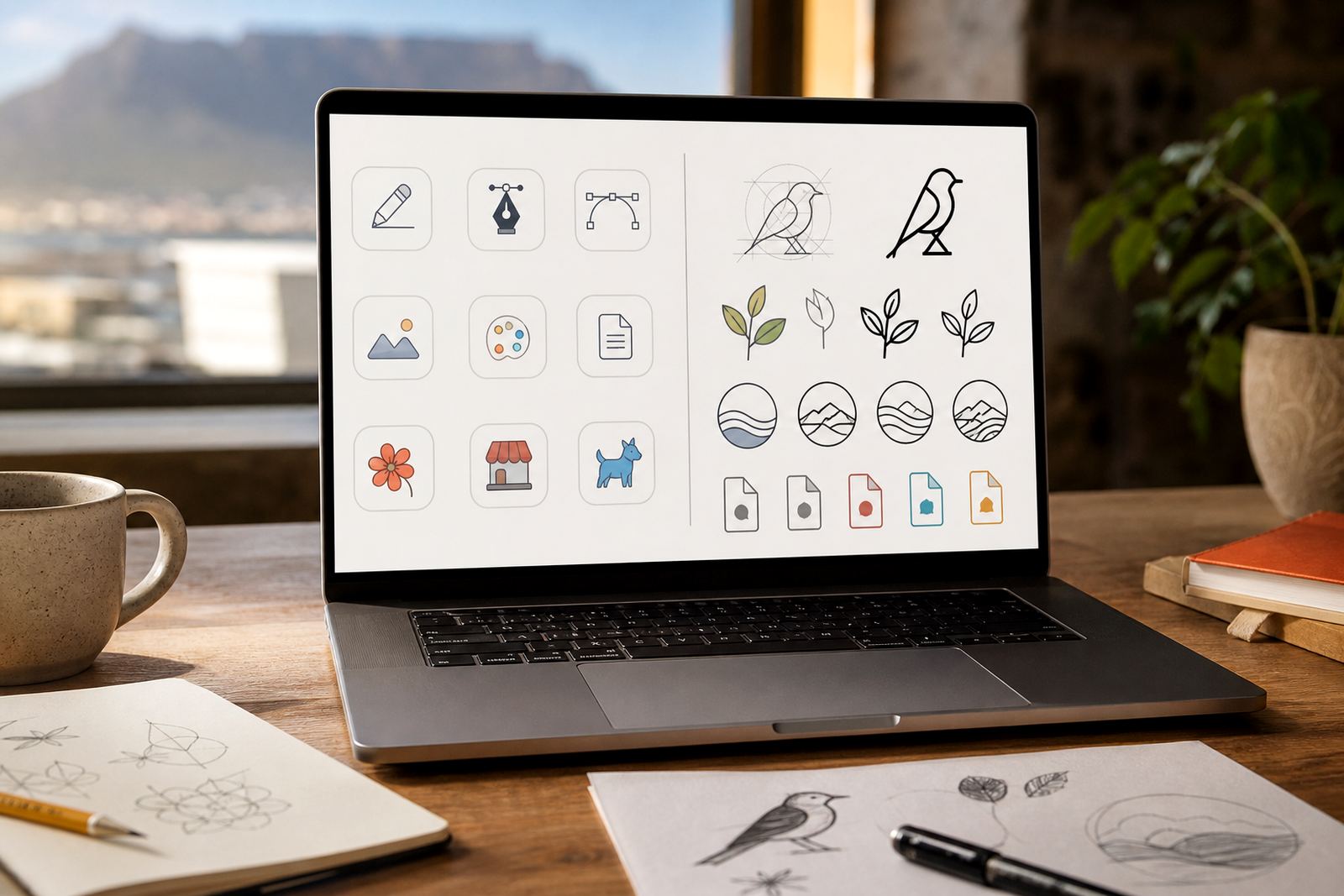
There are two common ways to rebuild artwork. Bitmap tracing follows the shape of an image and is useful when the logo is simple and the source file is decent. A hand redraw is better when the image is fuzzy, clipped, faded or has small details that need proper control. For food producers, hand redraws often give better results because they keep lettering, icons and decorative elements tidy at label size.
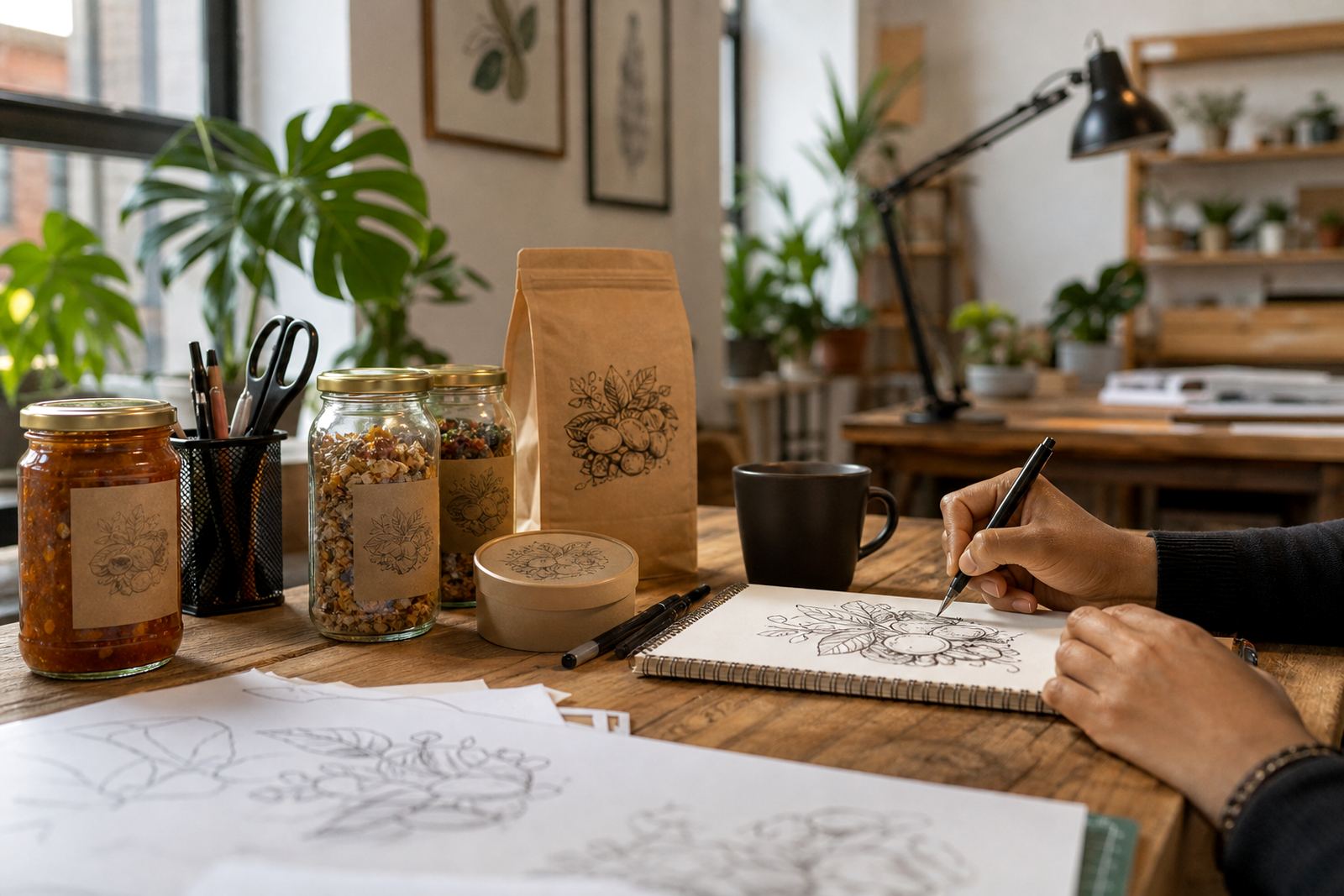
We also create hand-drawn vector illustrations where a brand needs a more crafted look, such as produce sketches, ingredients, heritage style emblems or store display artwork. The final file can be supplied in SVG, EPS, PDF or AI format depending on what your printer or production team needs. If the artwork is going onto packaging with different colour counts, we can prepare versions that suit spot colour or full colour print, and we can keep linework clean for black and white use too.
- Bitmap tracing works best for simple, high contrast originals
- Hand redraw is better for damaged files or detailed marks
- Vector files scale without losing sharpness
- Separate versions can be prepared for print, web and in-house use
Planning your label, sleeve or carton artwork
Good packaging artwork starts with practical planning. Before the redraw begins, it helps to know the final label size, print method, substrate, and whether the pack will be stored in cold rooms, on shelves, or in direct sunlight at a market stall. Coastal humidity in places like Durban or Port Elizabeth can also affect how labels sit on containers, so the artwork layout should leave enough breathing room around key details.
For food producers, we usually suggest checking these items first: pack dimensions, barcode space, ingredient panels, batch coding space, and any local marking needs such as net mass or contact details. If your label wraps around a jar, keep important text away from the join. If the artwork sits on a carton fold, avoid placing fine lines over the crease. These small choices save reprints and keep the finish neater.
- Confirm the final print size before artwork is started
- Leave space for barcode, nutrition panel and batch coding
- Avoid tiny text on textured or curved surfaces
- Keep high contrast where labels are read quickly on shelf
- Allow for temperature and moisture exposure where relevant
Common mistakes we see on food packaging
One of the most common issues is using a logo copied from a screenshot or social media image. That often gives you jagged edges, broken type and colour shifts. Another frequent problem is sending artwork that has no proof of ownership or use rights. We only work on artwork where the customer owns the rights or has permission to use it, because packaging work should be clean from the start.
We also see labels fail because the artwork was built for a screen rather than print. Thin lines disappear, pale colours wash out, and small icons become unreadable once the pack is reduced. Another issue is trying to fit too much into one label. When a jar already carries ingredients, nutritional details and legal marks, the logo and illustration need enough space or the front panel becomes cramped. A bit of restraint goes a long way.
- Low resolution files that cannot print cleanly
- Artwork placed too close to folds, seals or edges
- Colours not checked against the packaging material
- Missing source files for future product ranges
- Too much detail for small pack sizes
Budget ranges for redraw and illustration work
For food producers, budget usually depends on how much rebuilding is needed, whether the artwork is a simple mark or a full illustration, and how many variations are required for packaging ranges. A basic logo redraw is generally more affordable than a detailed mascot, scene or ingredient illustration. If the pack line includes several flavours, size variants or retailer specific versions, that also affects the scope.
As a practical guide, smaller redraw jobs may sit in the lower thousands of Rand, while more involved packaging illustration work can move into the higher thousands or beyond, depending on detail and file preparation. If the job includes multiple formats, extra colour versions, icon sets or artwork for cartons, sleeves and market graphics, it is better to plan the full set at the same time instead of chasing changes later. It usually saves time and rework.
- Simple redraws are lower cost than custom illustration
- More versions and formats increase the scope
- Packaging ranges are easier to manage when planned together
- Final files can be prepared for printers, label suppliers and in-house use
How we work with food producers across South Africa
We work with food businesses from our Observatory, Cape Town base and support clients in Cape Town, Johannesburg, Durban, Pretoria, Bloemfontein, Stellenbosch, Paarl and Port Elizabeth. The process is straightforward: send the artwork you have, explain how the pack will be used, and let us know the sizes and file types you need. From there, we rebuild the logo or illustration and prepare the output for practical use.
Vectorization Studio has been working on redraws and illustration projects under the direction of Luyanda Mthembu, with support from Ayesha Mafokeng, Pieter Skosana, Zanele Kajee, Teboho Molefe and Megan Khoza. For food producers, the aim is to keep the brand mark clear, keep the packaging tidy, and make sure the files are ready for the next print run without fuss.