What a seal logo redraw gives you
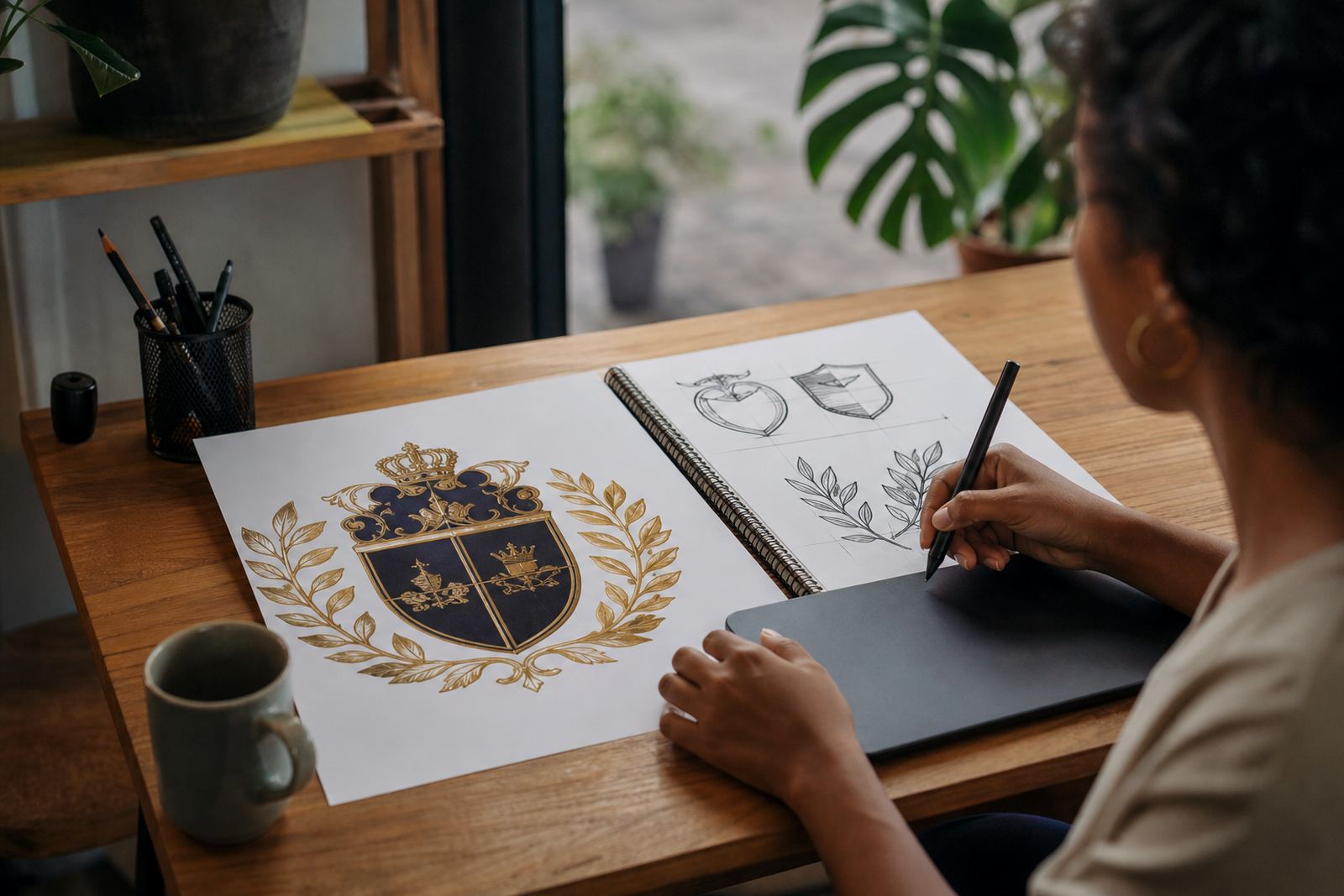
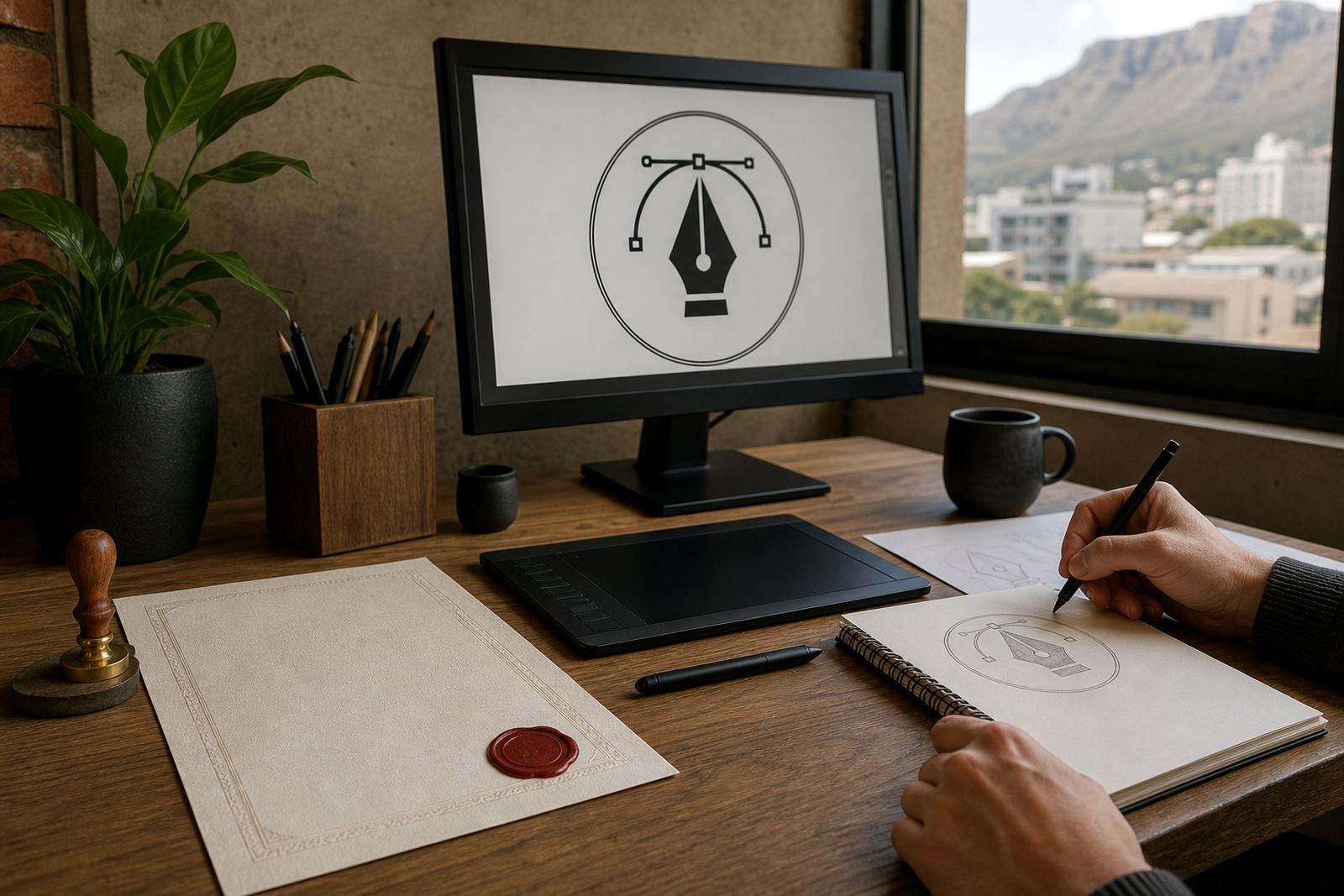
A seal logo redraw turns a raster image, old scan or rough artwork into a proper vector file that can be used at any size. If the original is soft, cropped, low resolution or has broken edges, we rebuild it carefully so the border, text, icons and line weight read clearly on paper, labels and packaging. This suits round seals, crests, badge marks and formal emblems that need to look sharp on certificates, letterheads and presentation packs.
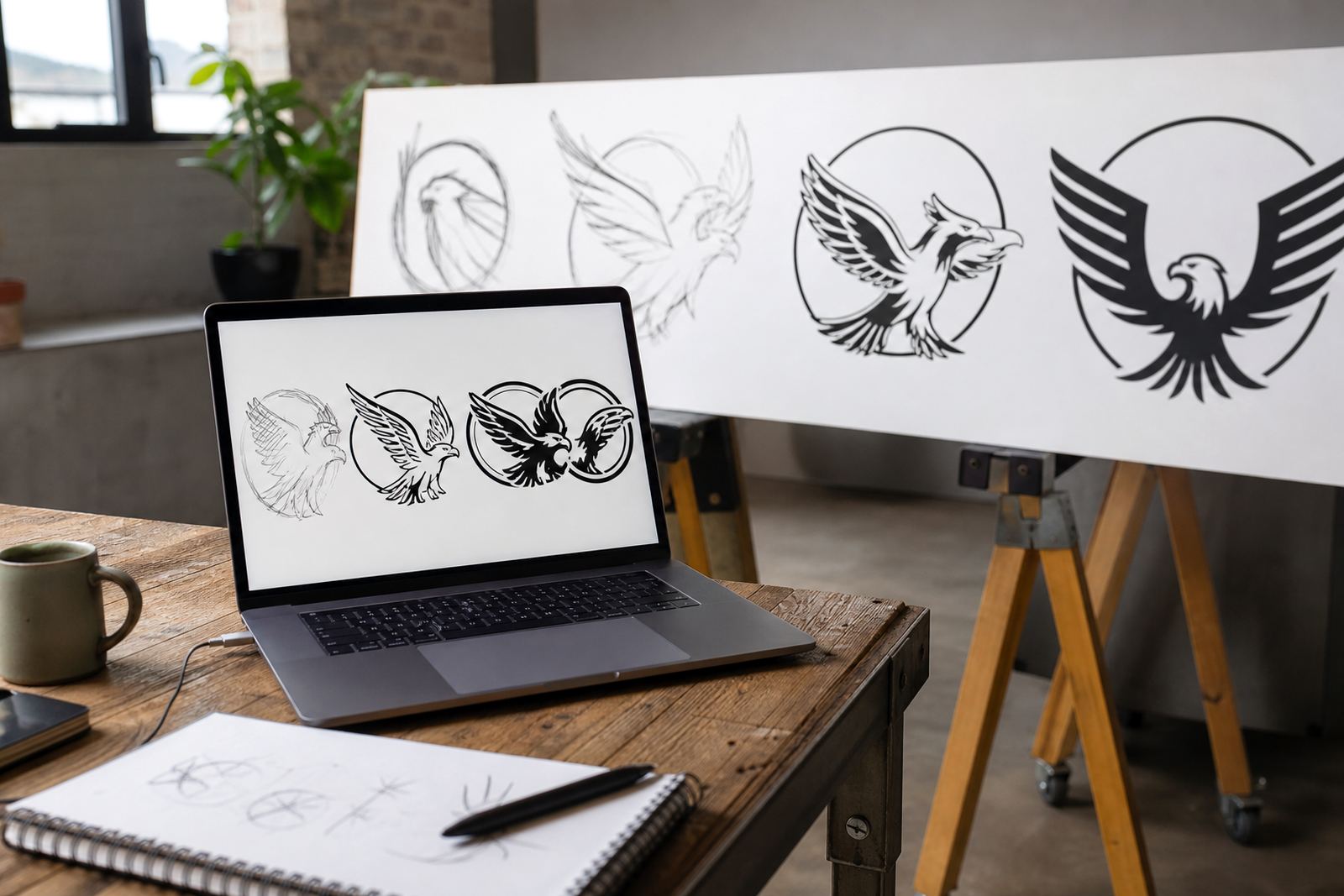
We do not just trace every pixel. Where the logo is simple and clean, bitmap tracing may work for a first pass, but many seal marks need a hand redraw to sort out uneven curves, uneven spacing and damaged text. That is especially important when the mark must print cleanly at 25 mm wide or hold detail on a large wall board. We rebuild the artwork so it can be resized without blur or jagged edges.
Before we start, please make sure you own the artwork or have permission to use it. If you are sending an old mark that belongs to a supplier, a former business partner or a third party, you need the rights to have it redrawn. That keeps the work proper and avoids later disputes.
Where seal style artwork is used most often
Seal marks are common where a formal, trusted look is needed. We often redraw them for companies in Cape Town, Johannesburg, Durban, Pretoria and Bloemfontein that want a neat finish for print, admin and packaging. They also suit offices in Stellenbosch, Paarl and Port Elizabeth where a clean crest style logo still carries weight on paper, despite digital use becoming more common.
- Certificates, awards and membership documents
- Letterheads, envelopes and formal stationery
- Packaging labels, box seals and tissue wraps
- Menu covers, folder covers and presentation sheets
- Sticker labels, tags and promotional inserts
- Social graphics and simple web graphics for consistent branding
If your seal includes a lot of fine text, small stars, laurels or tiny inner shapes, we will flag any parts that may need simplification for very small print sizes. This helps prevent the mark from filling in when it is reproduced on coated stock or on a small sticker.
Options, sizes and file formats
Every redraw is prepared in vector format, so the artwork can be scaled to suit small labels or large signage artwork later on. We normally supply the finished seal as SVG, EPS, PDF and AI, depending on what your printer, designer or production team needs. If you need one master file for internal use and one print-ready export for a supplier, we can prepare both.
- Small use: 20 to 40 mm wide for labels, tags and envelope corners
- Medium use: 50 to 120 mm wide for stationery and certificates
- Large use: 150 mm and up for folders, boards and packaging layouts
- Line detail: fine enough for formal seals, but adjusted where ultra-thin lines may fail in print
For some marks we keep the original look as closely as possible. For others we tidy spacing, rebuild damaged lettering and correct uneven circles so the seal sits properly on the page. If your artwork has layered elements, we can separate parts for easier use by your printer or prepress team.
How we handle bitmap tracing and hand redraws
Bitmap tracing is best when the source image is clean, evenly lit and already well drawn. It can be useful for a simple silhouette or a strong black seal that has no broken detail. The limitation is that it follows the image as it is, including blur, rough edges and scan marks. In some cases that is fine, in others it gives a file that still looks tired.
A hand redraw is better when the seal is important to the brand or the original artwork is poor quality. We rebuild the curves, clean the text rings and adjust the balance so the final mark prints better. This method is slower, but it usually gives a sharper result for formal identities and sensitive print work. If you need the seal adapted for two uses, such as a detailed master version and a simplified production version, we can set that up too.
It opens cleanly, exports cleanly and is easier for printers to place into layouts without extra fixing.
What to send before we start
To get the best result, send the clearest source you have. A scan at 300 dpi or higher is useful, and a sharp photo can help if the original is old or only available on paper. If there is a preferred wording, a company name change or a corrected spelling, include that too. If you have rules for a municipal tender, formal certificate or regulated label, mention those at the start so the artwork is prepared with the right use in mind.
- Original logo file, scan or photograph
- Notes on text that must stay exact
- Any colours to keep or remove
- Preferred file formats: SVG, EPS, PDF or AI
- Required usage: print, packaging, web or mixed use
- Confirmation that you have rights to the artwork
Where the seal includes small text, we may ask for a second reference image or a clearer photo of the same mark. That helps us confirm the letterforms and spacing before we redraw anything.
Care, servicing and practical production notes
Vector artwork does not wear out like a physical stamp or printed sheet, but the way it is used still matters. If a printer needs a spot-colour version, a black-only version or a reversed version for dark backgrounds, it is better to request those variants before production starts. That avoids rushed changes once the artwork is already in a layout.
There is no on-site requirement for the service itself. If you are only sending source artwork and receiving files, nothing needs to be installed. For companies keeping stationery in-house, it helps to save the final files in a shared folder with a simple naming system so the right version is used every time. We can also advise if the seal should be simplified for embossing, foiling, laser cutting or small sticker runs.
When the original seal is very detailed, a printer may ask for a thicker line weight or a cleaner spacing arrangement. We can handle that in the redraw so the final result is practical, not just neat on screen.
Key facts
| Service type | Seal-style logo redraw and vector illustration |
|---|---|
| File formats | SVG, EPS, PDF, AI |
| Common uses | Certificates, packaging, formal stationery, labels |
| Artwork method | Bitmap tracing, hand redraw or a mixed approach |
| Coverage | Observatory, Cape Town and South Africa-wide |
| Artwork rights | Client must own or have permission to use the source artwork |