Why a hand redraw often beats a quick trace
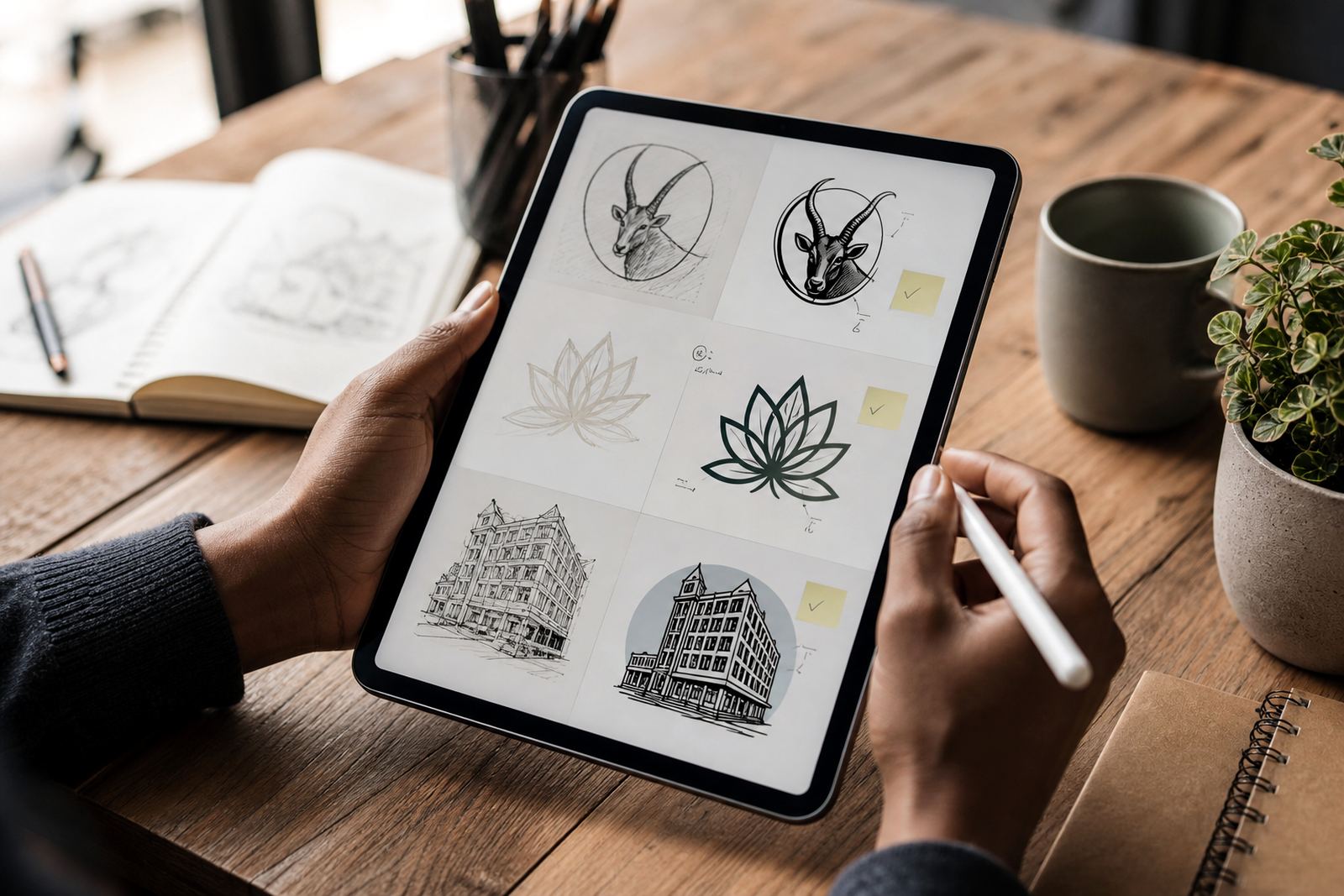
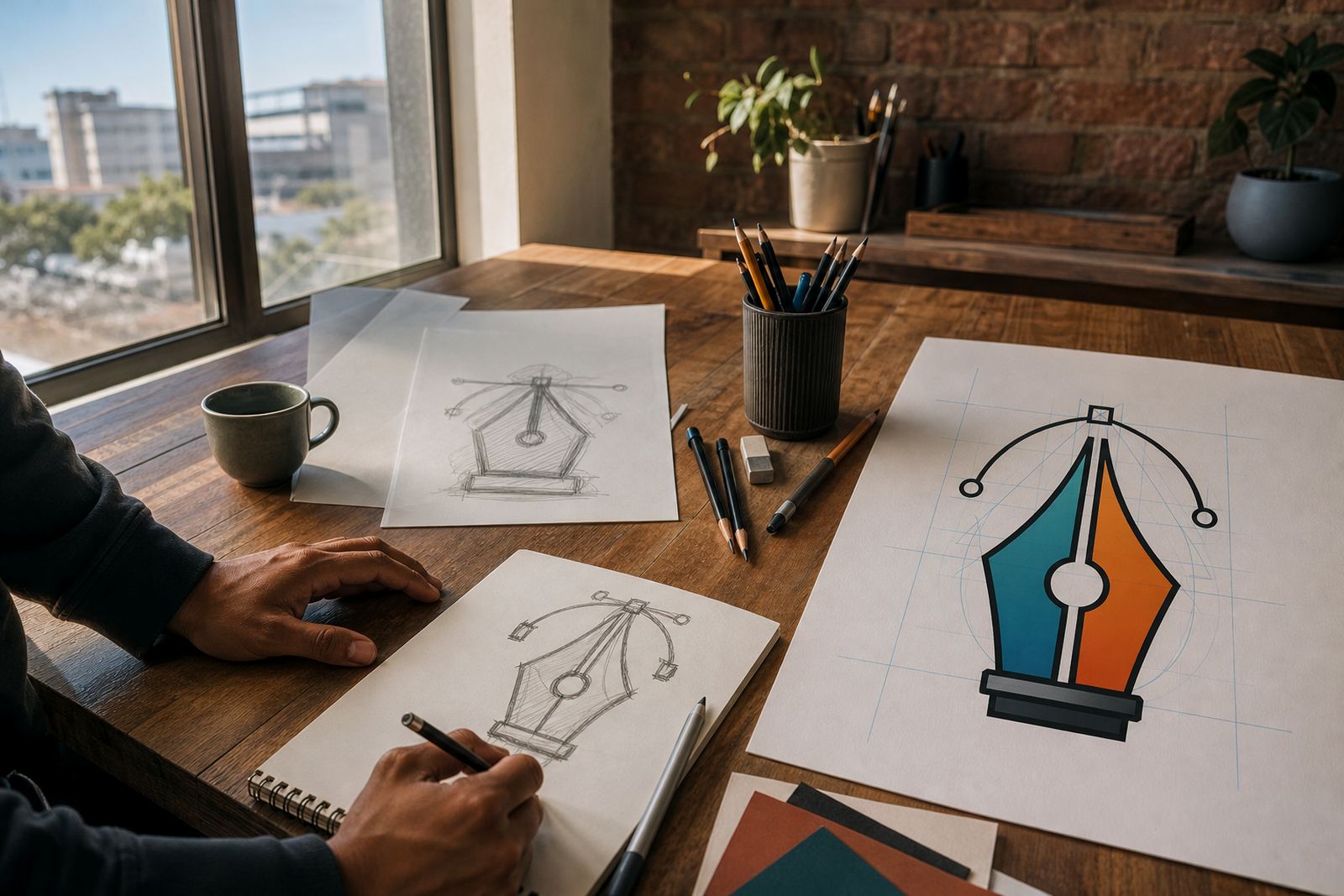
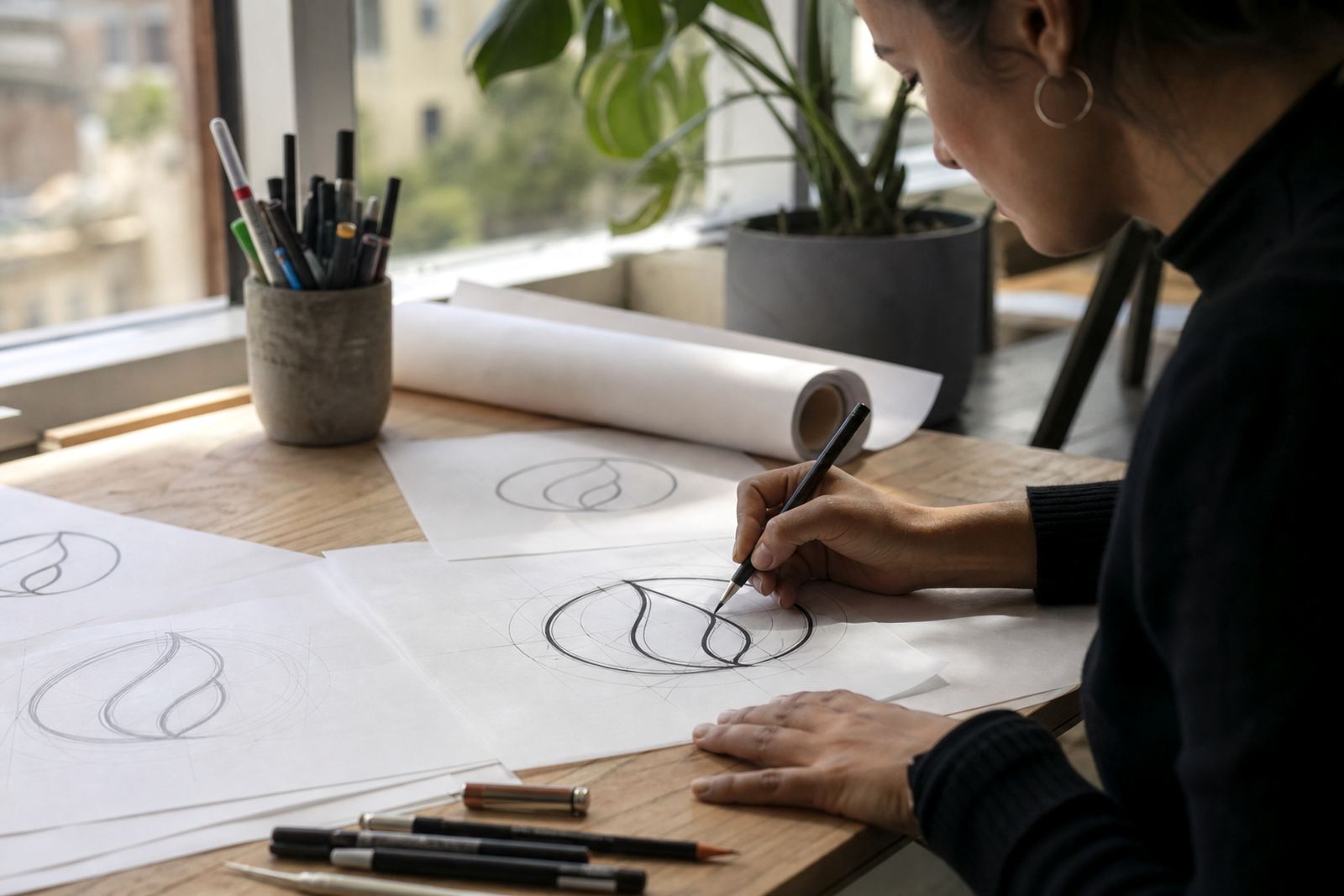
When a logo is traced straight from a blurry image, the result usually follows every wobble in the original file. That can mean uneven curves, patchy corners and letterforms that look slightly off once they are scaled up or placed on a signboard. A hand redraw starts from the shape and structure of the artwork, not only the pixels, so the final vector file is more careful and more consistent.
This matters for businesses that need logos to hold up across invoices, uniforms, vehicle branding and packaging. A cleaner redraw gives you a version that can be used at small size on a social graphic or enlarged for a shopfront in Cape Town without falling apart. The file is built for practical use, not just for looking neat on a screen.
For any redraw or illustration work, the customer must own the artwork or have the rights to use it. That protects both sides and keeps the job above board.
Balance, spacing and legibility are easier to fix by hand
Good logo redraws are not only about sharp edges. They are also about balance. A mark can look fine at first glance, but if one side carries more weight than the other, or if the spacing between letters is uneven, it becomes harder to read in real use. Hand redrawing allows those details to be corrected properly.
At Vectorization Studio, the work is done in a way that suits the finished purpose. If a logo needs to sit on a municipal tender document, a deli menu in Durban, or a delivery van in Pretoria, the letter spacing and line weight must remain clear from a distance and in small print too. That is where careful redraws help more than fast bitmap tracing.
- Improves letter spacing and curve balance
- Makes thin lines easier to reproduce in print
- Helps small logos stay readable on labels and invoices
- Reduces odd artefacts from low-resolution source files
Bitmap tracing versus hand redraw: the practical difference
Bitmap tracing follows the edges of a pixel-based image. It can be useful when the source is clean and simple, but it often copies flaws from a low-resolution file. Jagged edges, poor corners and fuzzy details can all end up in the final vector. A hand redraw is slower, but it lets the artist rebuild the artwork with intention.
That difference shows in the finish. A traced shape might look acceptable on screen, yet feel loose when exported to SVG, EPS, PDF or AI for press work. A hand redraw gives more control over each curve and anchor point. It is especially useful for older logos, faded scans and artwork that has been copied through several generations of a file, which happens more often than people think.
For businesses in coastal areas like Port Elizabeth and Stellenbosch, this can matter even more because printed materials face humidity, handling and frequent reordering. Artwork that is properly redrawn is easier to keep consistent from one print run to the next.
Where a hand-drawn vector file helps most
Some jobs need more than a clean logo. They need a drawn style that feels deliberate and brand specific. That is where hand-drawn vector illustration comes in. It can be used for mascots, badges, menu art, packaging illustrations, maps, patterns and social graphics. The advantage is that the artwork can be scaled without losing sharpness, while still keeping a human feel.
For example, a café in Observatory may want a menu illustration that looks warm and local, while a manufacturer in Johannesburg may need a badge or icon set that stays tidy on helmets, labels and product sheets. Hand illustration gives room for texture and character, but still keeps the file practical for printing and digital use.
- Custom brand icons and badge marks
- Mascot illustration for teams and promotions
- Packaging and sticker artwork for product ranges
- Map, scene and infographic illustration for business material
How this helps print, signage and everyday business use
Many South African businesses use one logo across a lot of different surfaces. The same mark may need to work on a vinyl sign, a rubber stamp, a label, a website header and a presentation file. If the artwork is not redrawn properly, one of those uses usually suffers. Fine details disappear, small text becomes muddy, or the logo starts to look uneven at larger sizes.
Vector files solve that problem when they are prepared properly. SVG is handy for digital use, EPS and PDF are useful for print workflows, and AI files keep the editable artwork in a format that can be worked on later. The point is not just to have a vector file, but to have a vector file that is clean enough to use without last minute corrections.
In practice, a good redraw also makes life easier for prepress. Fewer strange points, fewer overlaps and fewer hidden shapes means fewer surprises when artwork is prepared for production.
What to send when you want a better result
The better the starting material, the easier it is to produce a careful redraw. Even if the artwork is old or rough, any original file, photo, scan or printed sample can help. A clear reference gives the artist something to compare against, especially if the logo has changed over time or if there are multiple versions in circulation.
Before sending anything, it helps to check whether you have the right to use the source artwork. That is important for logos, mascots and illustrations that may belong to a previous designer, employer or supplier. If the rights are clear, the redraw can focus on quality rather than sorting out ownership questions later.
- Send the clearest version you have, even if it is imperfect
- Include notes on colours, spacing or missing details
- Say where the artwork will be used, such as print, web or signage
- Confirm that you own the artwork or have permission to use it
From Observatory, Cape Town, Vectorization Studio works with businesses across South Africa, including Cape Town, Johannesburg, Durban, Pretoria, Bloemfontein, Stellenbosch, Paarl and Port Elizabeth. The team is led by Luyanda Mthembu and includes Ayesha Mafokeng, Pieter Skosana, Zanele Kajee, Teboho Molefe and Megan Khoza, each handling a different part of the redraw and illustration process.