Why a rough sketch still has value
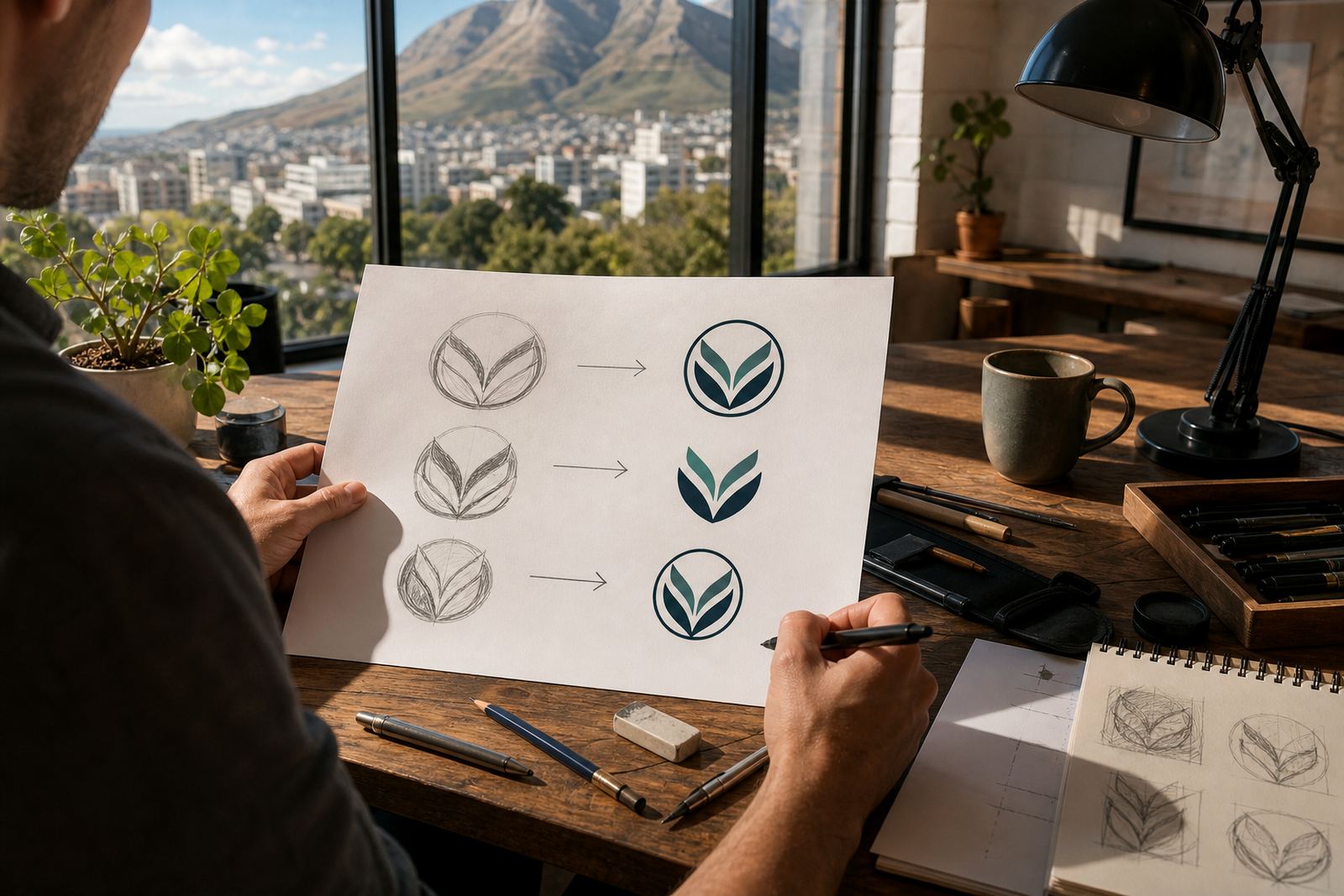
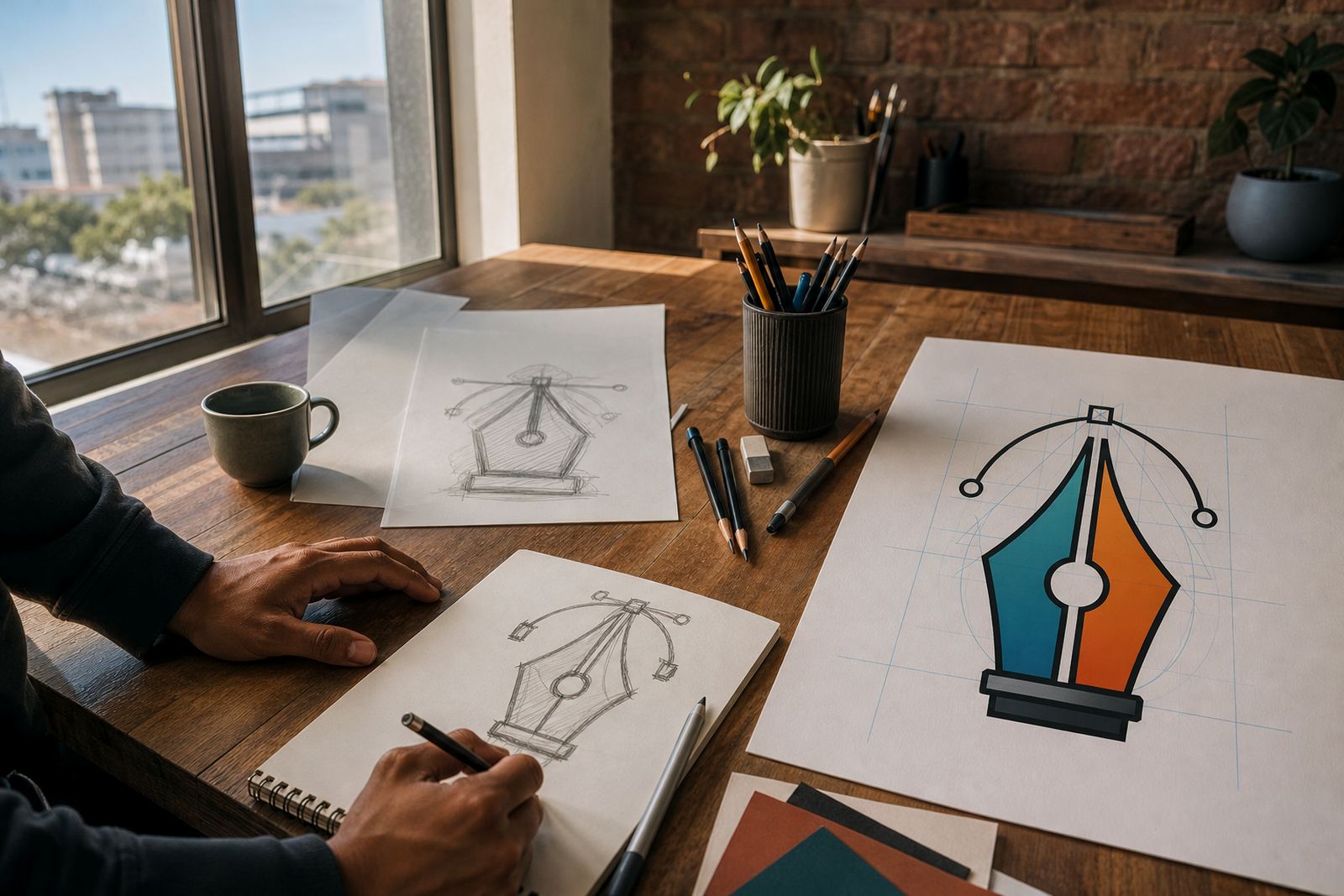
A pencil sketch is often where the strongest logo ideas begin. It may be a quick mark on paper, a scanned note from a meeting, or a photo of a drawing sent through the enquiry form, but it still carries shape, proportion and intent. The job is not to simply copy the sketch line for line. It is to translate that idea into artwork that holds up on a shop sign in Observatory, a delivery van in Durban, or a letterhead sent out from Pretoria.
That first drawing tells a designer what matters most. It may be the angle of a roofline, the curve of a leaf, the spacing of initials, or a mascot with a certain expression. A good redraw respects those details while making the artwork suitable for everyday business use. That means clean lines, balanced curves and forms that print clearly at small and large sizes.
When a sketch is handled well, it can become the base for a full identity system. The same artwork may later be used for packaging, social graphics, menu artwork, badges or stickers, with a consistent look across each use.
Bitmap tracing versus hand redraw: what changes the result
Many people think a photo of a sketch can simply be traced and called finished. That may be enough for a rough internal mock-up, but it is not always suitable for real production. Bitmap tracing follows the pixels in a scan or photo, so any wobble in the original drawing, shadows from the paper, or uneven pen pressure can end up in the final file. That can make the artwork look lumpy or thin in places.
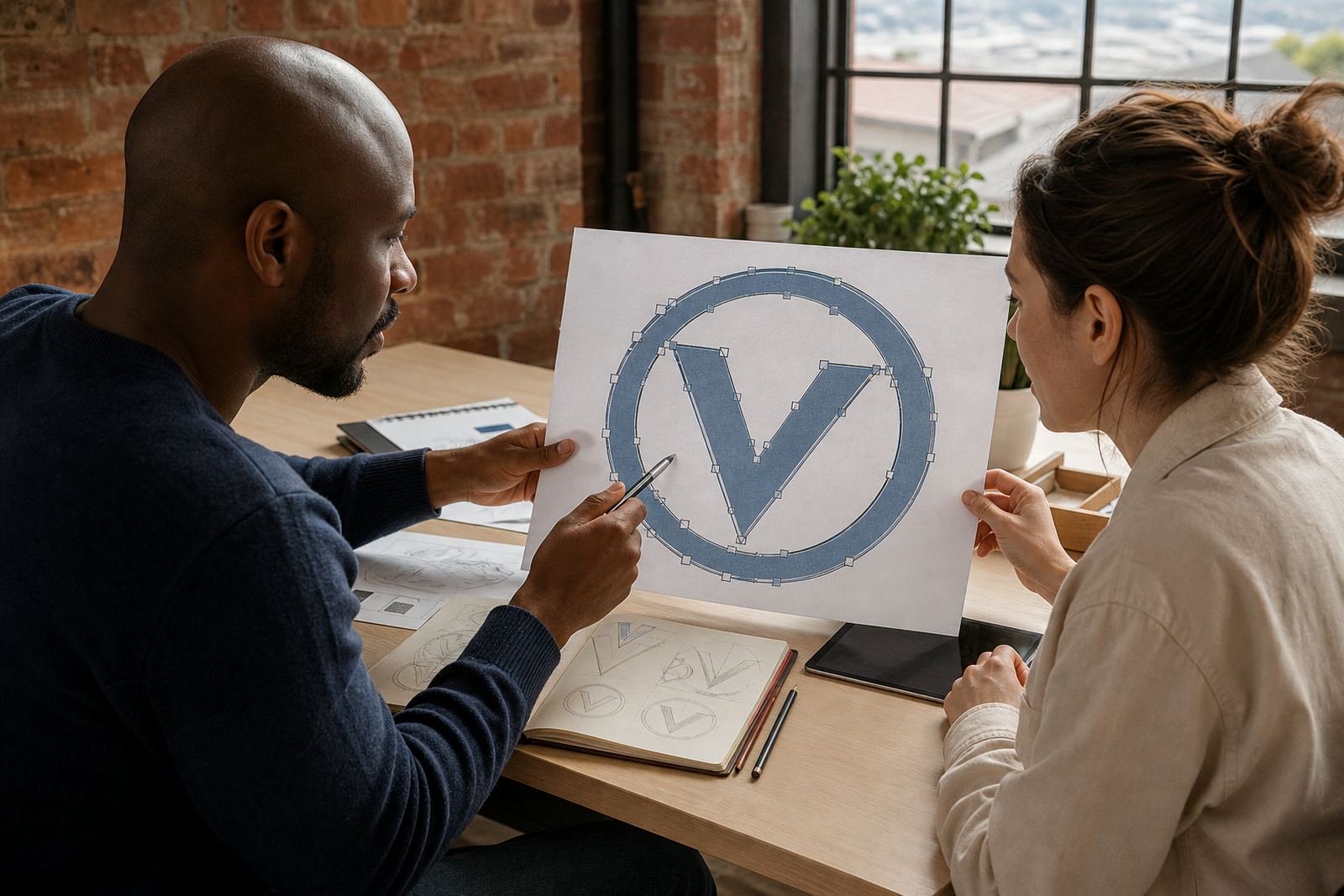
A hand redraw is different. The artist studies the sketch, then rebuilds the artwork as vector shapes. Corners are corrected, curves are smoothed, and line weights are made consistent. This approach is especially useful when the sketch is messy, low contrast, or drawn on a phone photo taken in bad light. It also gives more control when the logo has to work in one colour, reversed out for dark backgrounds, or reduced for a stamp or sticker.
- Use tracing when the source artwork is clear, simple and already well proportioned.
- Use hand redraw when the sketch needs correction, cleaner structure or a more polished finish.
- Use illustration work when the project needs extra detail, character or custom drawing beyond the logo itself.
For clients across South Africa, that difference matters because the final artwork must work across many suppliers, from a printer in Cape Town to a sign maker in Johannesburg. A file that looks fine on screen can still cause trouble if it is not built properly.
What makes vector artwork useful for business
Vector artwork is built from lines and shapes rather than fixed pixels. That means it can be scaled up for a building fascia or down for a small social media icon without becoming blurry. For a business, that is the main reason to convert a sketch properly instead of leaving it as a photo or raster image.
Once the artwork has been redrawn, it can be saved in file formats used by printers, sign shops and brand teams. SVG is handy for web use and digital assets. EPS is still widely accepted in print and production. PDF is useful for sharing and proofing. AI files are kept for editable working masters when more changes may be needed later.
- Cleaner separation of colours for print and vinyl cutting
- Sharper edges for embroidery, engraving and laser work
- Easier resizing for stationery, menus, stickers and packaging
- Better control over line thickness and small detail
Businesses in coastal areas like Cape Town and Port Elizabeth also need artwork that stands up well on different materials. Humidity can affect some substrates, and outdoor signage must remain legible after sun and salt exposure. Vector files give printers and installers a better starting point, even when the job needs to travel through a few hands.
How the redrawing process usually works
A proper sketch-to-vector job begins with the source artwork. The team checks whether the client owns the sketch or has the rights to use it, because that must be clear before any redraw or illustration is started. If the file is a photo, scan or rough pencil image, the details are reviewed for shape, spacing and any parts that need rebuilding from scratch.
From there, the artist decides whether the work should stay close to the original or be refined into a cleaner business mark. A mascot may need a more expressive pose. A badge may need tighter symmetry. A map or packaging illustration may need more line control so it prints neatly at smaller sizes. The aim is not to overwork it, but to make it practical for real use.
Clients sometimes ask for a quick vector file and then realise later that the artwork needs to be usable on signage, invoices and product labels too. That is where careful redrawing helps. A logo sketch that looks charming on paper can still be too loose for production, so the final drawing has to be checked for proportion, spacing and line consistency. Even a tiny misalignment can show once the file is scaled up.
A local example: from notebook sketch to printed brand mark
Picture a new café in Stellenbosch working from a notebook sketch of a coffee cup, mountain line and wordmark. The owner likes the rough idea, but the sketch has uneven lettering and the cup shape changes from side to side. If that drawing goes straight into print, the menus, takeaway stickers and window vinyl will all look different depending on who prepares the files.
In a case like that, the redraw starts by fixing the structure. The cup is rebuilt with even sides, the mountain line is cleaned up, and the lettering is spaced so it reads properly at a glance. The final logo can then be used on menus, social graphics, badges and packaging without constant rework. That saves time for the client and makes the business easier to present across branches or pop-up sites.
This kind of work is common for businesses in Cape Town, Durban, Pretoria and Bloemfontein as well. A sketch might begin in a meeting room, a market stall or a site office, then end up on labels, uniforms and vehicle branding. When the artwork is redrawn properly, it holds together across all those uses.
Beyond logos: when a sketch becomes an illustration
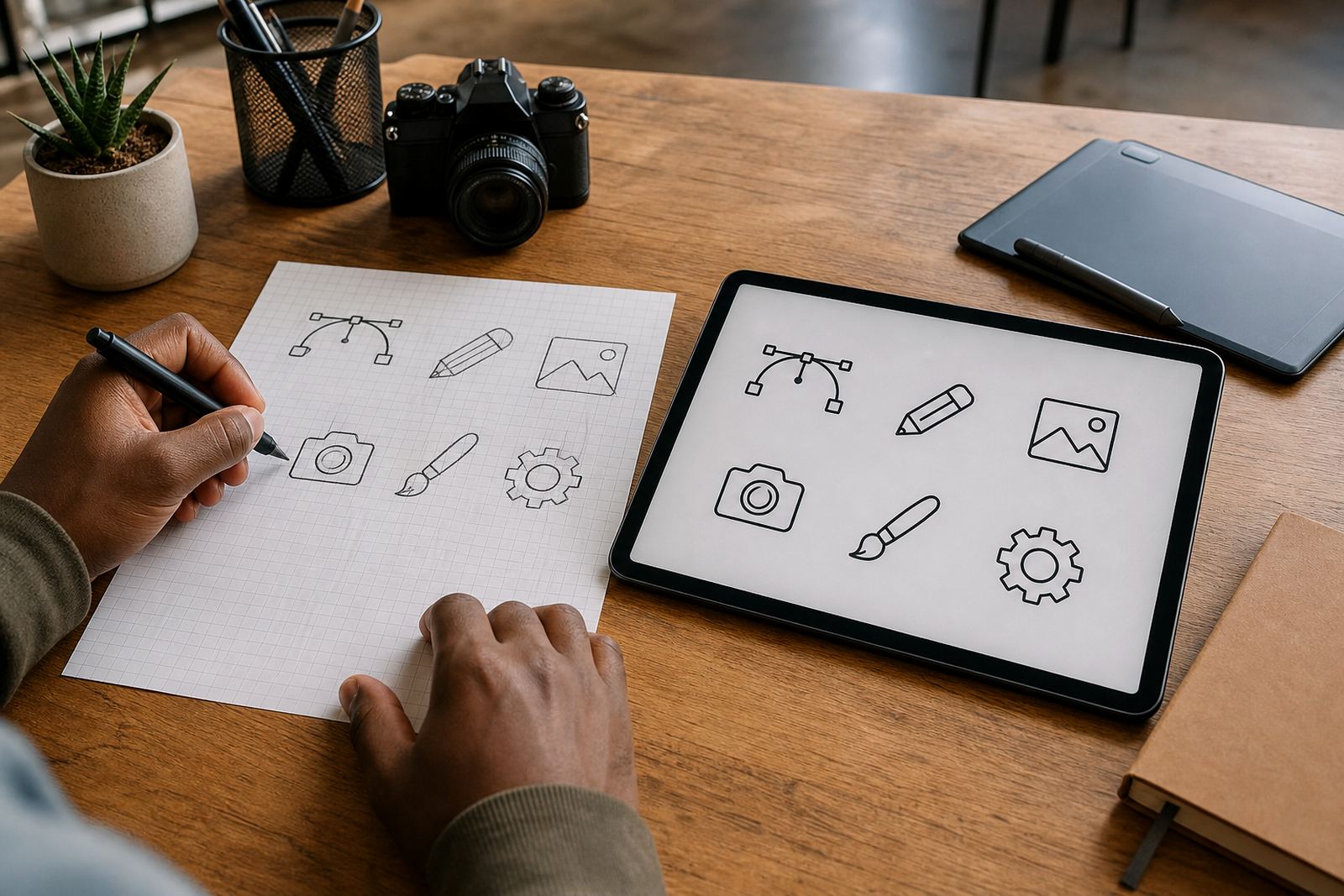
Not every sketch is meant to become only a logo. Some jobs need custom illustrations that support the brand more fully, such as mascots, scenes, icons or pattern elements. A hand-drawn approach is useful when the client wants something with personality, or when the sketch is meant to communicate a product story rather than a simple mark.
Vector illustrations can be built for many uses across a business. A food company may need packaging illustration and menu illustration. A property firm may need map illustration or badge illustration. A retail brand may need sticker illustration, line illustration or social graphics. The same vector drawing method keeps the artwork flexible, so it can be reused in different sizes and on different materials.
- Custom brand icons for fast visual recognition
- Mascot illustration for a friendlier public face
- Pattern illustration for packaging and wrapping
- Infographic illustration for clear communication
- Scene illustration for launches, campaigns and seasonal use
In these projects, the sketch gives the idea, but the redraw gives the discipline.
What to send when you want a sketch redrawn
The best starting point is the clearest version of the sketch you have. A scan is ideal, but a sharp phone photo can work if it is flat, evenly lit and not cropped too tight. Send any notes about what must stay, what can be improved, and where the final artwork will be used. If there are colours, include those too. If not, black and white is often the best place to begin.
It also helps to know whether the artwork must be delivered in SVG, EPS, PDF or AI format. Some clients need all four for different suppliers, while others only need a clean master file and a proof for approval. Clear brief notes make the process smoother, especially when the work must support print, web and signage at once.
For South African businesses, practical detail matters. If the logo will appear on a truck in Johannesburg traffic, on a menu in a coastal restaurant, or on packaging that must meet municipal labelling rules, the redraw should be planned with that use in mind. A neat sketch is a good start, but the final file has to work in the real world, not just on paper.