Why PDF still matters when the artwork is vector
PDF is one of the most practical file types for logo redraws and hand drawn vector illustrations because it opens easily on most devices and keeps the artwork in a stable format. For businesses that work with printers, signage makers, clothing decorators or packaging suppliers, that matters. A PDF can show the finished artwork clearly while still holding vector paths, text and layout information that suppliers can use as a reference.
In South Africa, this is useful when a client in Cape Town needs to send artwork to a printer in Johannesburg, or when a franchise owner in Durban must share the same approved logo with a supplier in Pretoria. The file travels well and does not depend on one specific machine or app.
Use PDF when more than one person must approve the work
If a logo redraw needs sign-off from a director, a branch manager and a printer, PDF is usually the easiest common file. Everyone can review the same layout, zoom in on details and check spelling, proportions and spacing before production starts. That makes it a strong choice for approval packs, especially where teams are not using the same software.
- Share one file instead of sending separate working files around.
- Keep the approved version easy to identify.
- Add notes or marks for small corrections before final release.
- Reduce confusion when a supplier asks for the latest artwork.
For a business in Observatory, for example, a PDF can be sent to a local sign writer and the same file can be forwarded to branches in Stellenbosch or Bloemfontein without changing the core artwork.
When PDF is better than a traced bitmap alone
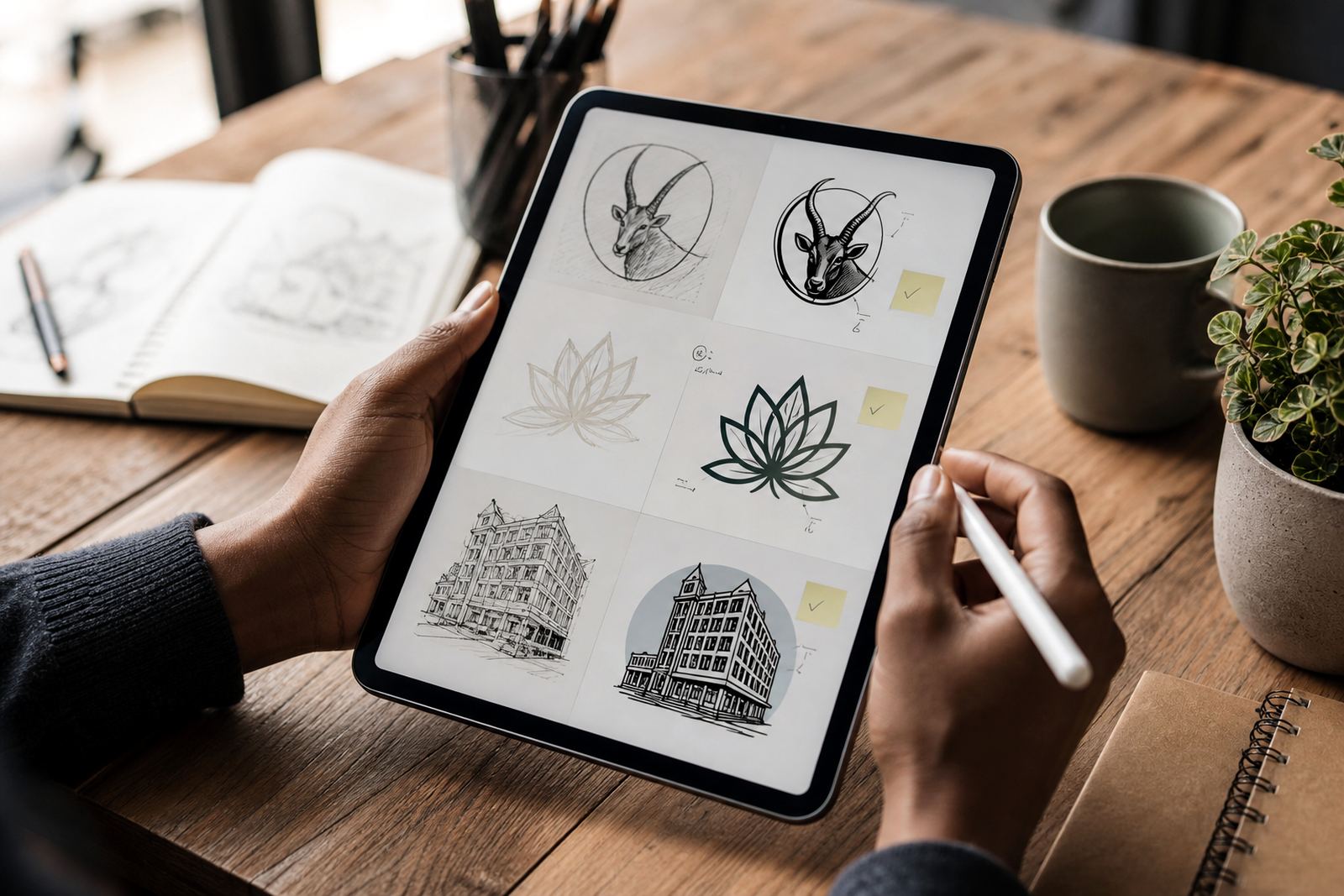
Some artwork starts as a bitmap image, like a low-resolution JPEG or PNG. That can be traced into vector paths, but tracing is not the same as a careful redraw. A traced image may keep rough edges, uneven curves or unwanted shapes that were hidden in the source file. A hand redraw gives cleaner lines and better balance, especially for logos with fine detail or illustrations that must scale up for print.
A PDF is useful after either process, but it should not be seen as a fix for poor source artwork. If the original image is blurry, stretched or compressed, the final result will still need skilled work. That is why customers should send artwork they own or have rights to use, along with any original vector files if they have them.
- Bitmap tracing is useful for simple shapes and quick conversions.
- Hand redraws are better for accuracy, refinement and custom illustration.
- PDF can present the finished result clearly for review and production.
- Always confirm ownership or usage rights before work begins.
What a production-ready PDF should show
A good vector PDF is more than a picture. It should show the artwork in correct colour, proper alignment and a layout that is easy to read. For print or signage work, this means the supplier can check the logo at full size, confirm spacing around the mark and use it as a production reference without guessing. If Pantone references are not supplied, the colour should still be set cleanly in CMYK or spot colour terms as agreed with the client.
For menu boards, packaging mock-ups, stickers or badges, a PDF is often the file most likely to make the approval process smoother. It can carry notes, multiple pages and different logo variations in one file, which helps when a brand has several versions for light and dark backgrounds.
- Use PDF for layout proofing, not just for viewing.
- Include black, white and colour versions where needed.
- Keep text outlined or supplied in a way the printer can open safely.
- Check that the artboard size matches the intended use.
Practical reasons South African businesses ask for PDF
PDF helps because it is lighter than many working files and easier to open on a phone, laptop or office computer. That matters when a procurement officer in Pretoria is waiting for artwork approval or a small company in Paarl needs to send the same file to three different suppliers on the same day.
It also helps when a client wants a simple, fixed version for records. If a printer reopens the file later, the layout is still there. A PDF is often the safest choice when the artwork must be seen exactly as approved, not edited by accident.
How we use PDF in logo redraw and illustration work
At Vectorization Studio, PDF is often the file that sits between the creative stage and production. A logo may be redrawn in vector format, checked for clean curves and spacing, then supplied as PDF for review alongside SVG, EPS and AI where needed. For some jobs, the PDF is used as the main approval file and the other formats are issued for print, cutting or digital use.
Clients across Cape Town, Johannesburg, Durban, Pretoria and Bloemfontein often need artwork that can move between marketing teams, printers and product suppliers without confusion. A PDF keeps the hand drawn work readable while still being practical for everyday business use. If the brief is a mascot, map, badge or packaging illustration, the file can show exactly what was agreed before production starts.
Founded in 1994 and based in Observatory, Cape Town, our team works on vector redraws and custom illustrations for businesses that need clean files and proper handover. Enquiries come through the form on our contact page, which keeps the process tidy and easy to track.