What a bad scan can still give you
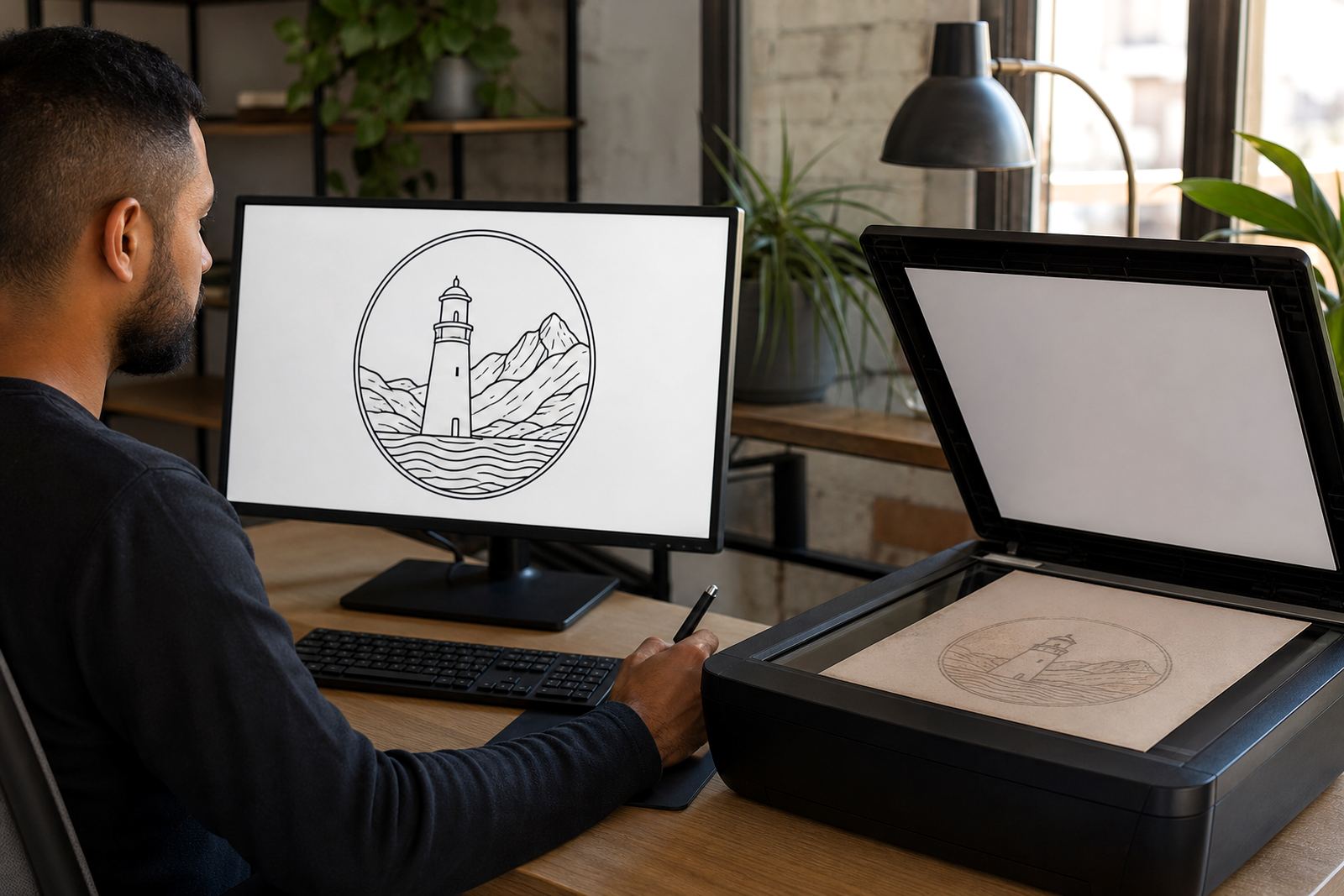
A low-resolution scan is often messy, yet it can still contain enough information to rebuild a logo or illustration properly. Faded lettering, uneven outlines, broken shapes and yellowed paper are common problems, but they do not always mean the artwork is lost. The first step is checking whether the scan shows the original proportions, the correct letterforms and any small details that matter for the final use.
In practice, we look for the parts that still hold up under enlargement. If the scan is sharp in one area but soft in another, that can guide the rebuild. A signboard photographed on a phone, a faxed letterhead, or a photocopy from years ago may all need different treatment. Sometimes the scan is only useful as a reference for colour, spacing or layout, not as a direct source for tracing.
- Clear enough for tracing: clean edges, readable shapes, consistent proportions
- Better for rebuilding: blurred text, missing corners, warped artwork, heavy noise
- Useful as reference only: old printouts, crooked photos, low DPI scans, cropped images
Bitmap tracing versus hand redraw
Bitmap tracing means following the pixels in a raster image and turning them into vector paths. It can work well when the source artwork is simple, bold and already fairly clean. But tracing is only as good as the scan in front of it. If the original has jagged edges, inconsistent curves or distortion from photocopying, those faults can be carried straight into the new file.
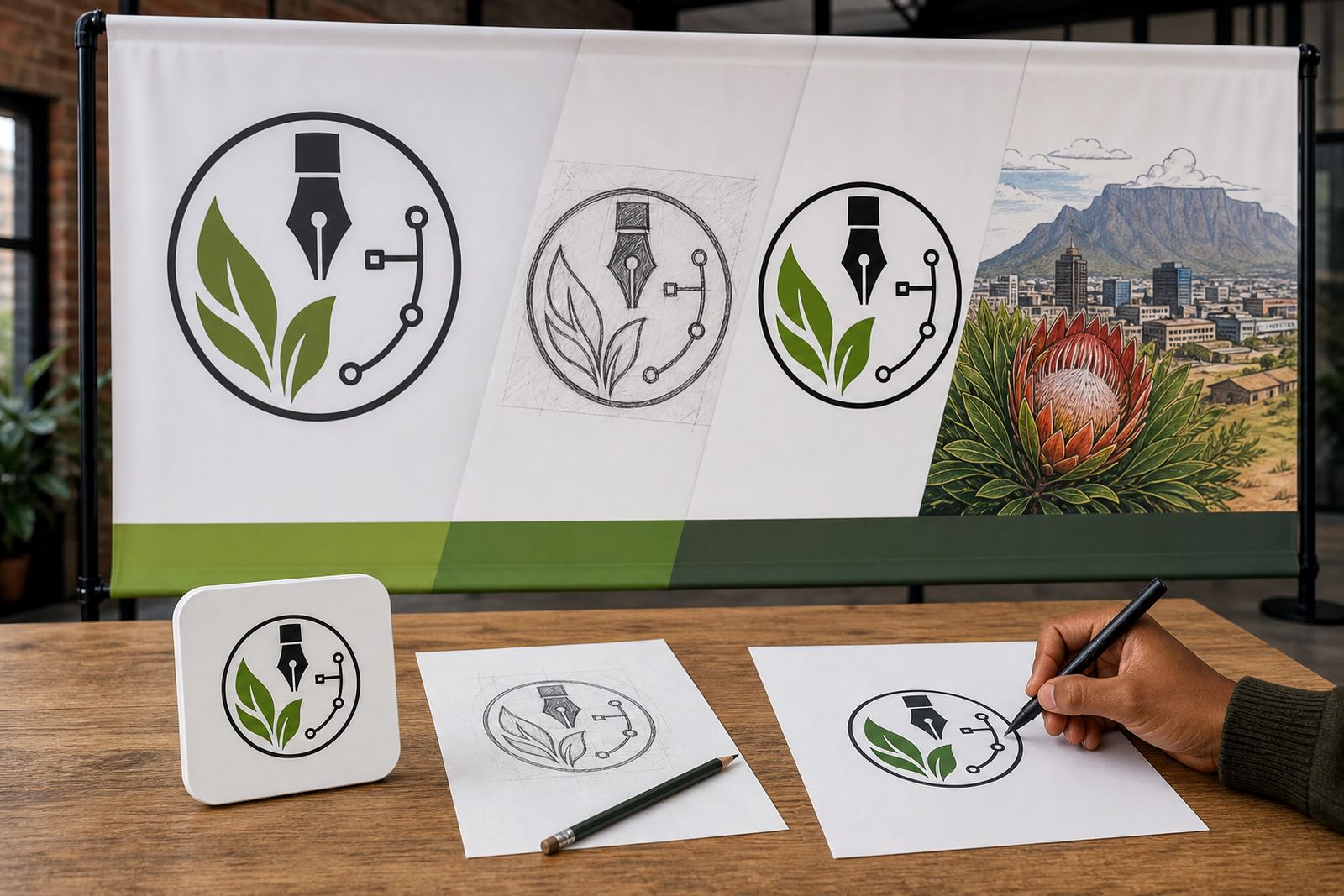
Hand redraw is different. The artwork is rebuilt shape by shape, which allows for cleaner curves, corrected balance and proper spacing between elements. This is often the better choice for logos, badges and line work that must stay crisp at small sizes and on large signage. When a client needs a polished result for print and digital use, hand rebuilding usually gives more control.
- Tracing suits simple marks with strong contrast
- Hand redraw suits damaged scans, old logos and artwork with fine detail
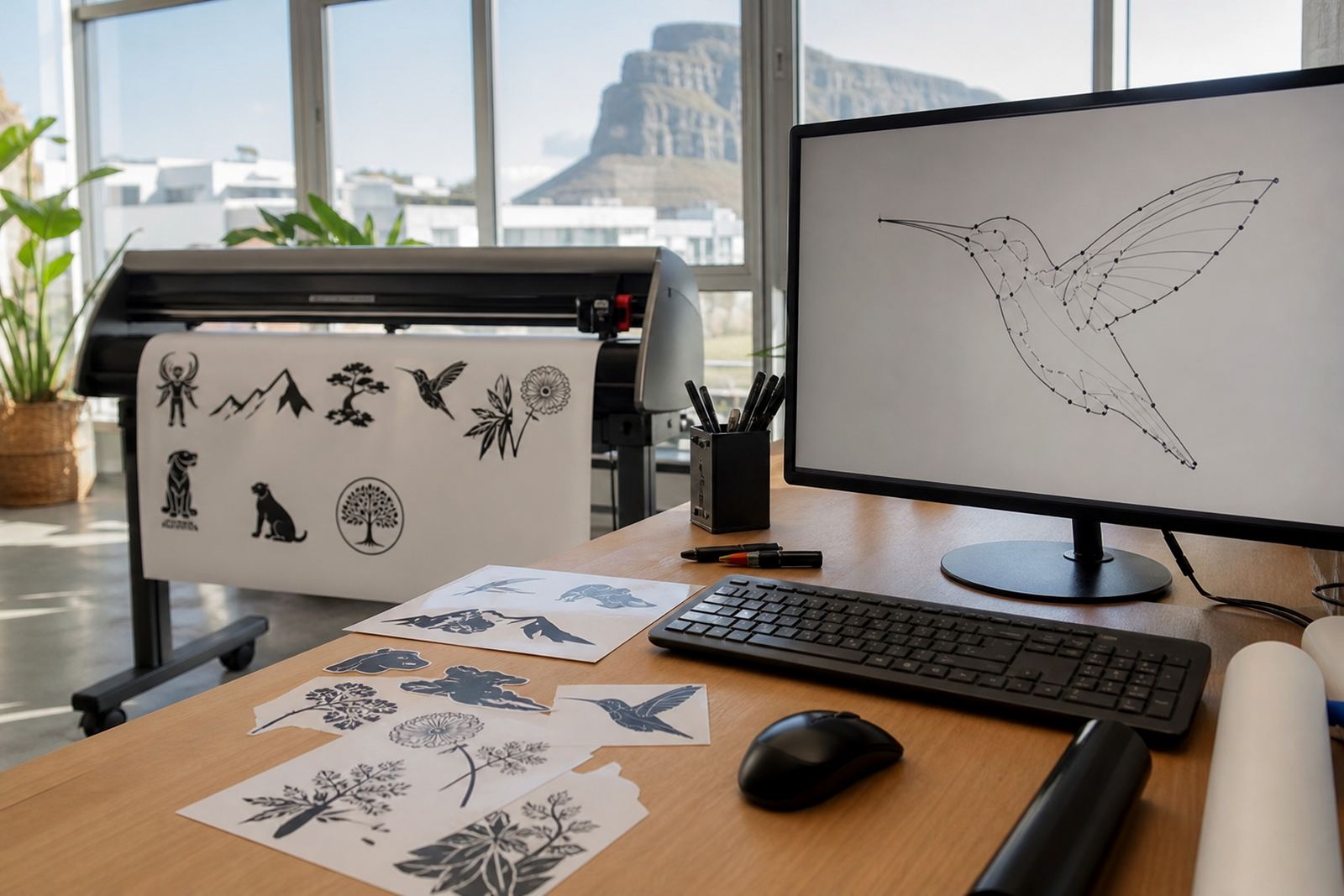
- Illustration rebuilds suit mascots, scenes, icons, maps and packaging art
Where the biggest fixes usually happen
The most common problems are not always the obvious ones. A logo may look fine at first glance, yet the letter spacing is off, the curves are uneven or a thin line disappears when the image is enlarged. Those faults become obvious on a vehicle decal, a banner or packaging artwork, especially where the print is seen close up. That is where a hand redraw helps most.
We also pay attention to missing corners, broken strokes and small details that were lost in the scan. In older files, the centre of a symbol may be shifted slightly or an outline may vary from left to right. Those issues are easy to overlook on screen but they show up on press. A proper rebuild corrects that before the file is sent for use in SVG, EPS, PDF or AI format.
For businesses in Cape Town, Johannesburg, Durban, Pretoria and Bloemfontein, this matters when the artwork has to work on everything from invoices to shopfront signage. A file that is clean at 20 mm can also hold up on a 3 metre banner if the structure is right from the start.
How to prepare old artwork before sending it in
Good source material saves time and improves the final result. If you have more than one scan, send them all. A poor copy can sometimes be fixed using a better second version, or a photo of the original may show a detail the scan missed. If the artwork came from an old supplier, a box file or an archive folder, include any notes you have on colours, fonts or layout.
It also helps to confirm that you own the artwork or have permission to use it. We can only work from material that the client has the rights to use. If the image is borrowed from another business or taken from a third party source, that should be cleared first.
- Send the clearest scan you have, even if it is not perfect
- Include colour references if the original was printed in specific shades
- Tell us where the file will be used, such as packaging, social graphics or signage
- Share any spelling corrections, old versions or layout notes
A local example: old shop artwork in Cape Town
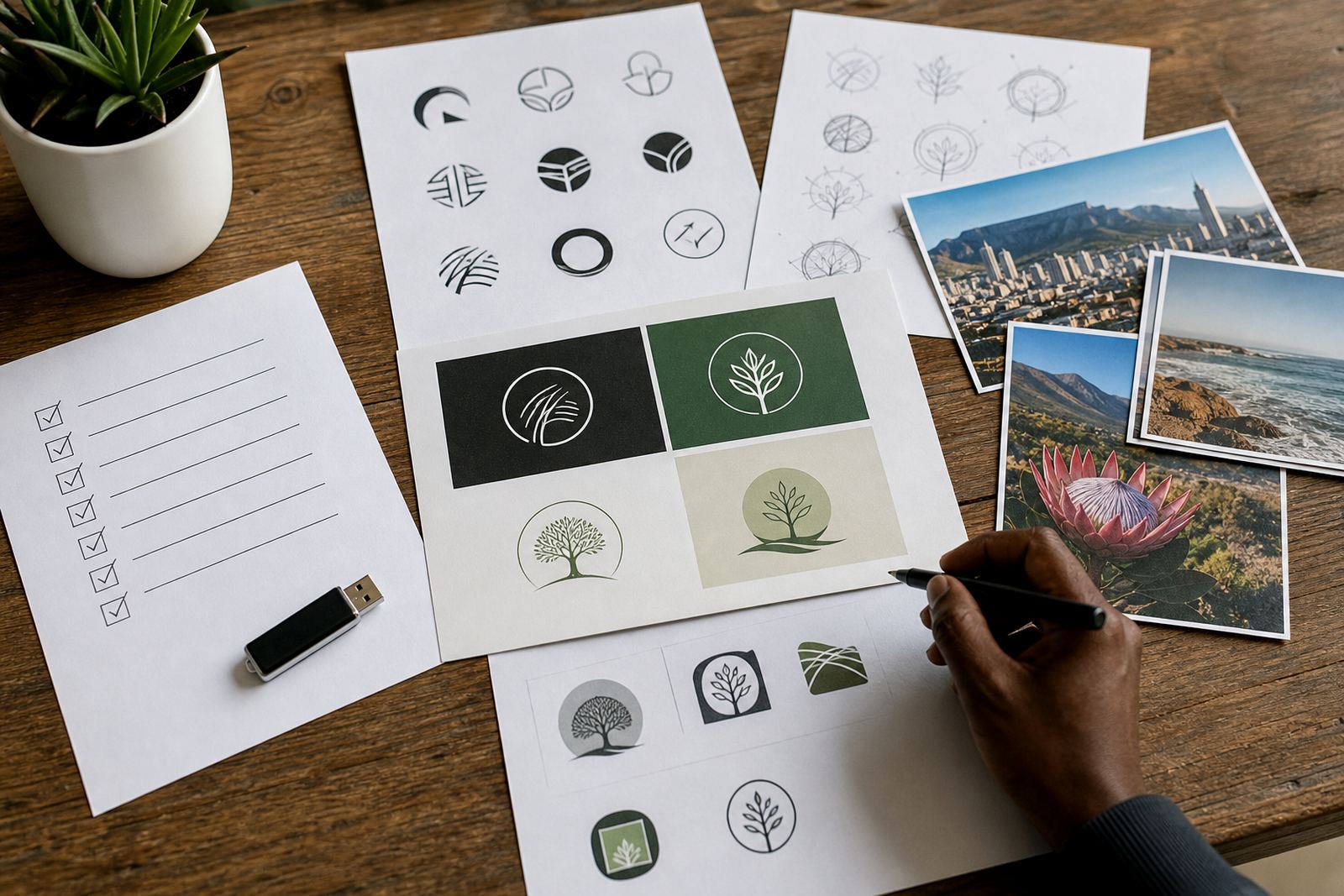
A small retailer in Observatory might bring in a faded logo from a 1990s flyer, along with a photocopy from a municipal permit file and a phone photo of the sign above the door. None of those sources is ideal on its own, but together they can give enough information to rebuild the mark properly. The lettering may need to be redrawn from scratch, while a simple border can be traced and cleaned up.
That same approach works for businesses across South Africa where the original artwork has been used for years in different forms. On a windy coast, on corrugated signage or on printed labels stored in humid conditions, files can degrade quickly. A clean vector rebuild helps keep the artwork consistent when it is reused by printers, sign writers and packaging suppliers.
For a Cape Town client, the final file might need to suit a label printer, a laser cutter and a social media post. That means the art must be tidy, scalable and easy to separate into the right file type for each job.
What you receive after the cleanup
Once the old scan has been cleaned and rebuilt, the finished artwork is supplied in the formats needed for production and everyday use. SVG is useful for web and digital use, EPS is often requested for print and signage, PDF is practical for sharing proofs and final artwork, and AI files are commonly used for future edits and studio work. The right format depends on where the artwork is going next.
We also keep the shapes tidy so the file can be scaled without losing clarity. That means the lines stay smooth, the text stays readable and the artwork remains useful long after the original scan has been put away. If the job includes custom brand icons, mascots, badges, maps, menu art, patterns or illustrations, the same clean vector method can be used across the full set so everything feels related.
- SVG for flexible digital use
- EPS for print and trade work
- PDF for proofs and sharing
- AI for editable source artwork