Artwork that can move from a swing tag to a stitch file
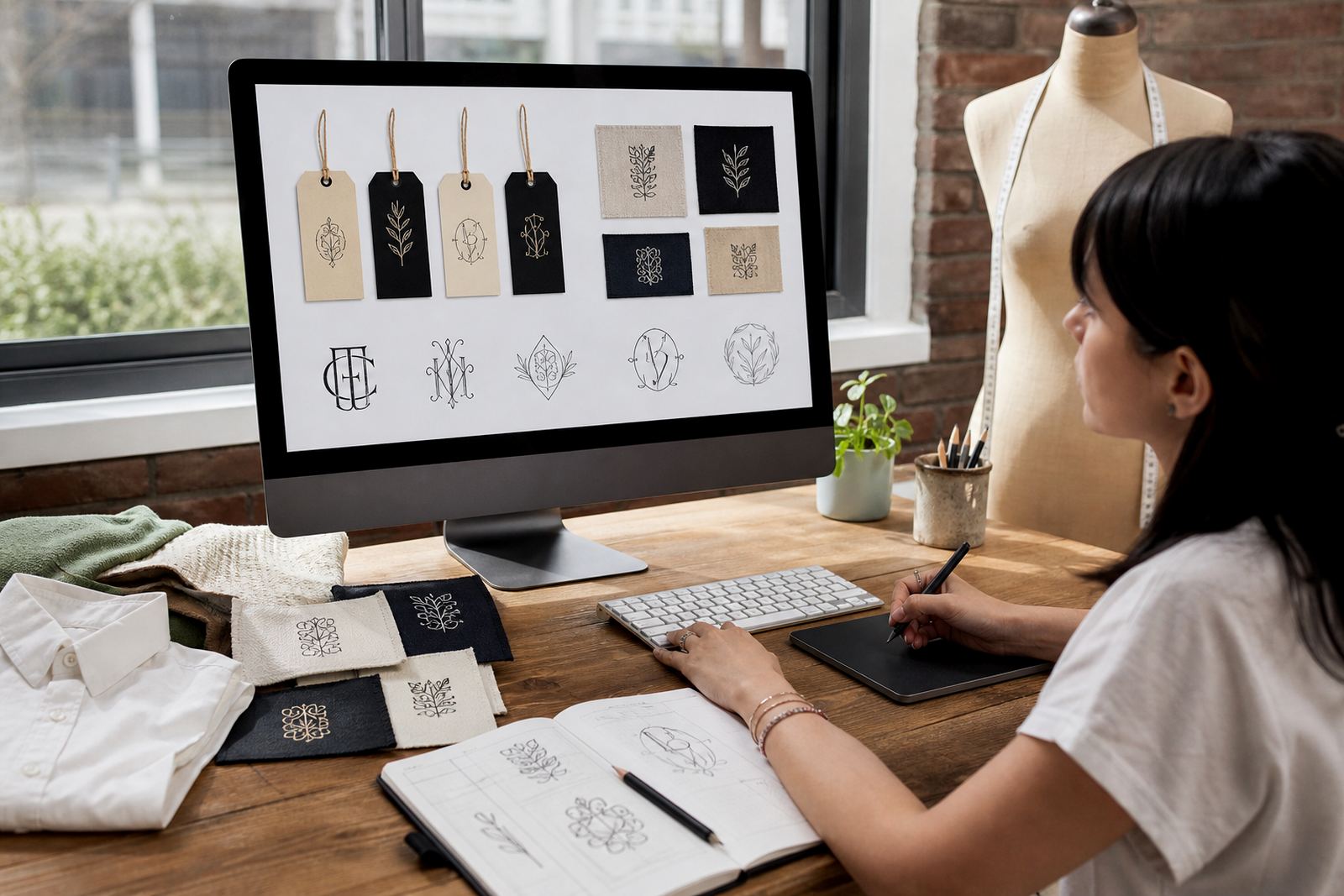
Fashion labels often work with artwork that started as a screenshot, a low-resolution file or an old logo that no longer prints cleanly. When that artwork is scaled down for a care label or blown up for a lookbook cover, the edges can soften, colours can shift and fine lines can disappear. We redraw logos by hand where needed and prepare vector files that hold their shape for print, embroidery and digital use.
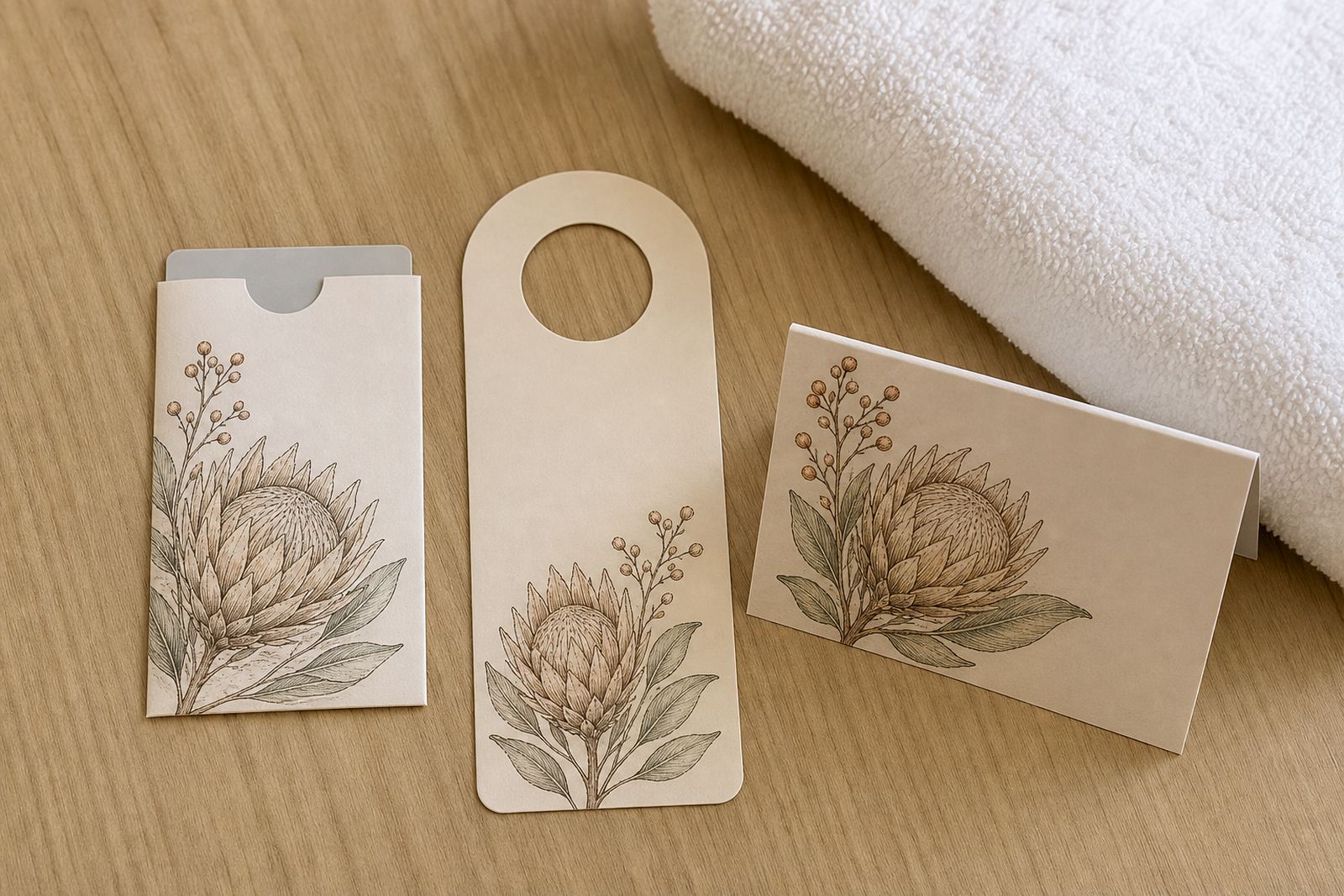
For clothing ranges, that usually means artwork prepared in SVG, EPS, PDF and AI formats, depending on how your printer, embroiderer or garment manufacturer works. We also look at line weight, spacing and small detail so the logo still reads clearly on woven labels, swing tags and neck prints. If you are supplying a range for retail, the artwork needs to stay neat at different sizes, from 20 mm care tabs right up to full-page lookbook layouts.
Bitmap tracing versus hand redraw for fashion work
Some jobs can be handled by bitmap tracing, where a flat image is converted into vector paths. That can be useful for simple shapes and logos with block colours. But for fashion labels, tracing alone can leave jagged curves, uneven corners or awkward joins, especially where the mark needs to sit on satin, woven fabric or textured paper. A quick trace can save time, but it is not always the best result.
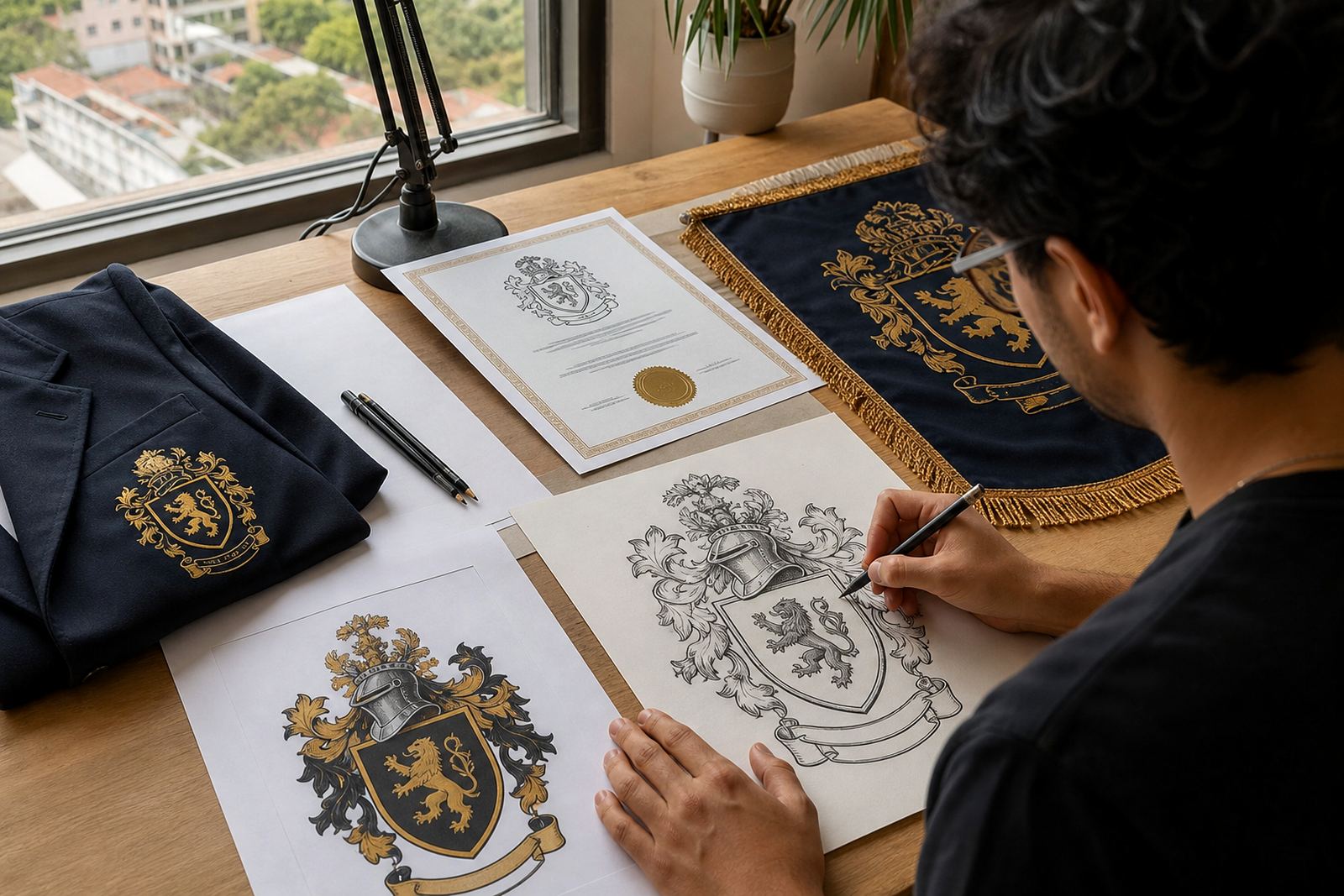
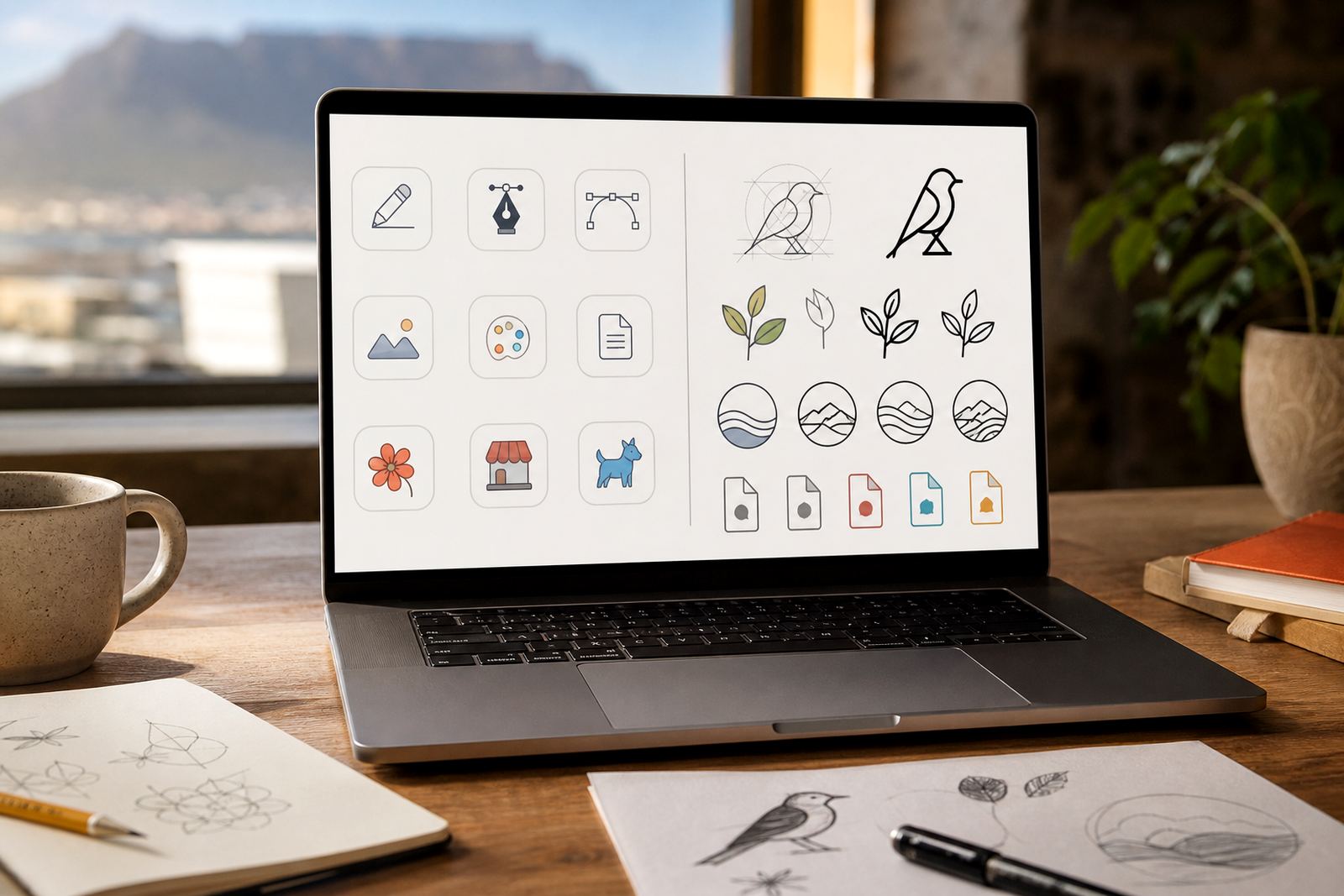
Hand redraw gives better control. We rebuild the logo or illustration carefully, adjust curves, correct proportions and tidy details that matter on small-format print. If the artwork needs a softer hand-drawn feel for a boutique range, capsule collection or artisan label, we can create a clean vector illustration that still has character. Customers must own the artwork they send us or have rights to use it, including any elements taken from old packaging, supplier files or third-party images. That part matters when labels go into market and the artwork is reproduced across multiple products.
- Tracing suits basic logos with strong shapes and limited detail.
- Hand redraw suits fine lines, lettering, icons and fabric labels.
- Illustration work suits mascots, motifs, badges, patterns and seasonal ranges.
What fashion labels usually need prepared
Most fashion clients approach us with a mix of production items, not just a logo. A label artwork set might need a primary logo, a small monogram, a garment care mark, a sizing badge and a layout that works on swing tags and inserts. If the collection includes premium packaging or retail display pieces, the same visual language may also need to move into box wraps, tissue stickers and seasonal campaign graphics.
Typical equipment and production setups we work around include digital printers, screen printers, die-cutters, embroidery machines, label looms and standard prepress workflows. We think about how the artwork will reproduce on cotton, satin, recycled board, coated paper and fabric tape. Coastal humidity can affect paper stock and adhesive labels, while some municipal packaging requirements may influence how care information and barcode space are arranged. It is worth planning for those details early, not after the final sampling round.
- Swing tags with logo, size, barcode area and seasonal copy.
- Care labels with short text blocks, symbols and tight spacing.
- Embroidered logos for caps, jackets, polos and trims.
- Lookbook graphics and social graphics that match the product line.
Layout planning for labels, trims and embroidered placements
Good fashion artwork starts with the end use. A logo that looks fine on a website banner may fail on a 30 mm woven tab if the strokes are too thin or the counters are too small. Before we redraw, we check the intended size range, fabric type, print method and whether the mark needs a one-colour version, reverse version or simplified stitch-friendly version. This avoids costly rework later, especially when sample runs are already underway.
It also helps to plan a mini system rather than a single logo file. For example, one mark can be adapted into a full logo, an icon for buttons or tags, and a simplified embroidery version for garment use. If your range includes both premium and entry-level items, the spacing and detail may need two versions. The layout should leave enough quiet space around the mark so seams, folds and stitch pull do not crowd the edges.
- Start with the smallest application first, then build up to larger formats.
- Ask for one-colour and reversed versions if you print on dark garments.
- Keep text short on small labels so the printer does not have to shrink it too far.
Common mistakes that slow fashion production
The most common problem is sending artwork that is too small for clean redraw. Another is using a logo that only exists in a flattened image, with no clear edges or editable text. Fashion teams also run into trouble when they send separate files for every item but no clear naming system, which makes approvals messy and can lead to the wrong mark going to print. A bit of order at the start saves a lot of back-and-forth later on.
It is also common to overlook thread behaviour, paper finish and production colour limits. Gold foil, embossing, stitch density and coated stocks all change how the artwork behaves. We often find that a logo needs a simpler second version for embroidery, or that a detailed illustration has to be trimmed back for a small hang tag. That is normal, and it is better to decide it early than after the first batch has been cut.
For fashion labels in South Africa, budgets for redraw and vector prep usually depend on how many versions are needed, how complex the artwork is and whether there are multiple product applications. Small logo cleanup work may sit at the lower end, while a full label system with icon set, embroidery version and packaging illustration sits higher. As a working guide, many projects fall somewhere between a few hundred Rand for simple redraws and several thousand Rand for fuller multi-use artwork packs, depending on scope and revision needs.
Working with our Observatory studio on a clothing range
We are based in Observatory, Cape Town and work with fashion labels across Cape Town, Johannesburg, Durban, Pretoria, Bloemfontein, Port Elizabeth, Stellenbosch and Paarl. Clients usually send the source image, a note on where the artwork will be used and any size or production limits from their printer, cutter or garment factory. From there, we redraw, clean up or illustrate the artwork in the right vector format for the job.
Our team includes Luyanda Mthembu, Ayesha Mafokeng, Pieter Skosana, Zanele Kajee, Teboho Molefe and Megan Khoza. That mix helps when a project needs both visual judgement and production care. The enquiry form on our contact page is the best place to begin. If you are planning a clothing range, it helps to send the garment type, the label size, the print method and the artwork you own or are allowed to use. We can then advise on what needs a full redraw, what can be traced and what should be simplified for cleaner output.