Artwork That Works From Reception to Room Service
Hospitality branding has to hold up in a lot of places at once. A logo may be embossed on stationery, printed on menus, etched onto glass, stitched onto towels, or used on a sign facing coastal wind and bright sun in places like Cape Town, Durban or Port Elizabeth. That means the source artwork must be clean, scalable and easy to reproduce in different finishes.
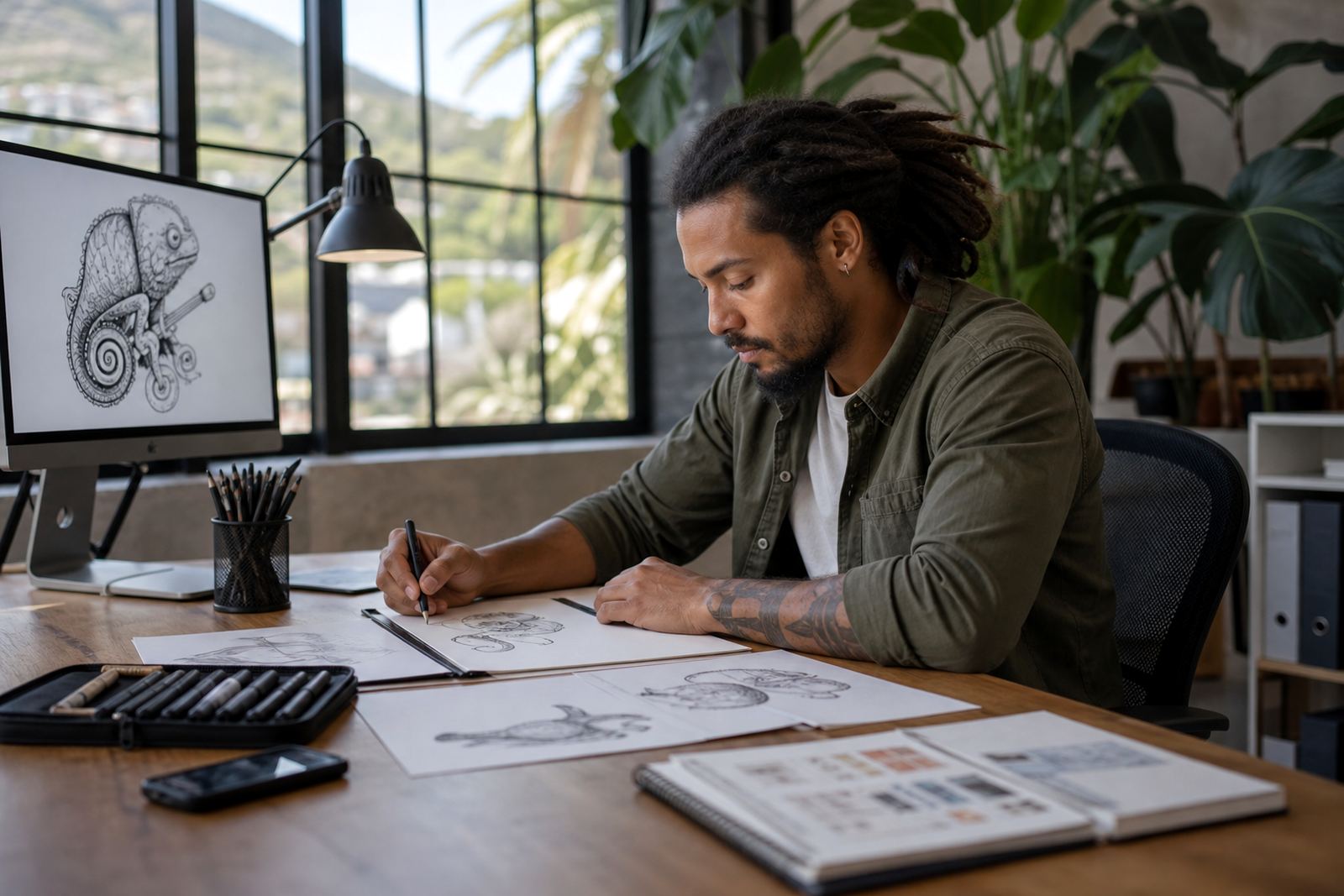
We help hotels, guest houses, lodges, restaurants and boutique stays with logo redraws and hand-drawn vector illustrations that suit guest touchpoints. If the original artwork is blurry, flat, outdated or only available as a low-quality image, we can redraw it properly so it is usable for print, signage and digital applications.
When to Redraw and When to Trace
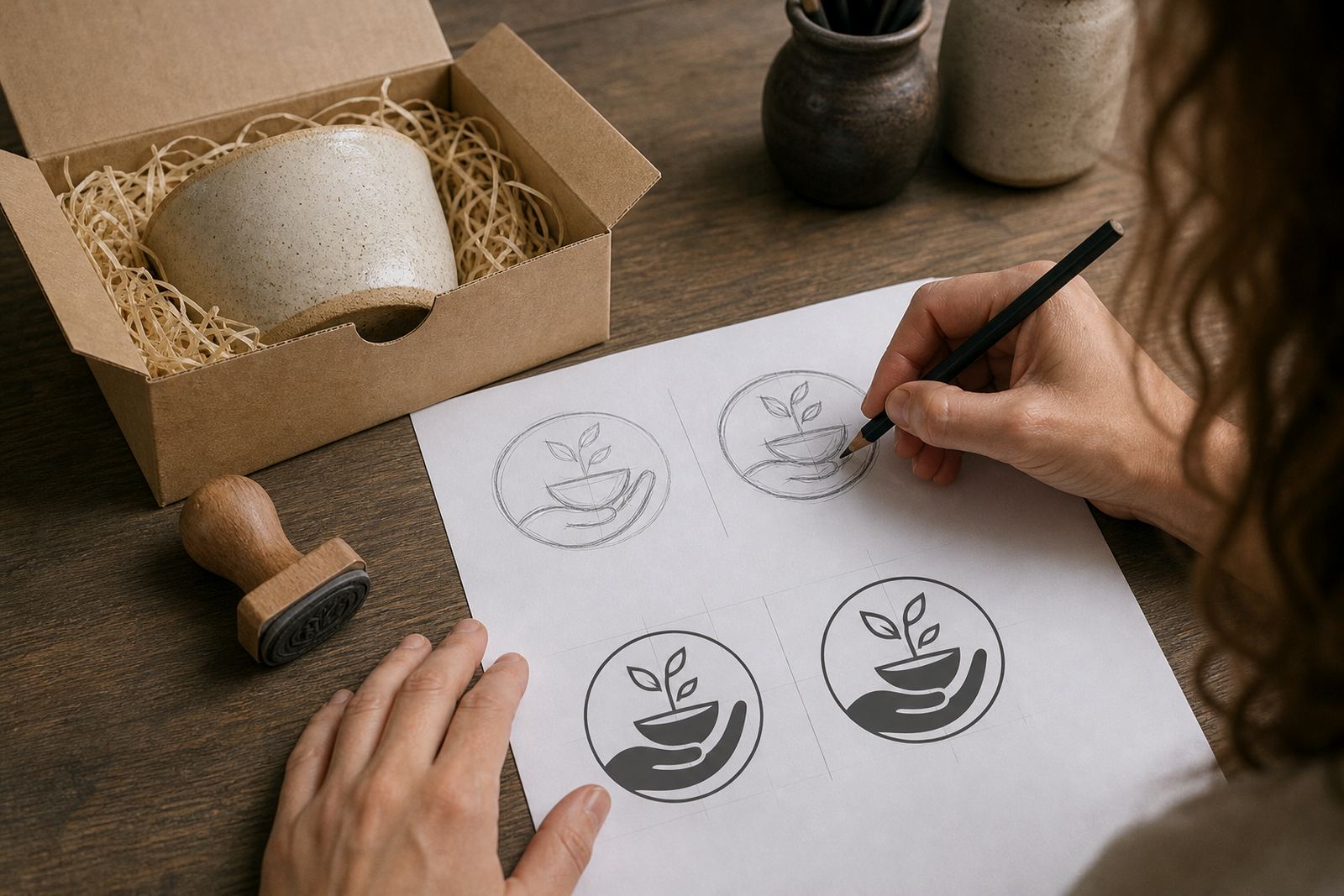
There is a difference between bitmap tracing and a proper hand redraw. Tracing can work for very simple artwork, but it often keeps the rough edges, uneven curves and pixel noise from the original file. A hand redraw lets us rebuild the shapes, balance line weight, and clean up details so the mark reads well at small sizes and on large format output.
For hospitality brands, that matters when the same artwork needs to appear on menu covers, room folders, signage, amenity labels and social graphics. We typically prepare vector files in SVG, EPS, PDF and AI formats, depending on how the artwork will be used by your printer, sign maker or in-house team. You should own the artwork you send us or have clear rights to use it.
Common Hospitality Applications We Prepare For
Every venue uses branding slightly differently, but the production needs are familiar. A logo for a restaurant menu may need fine detail removed, while a lodge emblem may need a stronger silhouette for laser cutting or embroidery. We also create illustrations for menu sections, local area maps, pattern repeats and social graphics that keep the same visual language across the property.
- Guest stationery and welcome packs
- Menus, wine lists and table talkers
- Signage, wayfinding and room markers
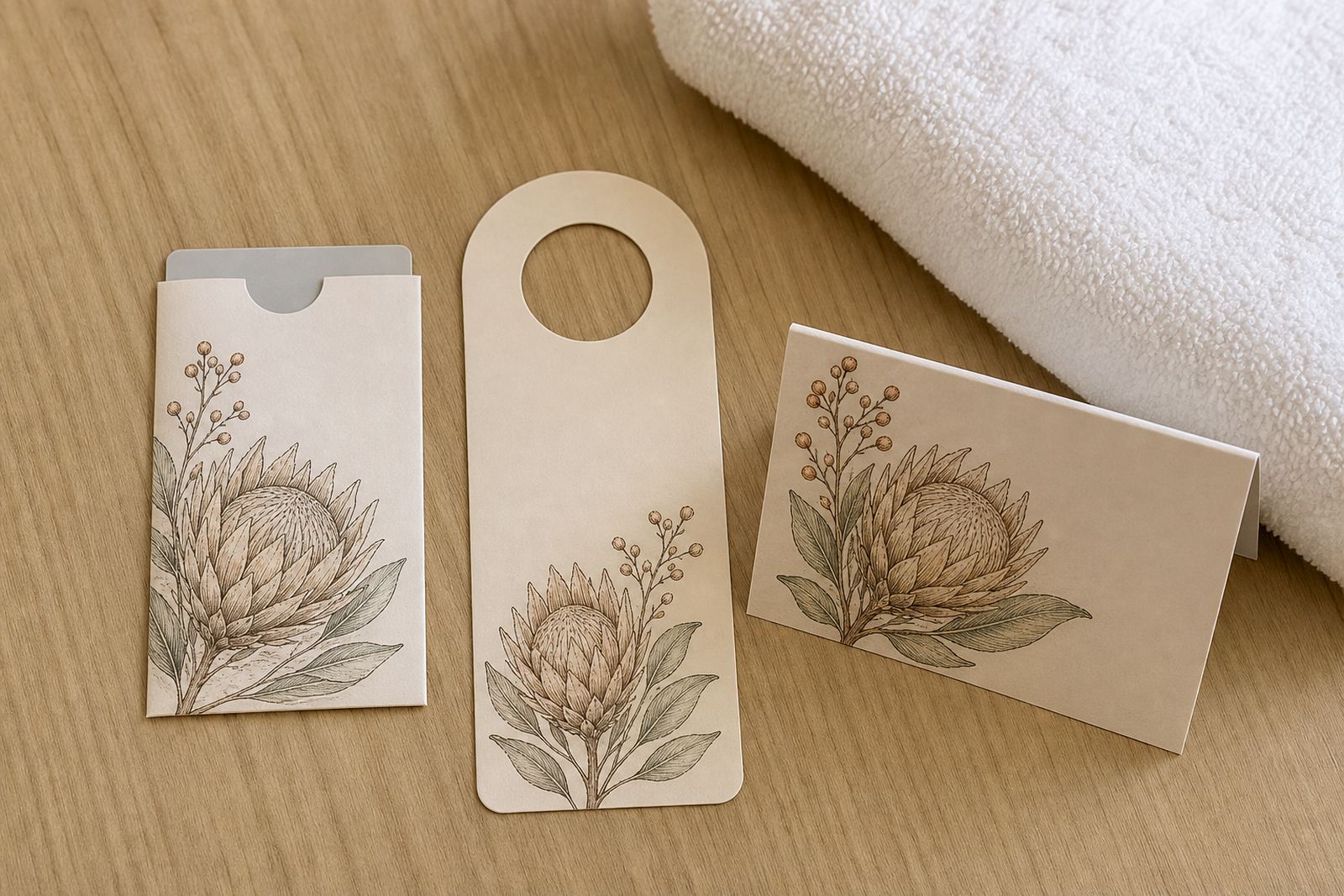
- Soap wraps, bottle labels and amenity cards
- Pattern artwork for packaging and interiors
- Illustrated maps, badges and scene artwork
In busy venues, these pieces often need to survive heat, handling and frequent reprints so it helps to start with artwork that is technically sound from the start.
Planning The Artwork Before Printing Starts
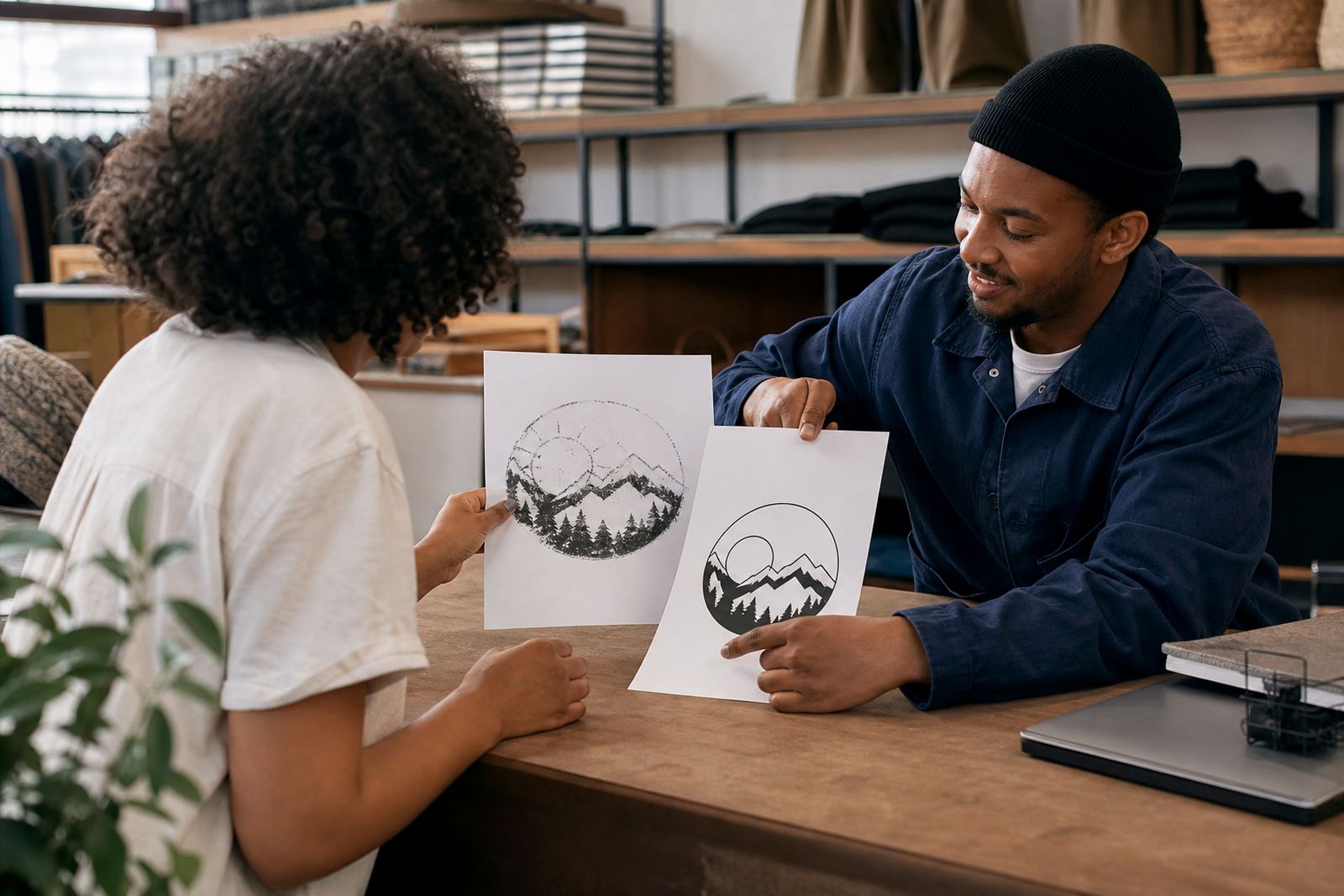
Good planning saves money and avoids rework. Before we redraw or illustrate anything, it helps to know where the artwork will live, the size it needs to appear at, and whether the end use is print, embroidery, engraving, signage or digital. If a logo is meant for a small amenity tag, a highly detailed version may become unreadable. If it is going onto a facade sign, thin lines may need strengthening for distance viewing.
We also look at colour use. Hospitality brands often need a version that works in full colour and a second version that still looks right in one colour, foil or reverse print. For coastal areas, darker tones may show wear differently on outdoor signage, while matte finishes on menus can show fingerprints quicker than expected. Small choices like this matter more than people think.
- Decide the main uses before final artwork is approved
- Keep one simplified version for small printing and embroidery
- Ask for a monochrome version early if signage is planned
- Match artwork size to the production method, not just the screen view
Typical Mistakes We See On Hospitality Jobs
Many hospitality projects start with a file that looks acceptable on a phone but falls apart in production. Common issues include logos saved from social media, stretched artwork, fuzzy outlines, and illustrations with too much detail for print or engraving. Another common problem is sending artwork in the wrong format, which can delay production with printers and sign shops.
It also helps to avoid changing the logo too often across menus, uniforms and guest materials. If the line weights, spacing or colours shift from one item to the next, the whole brand feels disjointed. A clear vector master file keeps everyone working from the same source and avoids endless back and forth.
Budget Ranges For South African Hospitality Brands
Budgets depend on how complex the redraw or illustration needs to be, how many variations are required, and whether the job includes custom icons, maps, patterns or a full set of menu graphics. A simple logo redraw is usually less involved than a full illustrated brand pack, and print-ready formatting can also affect the final scope.
As a general South African planning guide, smaller hospitality redraw jobs may start from a few thousand Rand, while broader illustration sets for multi-use branding can move into higher ranges depending on detail and usage. If your venue needs several items at once, it is usually better to plan them together so the style stays consistent and the production files are prepared in one go. That saves time and often reduces costly rework later on.
- Simple logo redraws for basic print use
- Refined vector files for signage and stationery
- Custom illustrations for menus, maps and amenities
- Multi-item artwork sets for hotels, lodges and restaurants
Serving Hospitality Teams Across South Africa
We work from Observatory in Cape Town and assist hospitality clients in Cape Town, Johannesburg, Durban, Pretoria, Bloemfontein, Stellenbosch, Paarl and Port Elizabeth. Some clients arrive with a single faded logo, while others need a set of illustrated assets for a new venue or a refresh of existing guest materials.
Founded in 1994, Vectorization Studio is led by Luyanda Mthembu with support from Ayesha Mafokeng, Pieter Skosana, Zanele Kajee, Teboho Molefe and Megan Khoza. Clients reach us through the enquiry form on our contact page, and from there we can assess the artwork, confirm the rights to use it and advise on the best file format for your next print or signage run.