When a small business needs a cleaner logo file
Many small firms start with a logo that was made years ago in a word processor, drawn on a phone, or saved from a low quality image. That works for a WhatsApp profile picture, but it causes trouble when the same mark needs to go onto a shop sign, invoice, vehicle decal or embroidered shirt. A proper redraw gives you sharp edges, clean curves and a version that can be scaled without the pixel blur that shows up on bigger print jobs.
We work with owner managed businesses, home based services, trade teams, cafes, salons, clinics and small retail shops. The usual brief is simple: make the logo clearer, keep it close to the original, and supply the right files for the work ahead. If the old artwork was never properly owned or approved, we ask that you only send artwork you have rights to use. That protects both sides and keeps the process clean.
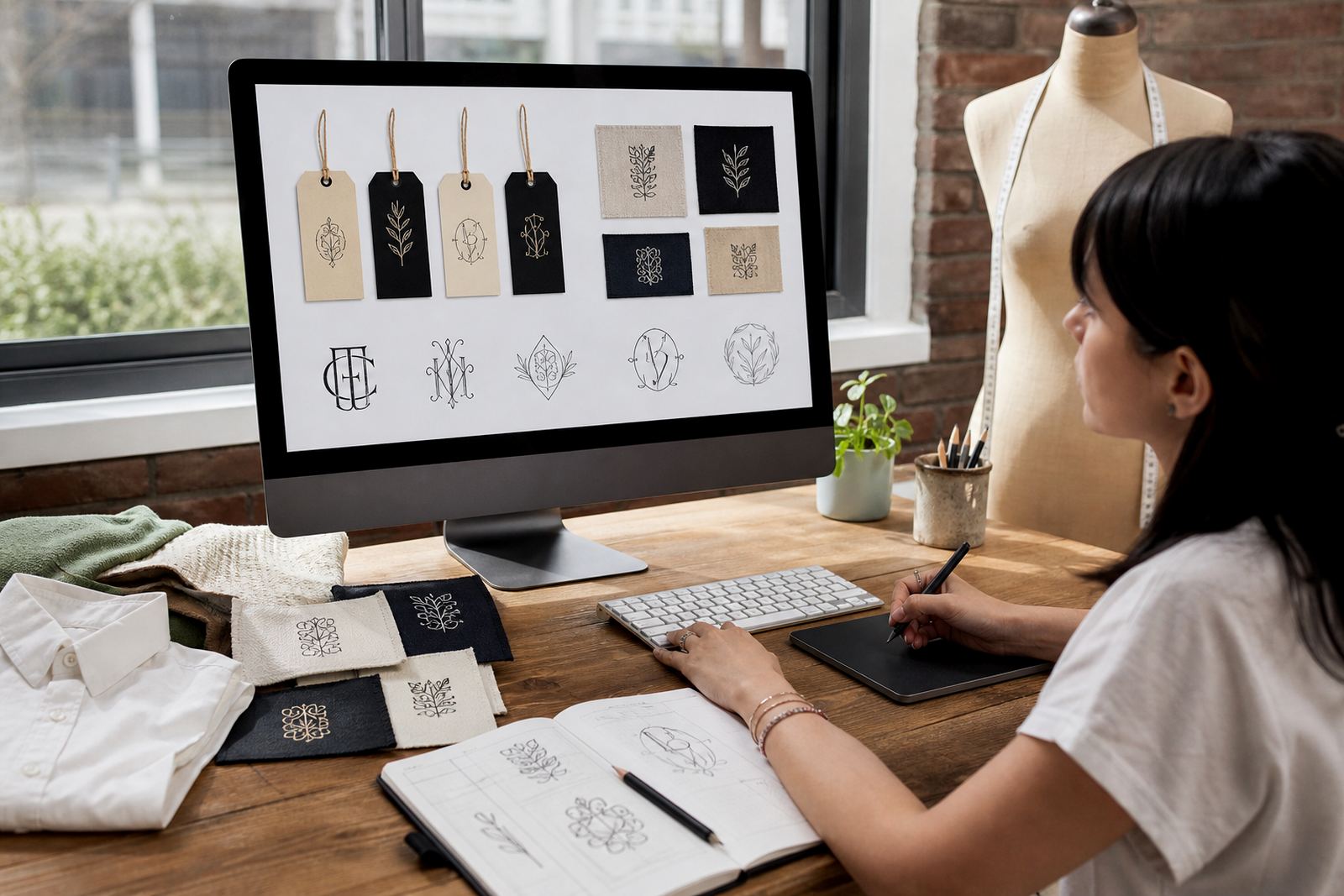
For many businesses, the first job is not a full rebrand. It is a careful redraw so the identity can be used properly across cards, uniforms and signage without looking messy. A small change done well can save a lot of reprint cost later on.
Bitmap tracing versus hand redraw and illustration
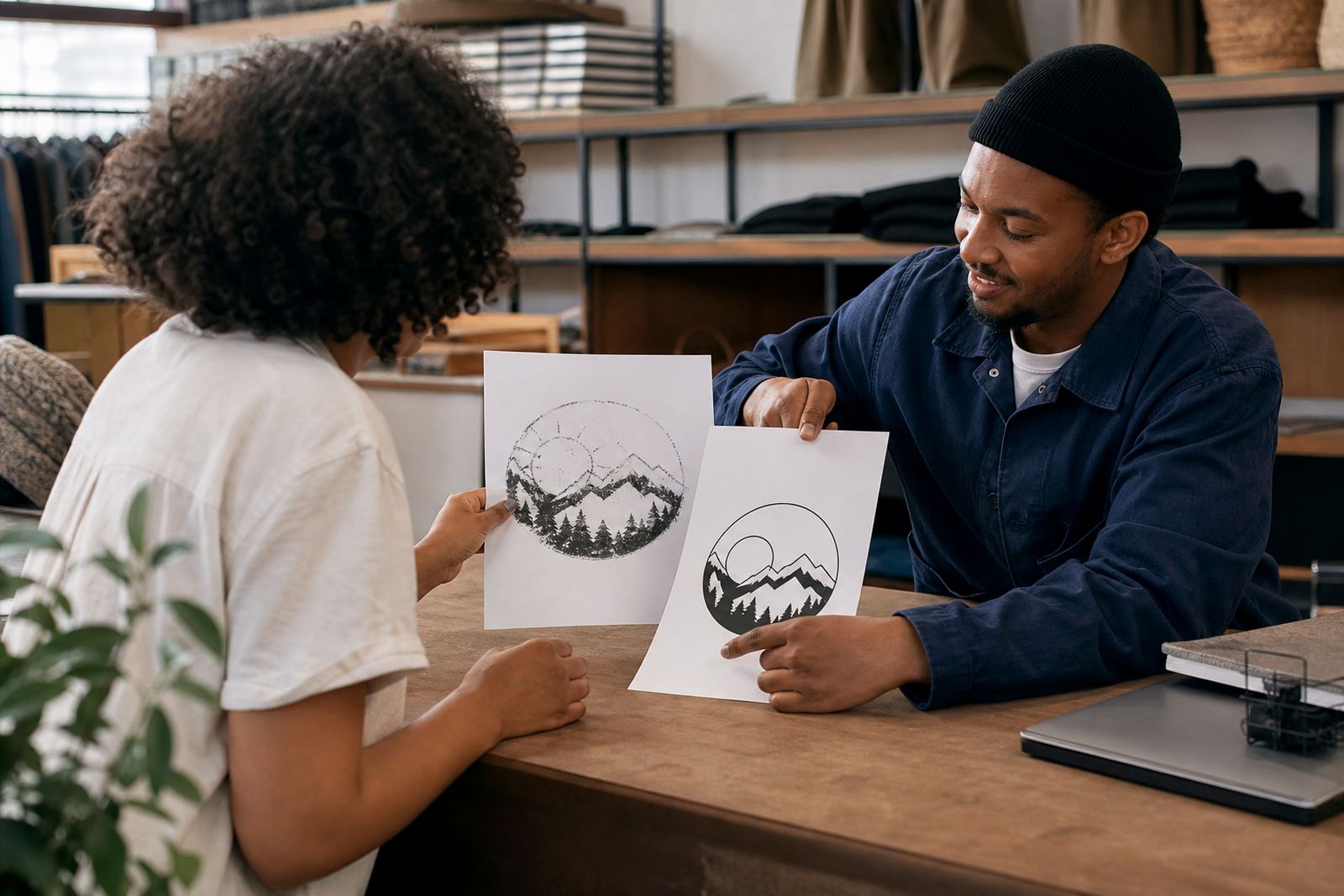
There are two common ways to turn artwork into vector form. Bitmap tracing follows the pixels in a photo or scan and turns them into paths. It can be useful where the source is fairly clean, but it can also carry across rough edges, uneven curves and unwanted speckle from the original file. Hand redraw is slower, but it gives more control over line weight, spacing, symmetry and small details.
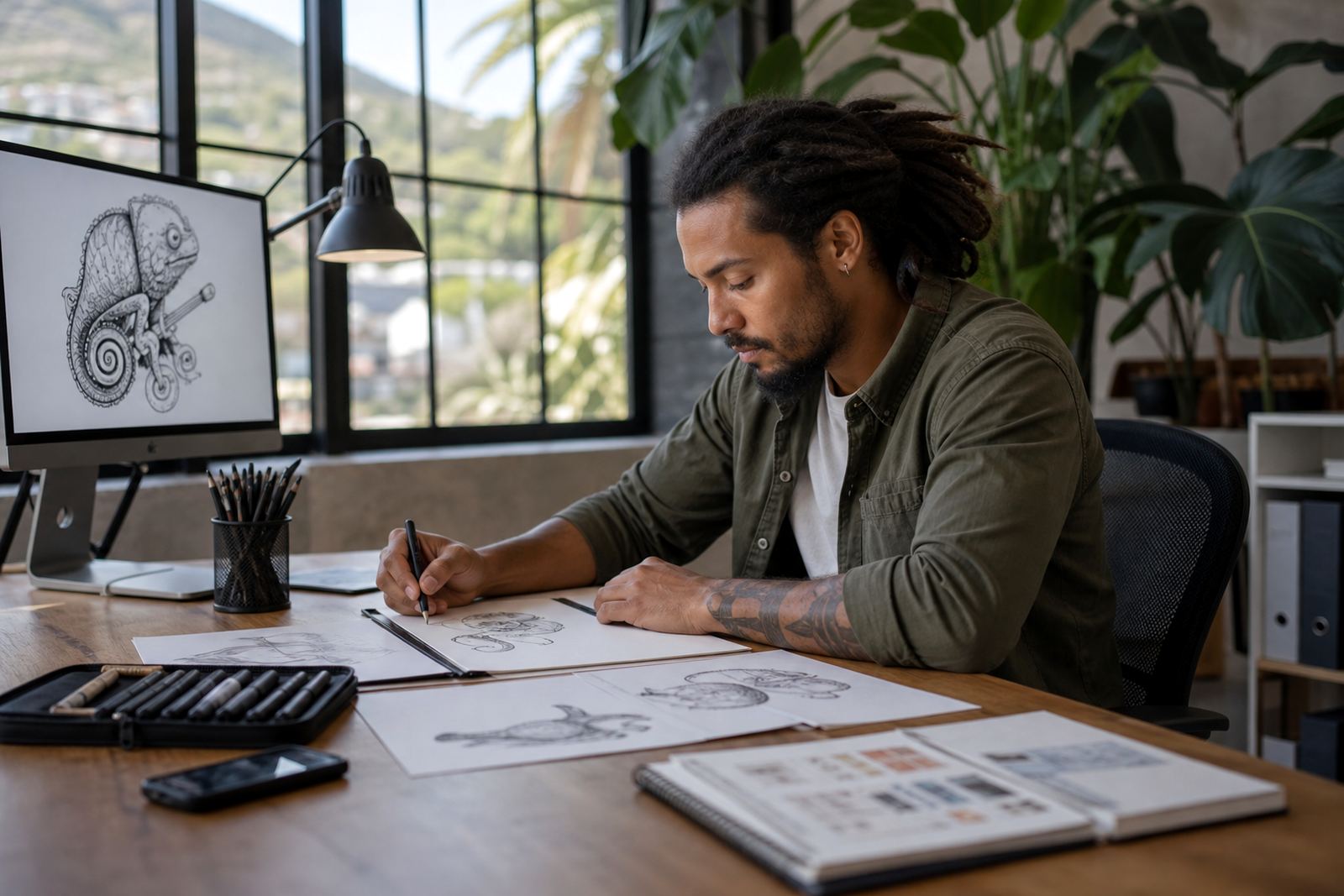
For logos, we usually recommend a hand redraw when the original is important to the brand. That is often the better route for small businesses that need a neat signboard, screen print or embroidery file. For illustration work, we draw by hand as well, because icons, mascots, maps and menu graphics often need a cleaner shape than tracing can give. We can then supply artwork as SVG, EPS, PDF or AI, depending on how your printer, signage shop or designer needs to work with it.
- SVG for web use and flexible digital scaling
- EPS for print and trade production
- PDF for easy sharing and proofing
- AI for editable working artwork
If the artwork is meant for embroidery, signage, laser cutting or sticker production, we also check line thickness and tiny gaps so the file does not fall apart when it is made up.
What small firms usually send through
Most small business jobs come from practical jobs already on the list. A cleaner logo for a frontage sign, a sharper version for uniforms, or a mascot illustration for a social media post. Some clients have a sketch from years ago, some have a scan from an old invoice, and some only have a photo taken off an office wall. We can work from what is usable and advise where the artwork needs simplfying before it goes to print.
Typical work includes custom brand icons, mascot illustration, menu illustration, sticker illustration, badge illustration, line illustration, pattern illustration, map illustration and social graphics. If you are opening in Stellenbosch, running a food truck in Durban, or updating a trades business in Pretoria, the goal is the same: give you files that are tidy and practical for everyday use.
- Frontage signs and shop fascias
- Business cards, letterheads and invoices
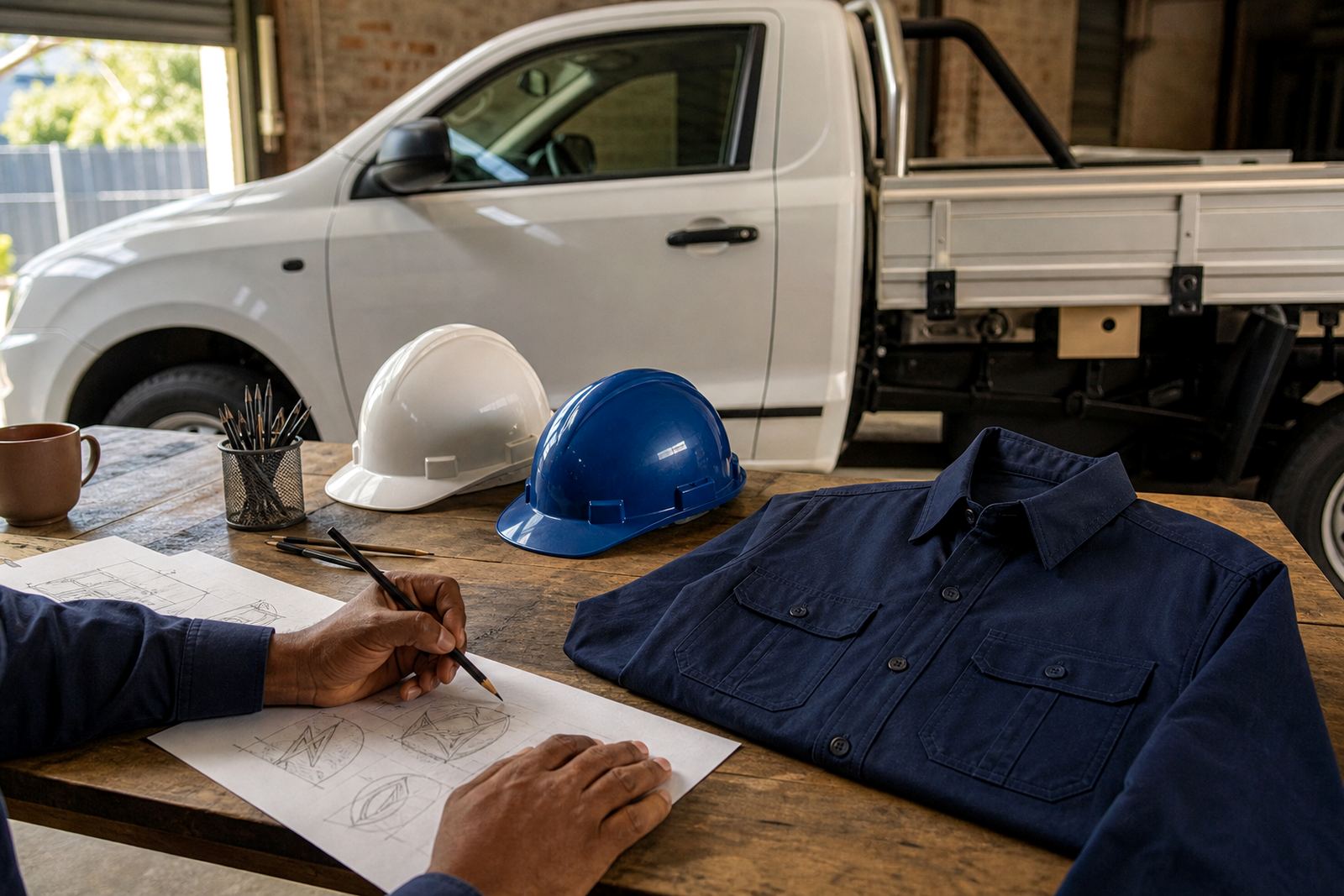
- Uniform chest marks and caps
- Vehicle decals and job-site boards
- Online profile images and social headers
We also help with artwork that has to sit inside a limited shape, like a round sticker, a square profile image or a narrow label. That means planning the layout before the final export, so no important detail gets cut off.
Layout advice before you approve the redraw
Small businesses often need their logo to work in more than one place at once. A signboard wants bold shapes. A uniform wants a simpler version. A website banner may need extra spacing. Good planning means setting up a main logo, a one-colour version and a small size version that stays readable when printed or stitched.
We usually suggest checking these points before approving the final file: the spacing around the logo, whether the small text can still be read, whether the colours still work in black and white, and whether any thin lines are too delicate for the intended use. If the logo has a slogan, it may need a separate lockup for small formats. That keeps the main mark clear and stops the copy from getting cramped.
- Keep one master version for large print and signage
- Ask for a simplified version for uniforms and small labels
- Check colour use for CMYK, spot colour or single colour printing
- Make sure the file can be shared with your printer without extra cleanup
In coastal areas like Cape Town and Port Elizabeth, we also think about wear and moisture. For outdoor use, a file that is neat on screen still needs to be clear enough for vinyl, UV print or paint masks, especially where sea air and sun can test the finish.
Common mistakes that cost small businesses money
One of the biggest mistakes is using a low resolution image for a new sign or brochure. It might look fine on a phone, but it becomes rough when enlarged. Another common issue is sending a logo that has already been stretched, compressed or cropped in a message app. By the time it reaches a printer, the original proportions are gone and the result can look uneven.
Another problem is asking for every version to do the same job. A logo that looks good on a website may not work on embroidery, and a detailed illustration may not be legible on a tiny sticker. It is better to have the right file for each use, even if that means a few variants. We also see rushed jobs where the owner wants the artwork before checking who owns the original design. That can create avoidable delay. If the artwork is not yours, or you do not have permission to use it, we cannot proceed.
Small businesses usually move faster when one person is assigned to say yes or no on the final artwork.
Budget ranges for small business redraws in Rand
Budget depends on how much cleanup is needed, how many versions you want, and whether the job is a simple redraw or a full hand drawn illustration. A very basic logo redraw with clean vector output may sit in the lower end of the range. If the logo has fine detail, multiple colour versions, icon variants or accompanying illustration work, the cost goes up in steps. We do not publish fixed prices because every file starts in a different state.
As a general guide, small businesses often plan for a few hundred Rand for a straightforward redraw and into the low thousands for a more detailed identity pack with extra formats and versions. Packaging art, mascot work, map illustration and menu graphics usually need more time than a plain word mark. If you need several deliverables for signs, cards, uniforms and digital profiles, it is wise to budget for the full set rather than only the main logo.
We work with businesses across Johannesburg, Cape Town, Durban, Pretoria and Bloemfontein, and the practical approach is the same wherever you are based: send the source art, explain where it will be used, and ask for the file types your printer or supplier needs. That keeps the work focused and avoids paying twice for fixes later on.