When a retailer needs a cleaner logo file
A lot of retail work starts with a logo that was saved from a screenshot, pulled from social media, or exported years ago in a low resolution bitmap. That can work on a small screen, but once it goes onto a hanging board, a till slip, a paper bag or a large window graphic, the edges soften and the lettering starts to look rough. For retailers, that is a common problem because the same logo has to work across packaging, signage, price cards and campaign artwork.
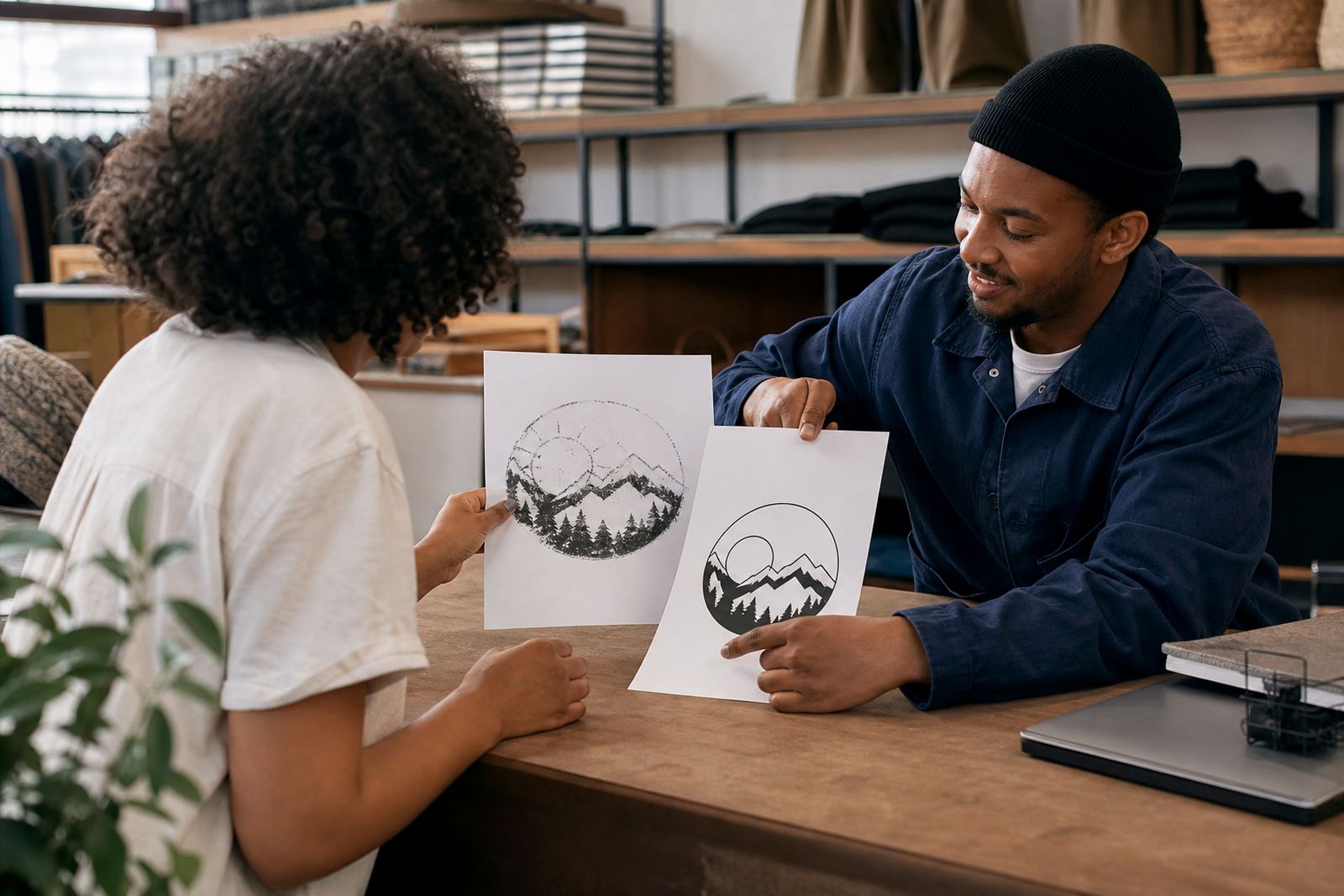
We redraw logos so the artwork is built properly for print and cut work. If the original file is unavailable or too poor to use, we can recreate the mark by hand using the shapes, spacing and letterforms as a guide. Where the logo is clear enough, bitmap tracing can help with simple shapes, but many retail marks need a manual redraw to get the curves, joins and proportions right. A hand redraw also gives more control over small details such as fine lines, corner weights and the spacing around icons and text.
- Use SVG for web and flexible digital use
- Use EPS or AI for print and production handover
- Use PDF for proofs, approval sets and simple sharing
- Keep master artwork in vector format for scaling without loss
Typical retail items that need vector artwork
Retailers usually need artwork that can move from one production method to another without changing the look. One week the logo goes onto a sticker sheet, the next it is needed for a shopfront sign, then it may appear on carrier bags, shelf talkers, menu boards or a seasonal campaign poster. In humid coastal areas like Cape Town, clear vector artwork also helps when printers need to compensate for different substrate finishes and the artwork must stay crisp on coated and uncoated stock.
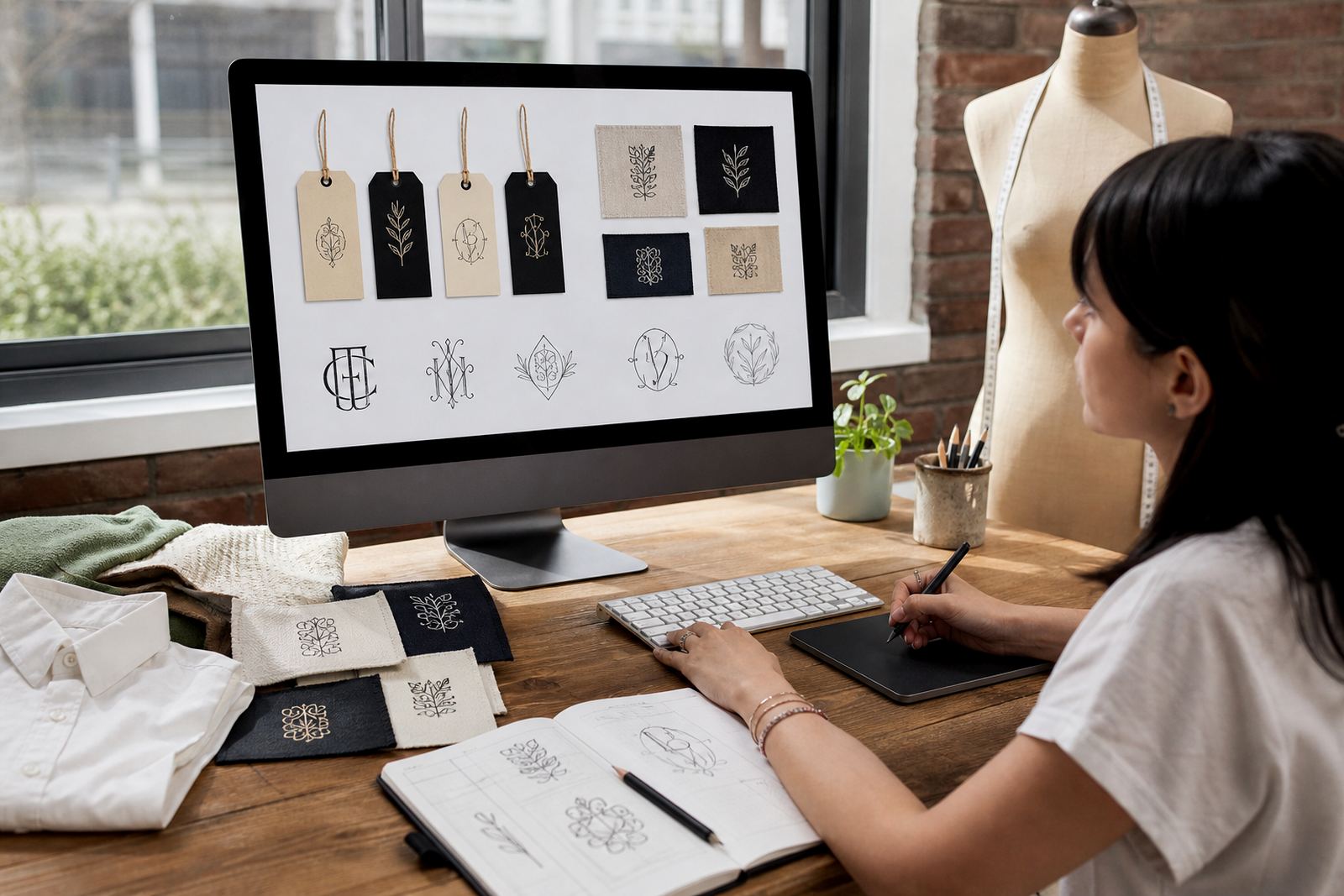
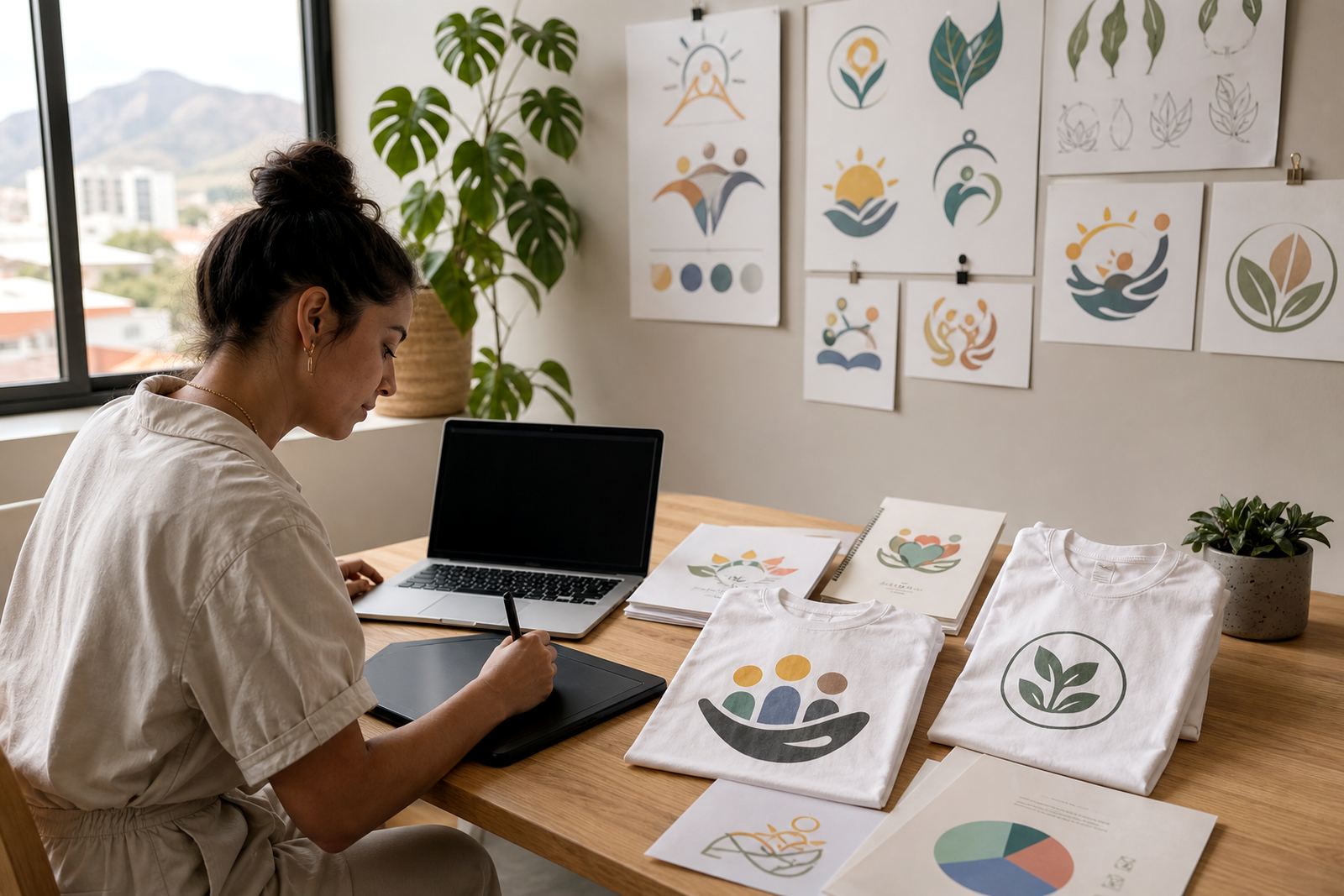
We also create hand-drawn vector illustrations for stores that want a more personal look. That can include custom brand icons, badge illustrations, pattern artwork, scene illustrations, line illustrations and product style graphics for labels and promotions. For retailers selling food, gifts, homeware or clothing, these elements can give the brand a consistent visual language across the whole store.
- Labels and swing tags
- Shopping bags and tissue wrap
- Window vinyl, fascia signs and in-store boards
- Campaign graphics for flyers, social posts and point-of-sale material
- Packaging illustration for limited editions or seasonal runs
How we plan the artwork before any redraw starts
Good retail artwork begins with practical use. A logo for a shop sign has different needs to a logo for a small label, and a pattern for wrapping paper needs more repeat logic than a social media icon. We look at where the artwork will be printed, the size it must hold, and whether it needs to be cut, embossed, foiled or screened. That planning step saves a lot of trouble later because it avoids files that look fine on screen but fail on press.
We also check the source material carefully. If you send a file, you should own it or have the rights to use it. That applies to logos, illustrations, fonts and any artwork included in the brief. If the source is low quality, we may recommend a full redraw rather than a trace, especially if the retailer wants sharp detail on a small pack or if the original artwork has been stretched, compressed or badly compressed over time.
- Confirm the final use first: sign, label, bag, menu or social graphic
- Check colours for print and digital use
- Allow space for barcodes, legal copy and price blocks
- Keep line weights strong enough for small format printing
Common mistakes retailers make with logo files
One of the most common mistakes is using a bitmap that has been enlarged too many times. Another is sending a logo in a format that cannot be edited properly, which makes colour correction and layout work slower. Some retailers also mix old and new versions of a logo across different branches, so the sign in one store looks different from the packaging in another. That weakens the brand and creates extra rework when new stock arrives.
Another issue is expecting one file to do every job. A logo that works on a black price tag may not work on a pale bag, and a detailed illustration might need a simplified version for embroidery or small sticker use. We help retailers separate master artwork from production artwork so the right version goes to the right supplier. Zanele and the client services team often flag these issues early, which helps avoid delays with printers and sign makers.
For stores with multiple branches, it helps to keep a simple artwork set with named files, clear versions and agreed colour references. That is particularly useful when a rollout is being done across Cape Town, Johannesburg and Durban at the same time, because different suppliers may need different file types and proof sets.
Budget ranges for retail redraws and illustration work
Retail budgets usually depend on how much reconstruction is needed. A straightforward logo redraw from a clear sample will sit in a lower range than a complex hand-drawn illustration or a full retail graphics pack. If the brief includes several artwork types, such as a logo, badge, pattern and social graphics, the scope increases and the file preparation takes longer. The final budget in Rand depends on complexity, number of revisions and how many final formats are needed.
As a general guide, simple redraw work may suit a smaller budget, while a more detailed illustration set, packaging artwork or a multi-item retail rollout will need a wider budget range. We keep the process practical and no-nonsense, with each stage set out before work starts. That way the retailer knows what is being redrawn, what is being illustrated, and which output files will be supplied for print, web and production. No one wants to discover at the last minute that a file needs extra cleanup before it can be used on a batch of bags or an instore poster run.
- Single logo redraws are usually simpler and quicker
- Multiple artwork items need more planning and file checks
- Special print finishes can affect setup time and proofing
- Retail rollouts across several branches often need version control
What to send us for a retail artwork brief
To get started, send the clearest source artwork you have, plus a short note on where the file will be used. If you have old packaging, a photo of a sign, a scan of a label or a rough sketch, that can all help. For retailers, it also helps to say whether the artwork needs to suit indoor signage, outdoor use, packaging, social graphics or a mixed set of applications. The more exact the use, the better the redraw can be matched to the final print method.
We work from Observatory in Cape Town and handle retail artwork for clients across South Africa, including Stellenbosch, Paarl and Port Elizabeth. Luyanda Mthembu leads the studio, with Ayesha Mafokeng on vector work, Pieter Skosana on illustration, and Megan Khoza on quality control. If your shop needs cleaner logo files or fresh illustrated artwork for labels and campaign graphics, the enquiry form on our contact page is the best place to start.