What the Mowbray brief called for
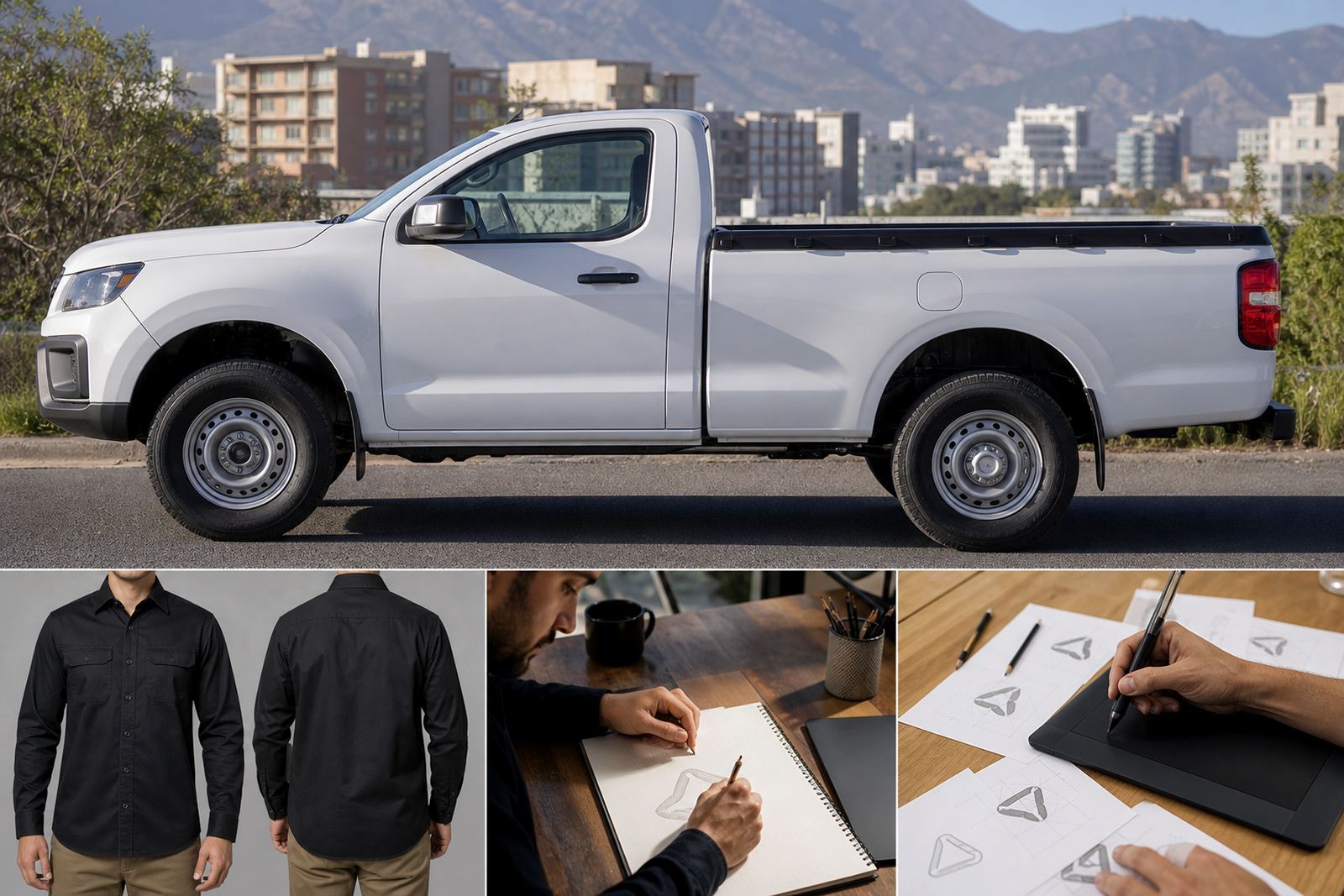
The client was a small building contractor in Mowbray, Cape Town, with a logo that had been used in different forms over the years. On a site board it looked acceptable enough, but once it had to sit on bakkie doors, trailer panels and work shirts the weak lines, uneven spacing and fuzzy edges became obvious. The brief was simple: keep the identity recognisable, tidy it up properly, and supply artwork that could be used by a sign shop, garment supplier and print house without extra guesswork.
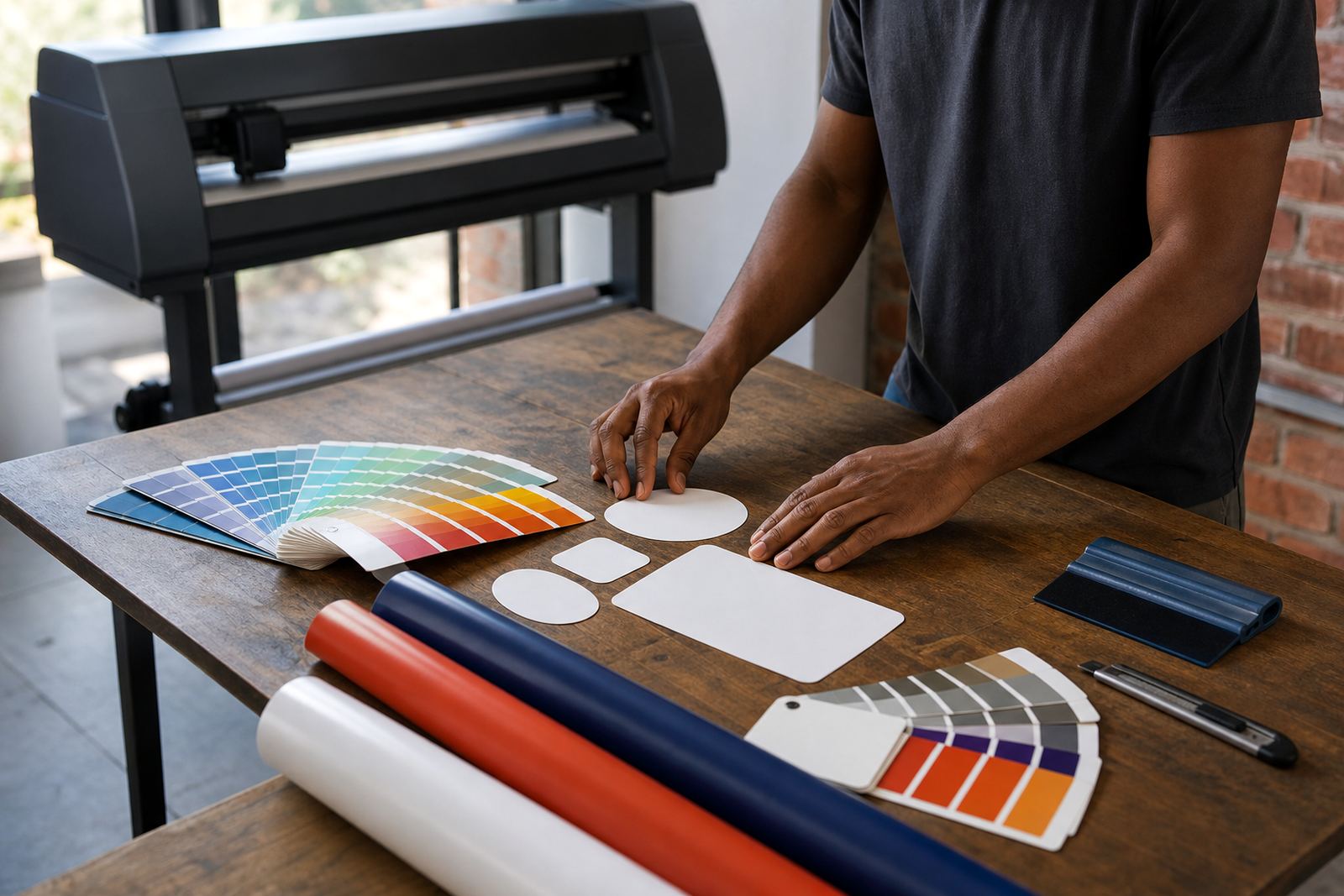
Because the logo had to work in the real world, we looked at viewing distance, scale, vinyl cutting limits and embroidery stitch movement. A lot of marks that look fine on a screen fall apart once they are reduced to 60 mm wide or trimmed for a door panel. This one needed a cleaner silhouette, stronger line weights and balanced letter spacing, not a quick bitmap trace that would just carry all the flaws forward.
- Client type: contractor in Mowbray, Cape Town
- Use cases: vehicle decals, uniforms, signage and document headers
- Goal: preserve brand recognition while making the logo production-ready
Why we chose a hand redraw instead of tracing
When clients send us an old logo, we first check whether the source is a crisp vector, a low-resolution bitmap, a scan from a vehicle panel or something exported many times over. For this project the artwork was a mixed bag: a rough image with bent shapes, soft edges and a few details that no longer made sense at small sizes. We could have traced it quickly, but that would have copied every wobble and made the result harder to use.
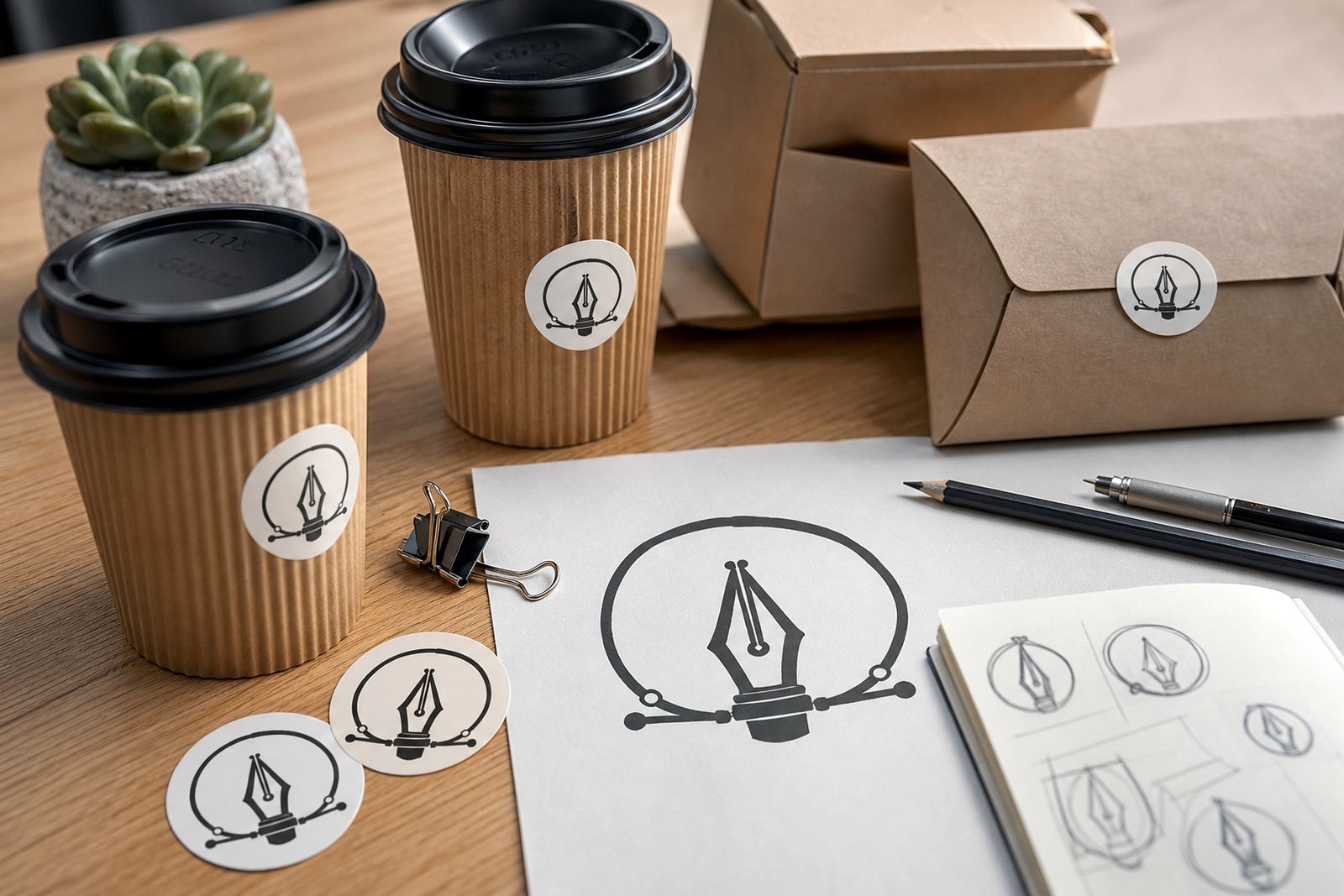
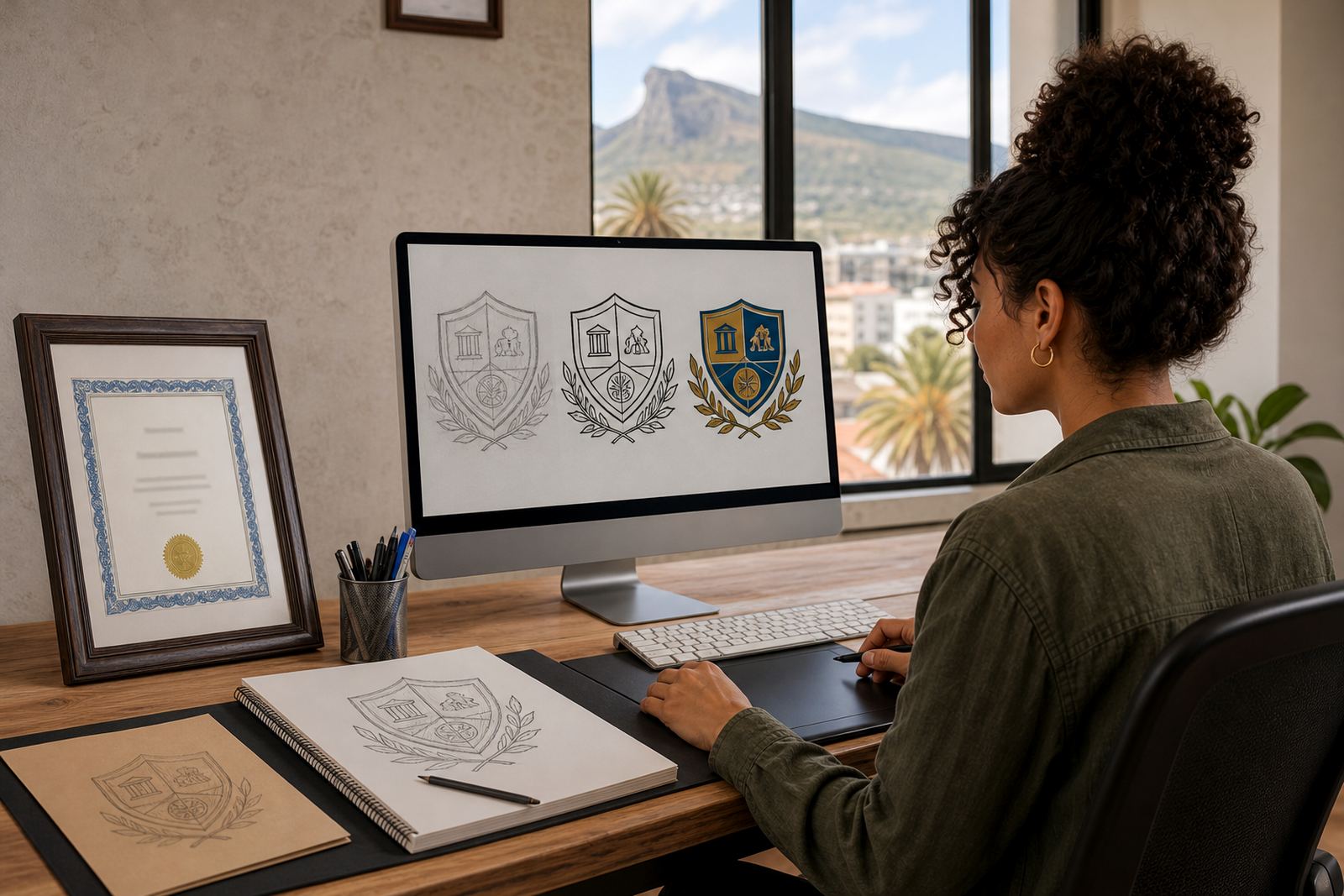
So we redrew the logo by hand in vector form. That meant rebuilding the shapes, setting the proportions again and cleaning the type so the mark would sit properly on a decal cut from coloured film. It also let us make practical choices for embroidery and small print, where very thin parts can break down or look patchy. The end result kept the same overall feel but it was far better behaved for production.
- Hand redraw for cleaner geometry and better control
- Vector artwork suited to scaling without quality loss
- Reduced fine detail where it would not reproduce well
Artwork supplied for print, vinyl and digital use
We supplied the logo in file formats commonly requested by South African suppliers: SVG, EPS, PDF and AI. That gave the client options for signwriting, laser or vinyl cutting, stationery and future artwork changes. We also supplied a flattened PDF preview so anyone handling the job could see the correct layout at a glance, even if they were not opening a design application.
The files were built with practical production in mind. Colours were separated cleanly, outlines were checked for overlapping points and the final vector paths were kept tidy so the logo could be opened, edited and scaled without headaches. For vehicle decals, clarity matters more than cleverness. A logo that reads well from the kerb and survives washing, sunlight and coastal humidity is worth far more than one that only looks good on screen.
- Formats supplied: SVG, EPS, PDF and AI
- Prepared for decals, uniforms, signage and office artwork
- Built for easy handover to print and production suppliers
Project timeline and working approach
This job ran over two weeks from first brief to final delivery. In week one we reviewed the source artwork, mapped the problem areas and produced a first redraw. After that the client checked the overall balance and asked for a couple of refinements to line thickness and spacing. In week two we finalised the artwork, prepared the output files and checked the logo in different sizes to make sure it still held up when reduced.
Our process is calm and practical. We ask for the source art, confirm what the client actually has rights to use, then match the redraw method to the job. Some marks need careful vector tracing because the source is already sound. Others need a full hand rebuild with illustration work added in. This one needed the second approach, and that saved time later because there was less faffing about when the supplier opened the files.
- Week 1: review, redraw draft and client feedback
- Week 2: refinements, export set and final quality check
- Process focused on production use rather than screen-only appearance
Results on the road and on the workwear
Once the updated logo was applied to the vehicle decals and uniforms, the change was immediate. The mark read more cleanly from a distance, the lettering no longer looked pinched, and the simplified shapes gave the whole brand a neater, more confident presence. For a contractor moving between sites in Cape Town, that matters. A muddy bakkie or a shirt washed many times still needs to look consistent.
The client also gained flexibility. Because the artwork was properly vectorised, the same logo could be used for future signage, invoice headers, stickers and social graphics without asking anyone to redraw it again. That is where the value sits: one well-prepared master file can support a business for years, instead of needing patch-up fixes every time a new supplier is involved.
- Cleaner appearance on decals and uniforms
- Better legibility at small and medium sizes
- Reusable master artwork for future marketing and print needs
What we would do for a similar job
If this same type of project came in from Durban, Pretoria or Bloemfontein, we would approach it in exactly the same way. We would first check the client's rights to the artwork and then decide whether the job needs bitmap tracing, a careful vector redraw or a full hand-drawn illustration. For a contractor logo with rough edges, a hand redraw is usually the safest route because it gives control over every line and keeps the logo practical for real use.
We would also keep the production list tight from the start. That means asking where the logo will appear, how small it has to go, whether it will be cut, printed or embroidered, and whether any tiny details need to be removed. It saves time later and helps avoid the sort of after-the-fact changes that cost money and cause delays. A neat file set, a clear brief and a proper check before handover make all the difference.
- Confirm usage rights before any redraw starts
- Match the method to the final output, not just the source file
- Keep small-size legibility in mind from the outset
Key facts
| Project name | Mowbray Vehicle Logo |
|---|---|
| Client type | Contractor in Mowbray, Cape Town |
| Service | Hand redraw and vector logo preparation |
| Output formats | SVG, EPS, PDF and AI |
| Timeline | 2 weeks |
| Primary uses | Vehicle decals, uniforms, signage and digital use |