Why a printed proof matters before anything goes to press
When a logo moves from a screen to paper, sticker vinyl, board or packaging, it can shift in ways that are easy to miss online. Fine lines may fill in, letter spacing may tighten, and pale tones can print darker than expected. A printed proof gives you a real-world check before the full run starts, which is especially useful when the logo will be used across branches, delivery vehicles or coastal packaging exposed to humidity.
We work with businesses from Observatory in Cape Town through Johannesburg, Durban, Pretoria and Bloemfontein, so we see the same issue often: a file that looks fine on a laptop can behave differently on a press sheet or a cutter. Proofing helps catch those differences while there is still time to correct them.
- Checks fine lines, small text and thin outlines
- Shows how colour reads on the chosen stock
- Highlights spacing issues around icons and lettering
- Helps avoid waste from a bad first run
Bitmap tracing and hand redraw are not the same job
Some logos arrive as low-resolution bitmap files that need tracing. Tracing can be useful when the source artwork is clean enough, but it still carries the flaws of the original image. Jagged edges, soft corners and uneven curves can remain in the traced result, especially when the source is small or blurry.
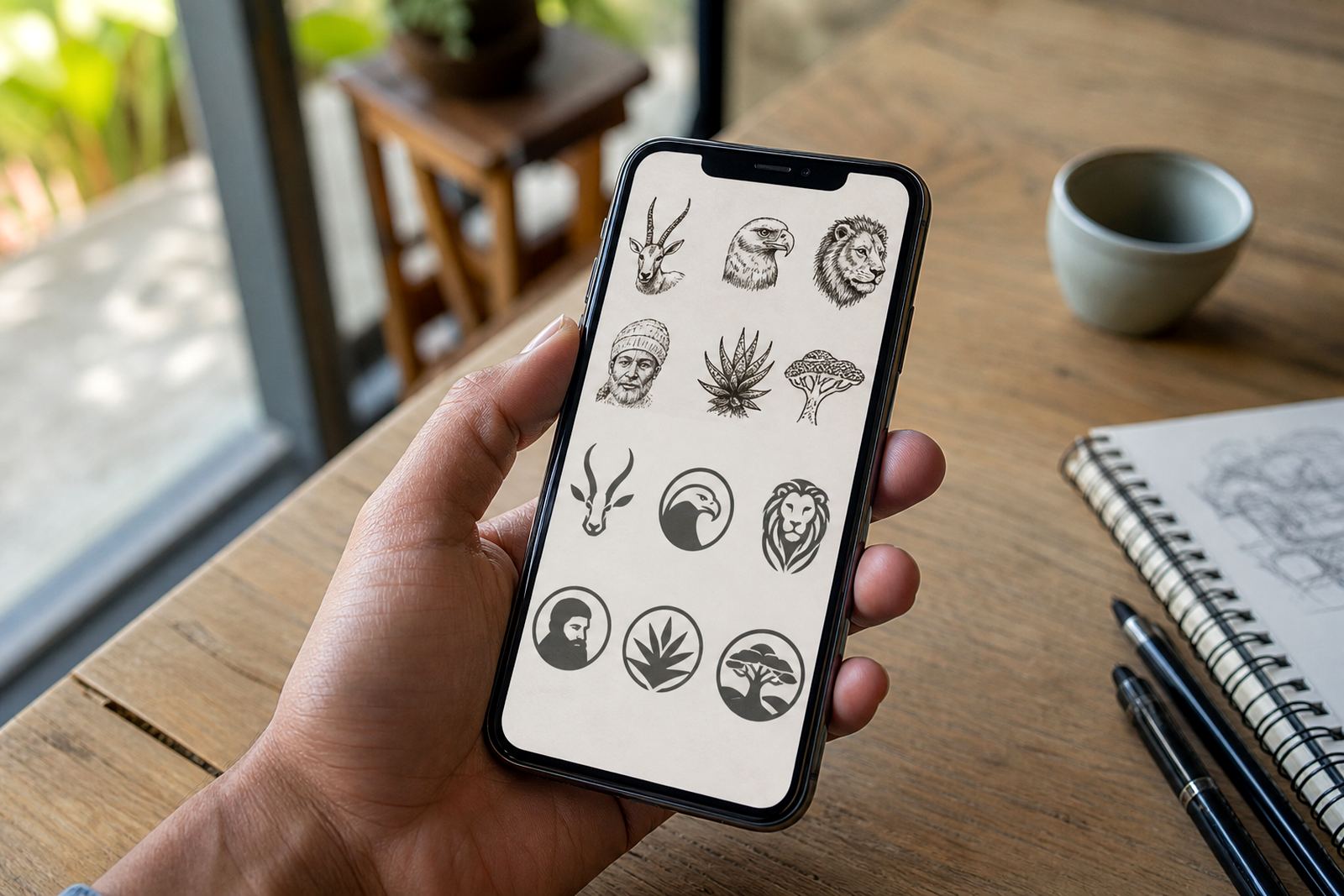
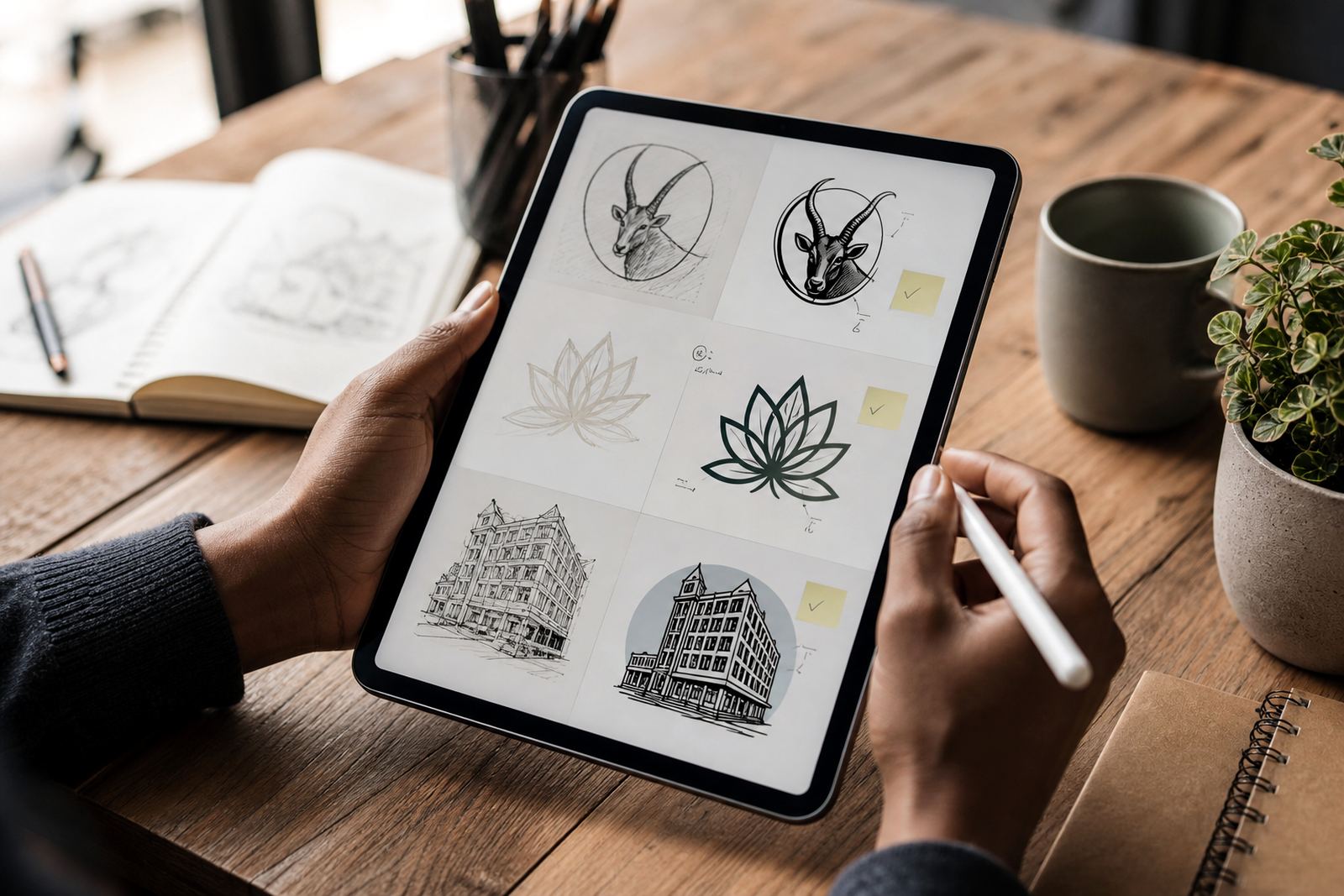
A hand redraw is different. It gives us a chance to rebuild the mark carefully, adjust line weights and fix awkward joins so the logo prints properly at small and large sizes. That matters for labels, embossing, laser cutting and municipal signage where detail needs to hold up.
- Tracing is suited to simple source artwork with clear edges
- Hand redraw is better for damaged, tiny or poor-quality originals
- Illustration work can add cleaner curves and stronger spacing
- Final files can be prepared for print, web and cutting use
What we check on a proof sheet
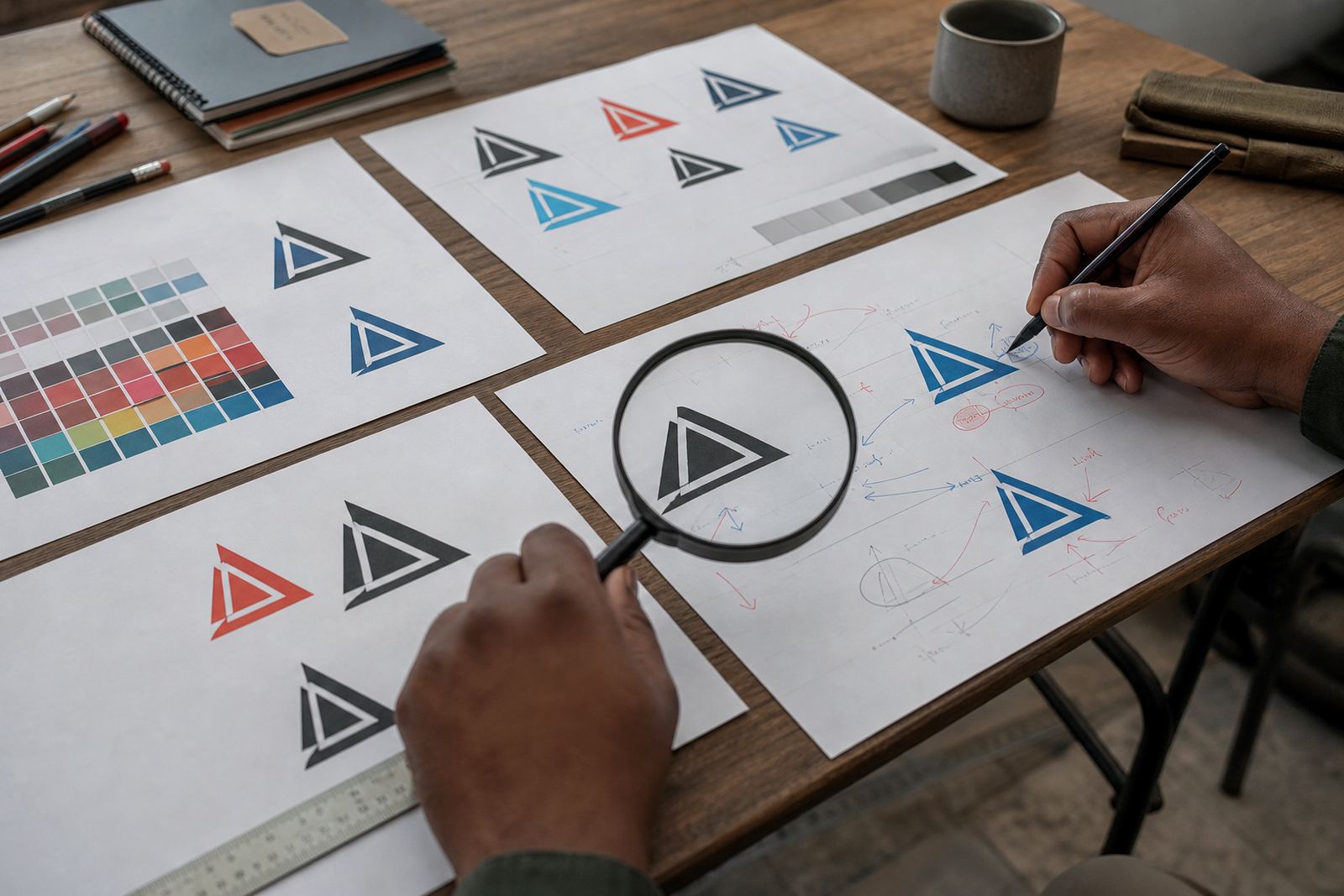
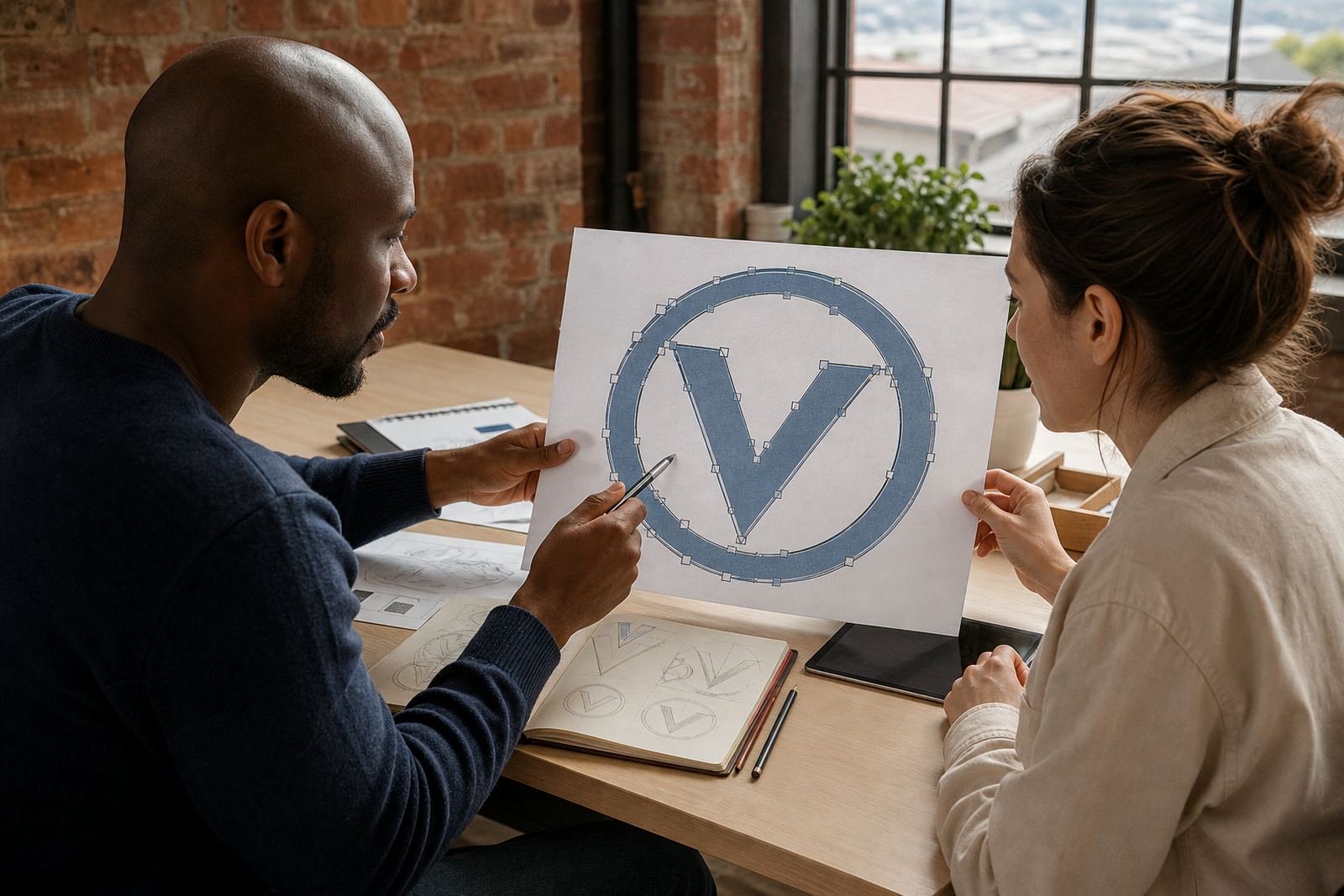
A proof is not just a formality. It is the stage where line quality, scale and colour are compared against the intended use. If a logo has very fine strokes, those may disappear on uncoated paper or on a dark substrate. If the lettering is packed too tightly, it can close up once printed. If the artwork uses several colour spaces, the proof shows what really happens on the chosen stock.
We usually look at the mark as a whole and in detail, from the spacing inside letterforms to the edges of icons and illustration elements. This is where issues show up that are hard to see on screen but very obvious in print.
- Line thickness and corner clarity
- Letter spacing and alignment
- Colour contrast on light and dark stock
- Small details that may vanish at reduced size
- Registration issues where multiple colours meet
Why South African print conditions change the result
Local conditions matter. A logo printed for a Cape Town coastal client may behave differently to one used in Pretoria heat or on Durban packaging where moisture is a factor. Cardboard can warp, stickers can lift at the edges, and some inks dry differently depending on the stock and the environment.
We often advise clients to check proofs against the final use case, not only the artwork itself. A mark that looks tidy on white copy paper may lose impact on kraft packaging, recycled board or a dark label. That is why printproofing is practical, not just neat-looking.
- Coastal humidity can affect paper and adhesive performance
- Dark substrates need stronger contrast
- Matte and gloss finishes change the look of colour
- Delayed production windows make fewer reprints important
What files are useful after proofing
Once a logo has been redrawn and proofed, it should be supplied in the right file formats for the job. Vector files are the mainstay because they scale cleanly without losing edge quality. Common delivery formats include SVG, EPS, PDF and AI, depending on how the artwork will be used by printers, sign makers or internal teams.
That said, file format alone is not enough. The artwork must also be cleanly built, with curves, spacing and colour values set correctly. A tidy proof stage makes the final files easier to use across menus, vehicle graphics, packaging inserts and social graphics without repeated adjustments.
- SVG for web and flexible digital use
- EPS for many print and production workflows
- PDF for easy sharing and print approval
- AI for editable master artwork
A practical example from a Cape Town packaging job
A Stellenbosch food business once sent a logo that looked acceptable on screen, but the print proof showed trouble straight away. The outline was too thin for the carton stock, and the small lettering started to fill in at the size they needed. We redrew the mark by hand, adjusted the spacing and supplied a cleaner vector version for print. The revised proof showed the logo holding its shape properly, so the cartons could go ahead with less risk of smudging or loss of detail.
That sort of fix is common. A proof gives everyone a last look before print, and that one look can save a lot of trouble later on.
- Good for packaging, labels and menus
- Useful when artwork must be resized often
- Helps keep multiple branches consistent
- Reduces the chance of costly reprints