What an AI master file actually is
An AI master file is the working source version of a vector artwork. It keeps the artwork editable, so colours, line weights, shapes and text can be adjusted later without losing quality. For a logo redraw, mascot, icon set or detailed illustration, that editability matters when the brand grows and the same artwork has to fit on business cards, vehicle decals, shop signage, menus and social media posts.
Think of it as the file you keep safe for future use. A flat image like a JPG or PNG can look fine on screen, but it is not ideal if a printer needs a larger version or if a designer needs to alter a section of the artwork. In South Africa, where one business may need a quick label, a township banner and a highway sign in the same month, having editable source files saves time and reduces rework.
When a redraw is better than bitmap tracing
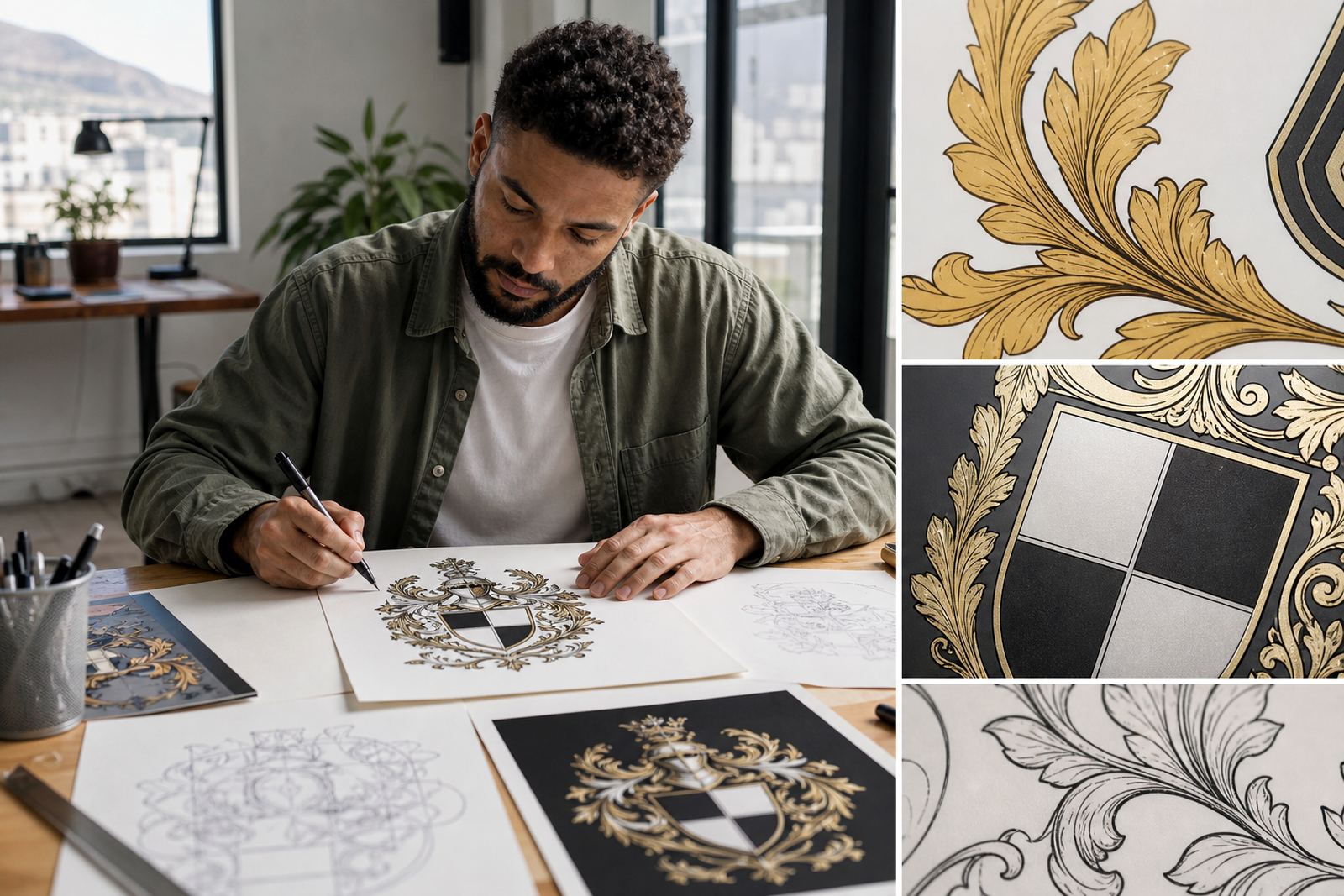
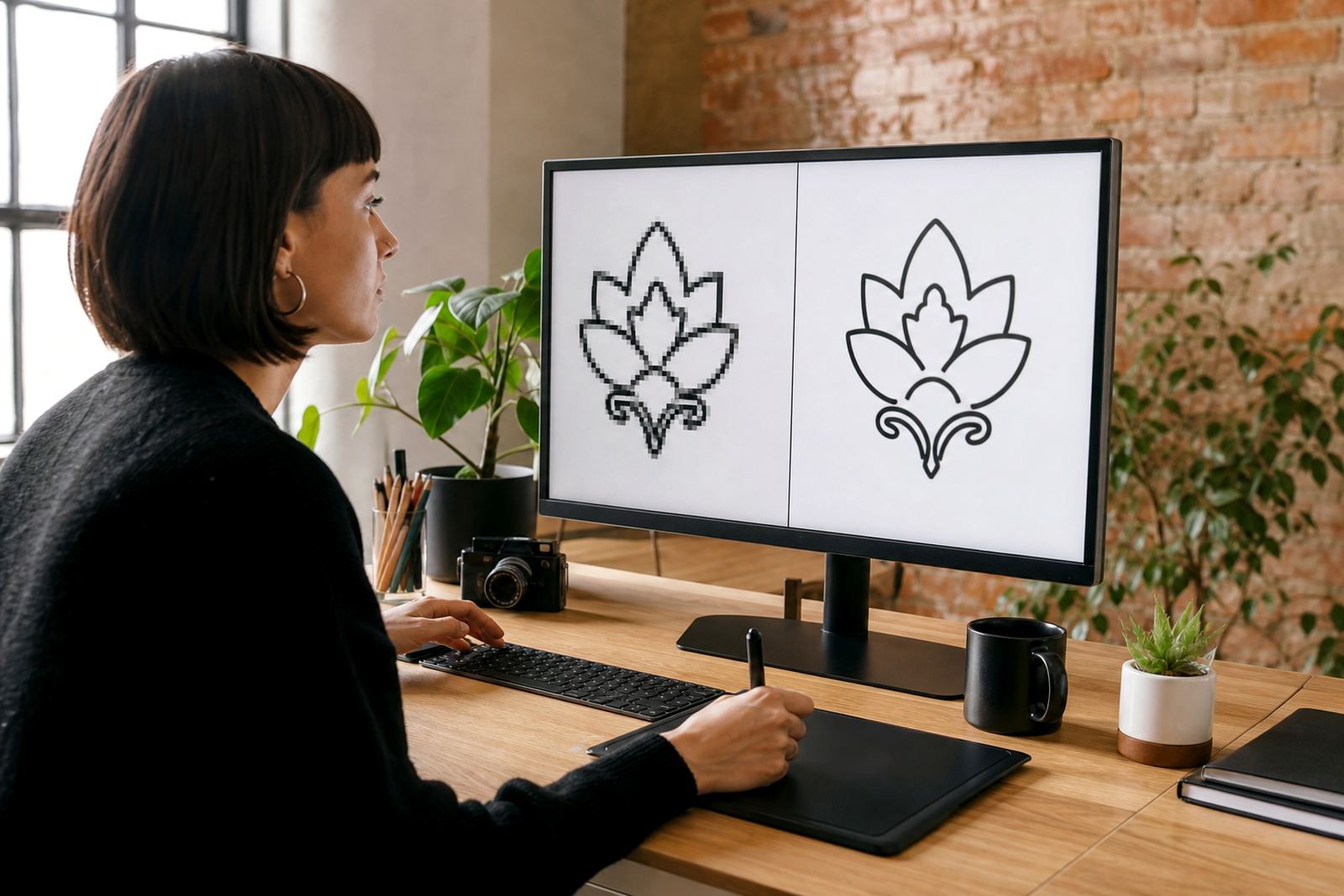
Not every logo should be traced from a bitmap. Bitmap tracing works best when the original is fairly clean and you mainly need a vector version from a low resolution image. A hand redraw is better when the artwork has rough edges, uneven spacing, faded scan marks or details that need proper judgement. That is often the case with older logos, hand-drawn marks, badge shapes and illustrations that were never set up as clean artwork in the first place.
We usually recommend a redraw when the artwork must be accurate and tidy at multiple sizes. A traced file can carry through flaws from the source image, while a redraw lets the artist rebuild the geometry properly. For a business in Observatory, Cape Town sending artwork to a printer in Paarden Eiland or a signage shop in Johannesburg, those small improvements make a real difference.
- Use bitmap tracing for simple, clean originals that only need vector conversion.
- Use hand redraw for worn scans, complex marks or artwork with uneven details.
- Use illustration work when the brand needs a fresh custom image rather than a copy of an existing mark.
Why editable source files save trouble later
Editable source files are useful whenever the artwork will be reused often. If a logo needs a one-colour version for embroidery, a reverse version for dark packaging, or a simplified version for small print, the source file lets the artwork be adjusted properly. It is also helpful when a company changes its trading name, adds a division or needs the same visual style across a series of products.
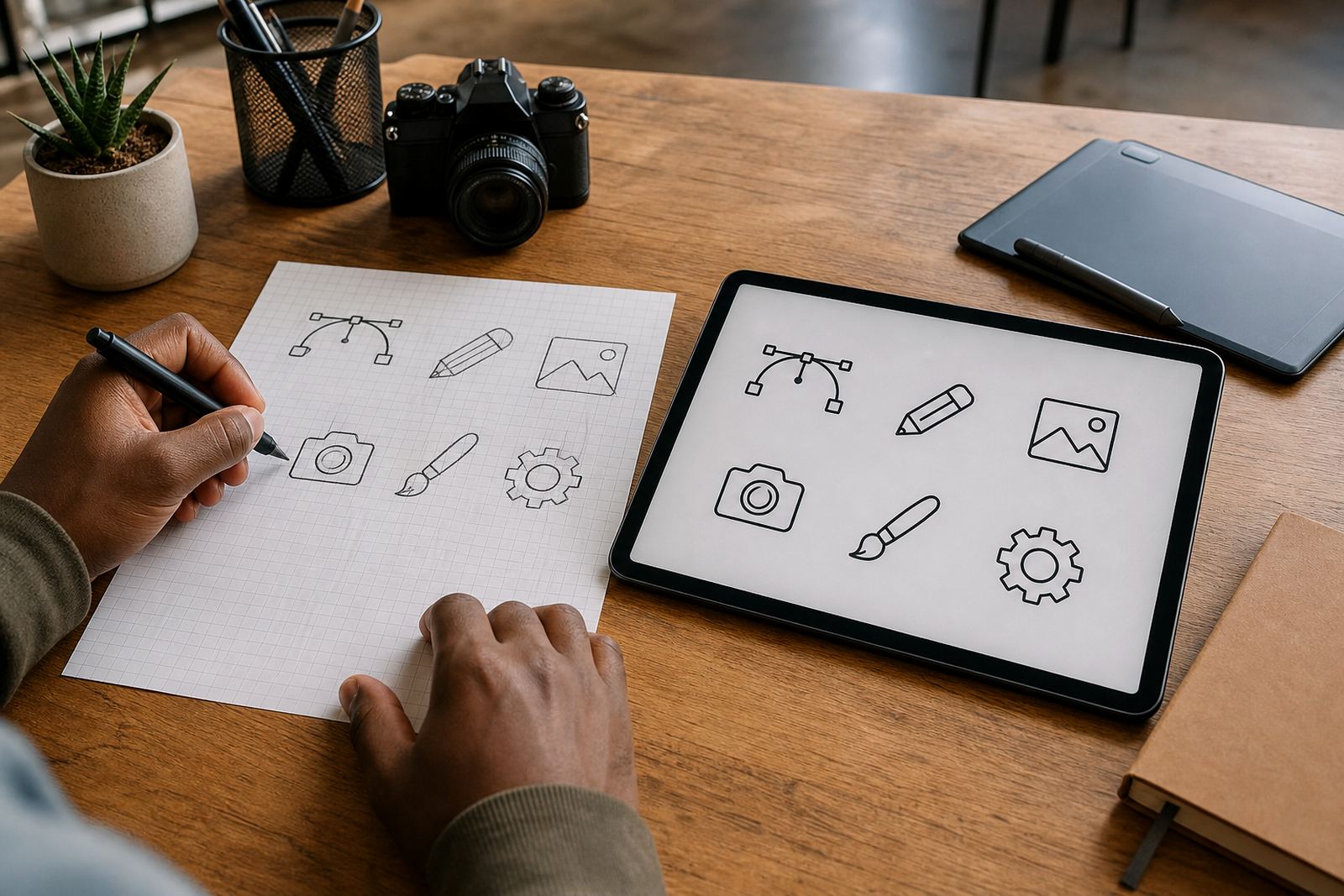
For South African businesses, practical uses come up quickly. A restaurant in Durban may need menu icons in different formats. A property team in Pretoria may want a map illustration for a brochure and a website banner. A manufacturer in Bloemfontein may need the same badge artwork on cartons, labels and product inserts. Without editable files, each new use becomes a fresh problem.
- Keep editable files for logos, icons, badges and repeat-use illustrations.
- Ask for SVG, EPS, PDF and AI files where appropriate.
- Store a clean master and use copies for day-to-day printing or sharing.
Which file format fits which job
Different vector formats suit different uses. SVG is practical for web and screen use because it scales neatly and can stay light. EPS is still useful for some print workflows and older production systems. PDF is handy for sharing proof files and for printers who want a stable file that opens cleanly. AI is the editable master file, useful when future changes are likely. The right handover depends on how the artwork will be used and who will be handling it next.
If a client only needs a one-off print and never plans to edit the artwork, a PDF may be enough. If the logo will be used across packaging, signage and digital channels, the AI file is worth keeping. We often supply more than one format so the artwork can move between a designer, a printer and a sign writer without unnecessary conversion.
Rights, permissions and what you may send
Customers must own the artwork they send, or have permission to use it. That applies to logos, mascots, illustrations, maps, badges, patterns and menu graphics. If the artwork belongs to someone else, it cannot be redrawn or converted without the proper rights. This is especially important when the source material came from a former designer, a contractor, a stock image, or an old social graphic pulled from a hard drive with no paperwork.
Before sending a file, it helps to check who created it, whether the business has full rights, and whether there are any limits on reuse. If the artwork is legally yours, it can usually be worked on in a practical way. If not, it is better to start with a new custom illustration or a fresh logo redraw based on material you are entitled to use.
- Send the clearest version you have, even if it is low resolution.
- Include any old files, scans, notes or colour references that may help.
- Make sure you have the right to use the source artwork before requesting a redraw.
A South African example, from Cape Town to Bloemfontein
A small company in Stellenbosch may start with a logo saved from an old letterhead, then later need it on packaging for a winter product range, a vehicle panel and a social media profile. If the original is fuzzy, the first pass may be a bitmap trace, but a better outcome often comes from a hand redraw. The result is cleaner spacing, sharper curves and a file that can be resized without trouble when the printer asks for a larger version.
In another case, a business in Bloemfontein may want a mascot illustration for a campaign and later need the same character as a sticker, a badge and a banner graphic. If the source art is editable, each version can be prepared properly rather than stretched or cropped until it looks awkward. That is the value of a master file.
When it is worth asking for the master file
Ask for the AI master file when the artwork will be used more than once, when the brand may change, or when different suppliers need different file types. It is also worth asking when the logo contains fine detail, unusual lettering or a hand-drawn illustration that must stay accurate across sizes. If you only need a single use file, the master may not matter as much, but it is still wise to keep it on record.
At Vectorization Studio in Observatory, Cape Town, our team works on logo redraws and custom vector illustrations for businesses across South Africa, including Cape Town, Johannesburg, Durban, Pretoria and Bloemfontein. The practical question is not whether the file sounds technical. It is whether the artwork can still do its job six months from now, when the next print run, sign order or packaging update lands on your table.