Why editable source artwork matters for South African print and digital work
When a logo or illustration is only available as a low-resolution image, it can show jagged edges, soft text and colour shifts as soon as it is enlarged. That becomes a problem on shop signage, vehicle graphics, labels, menus and social graphics, especially when artwork needs to hold up in bright Cape sun, coastal humidity or a busy print run.
Editable source artwork gives you more control. It can be scaled, colour adjusted and separated into parts without starting from scratch each time. For businesses that print in different sizes across Cape Town, Johannesburg, Durban, Pretoria and Bloemfontein, that saves time and keeps your brand looking consistent from a small sticker to a large banner.
Bitmap tracing versus hand redraw: what is the difference?
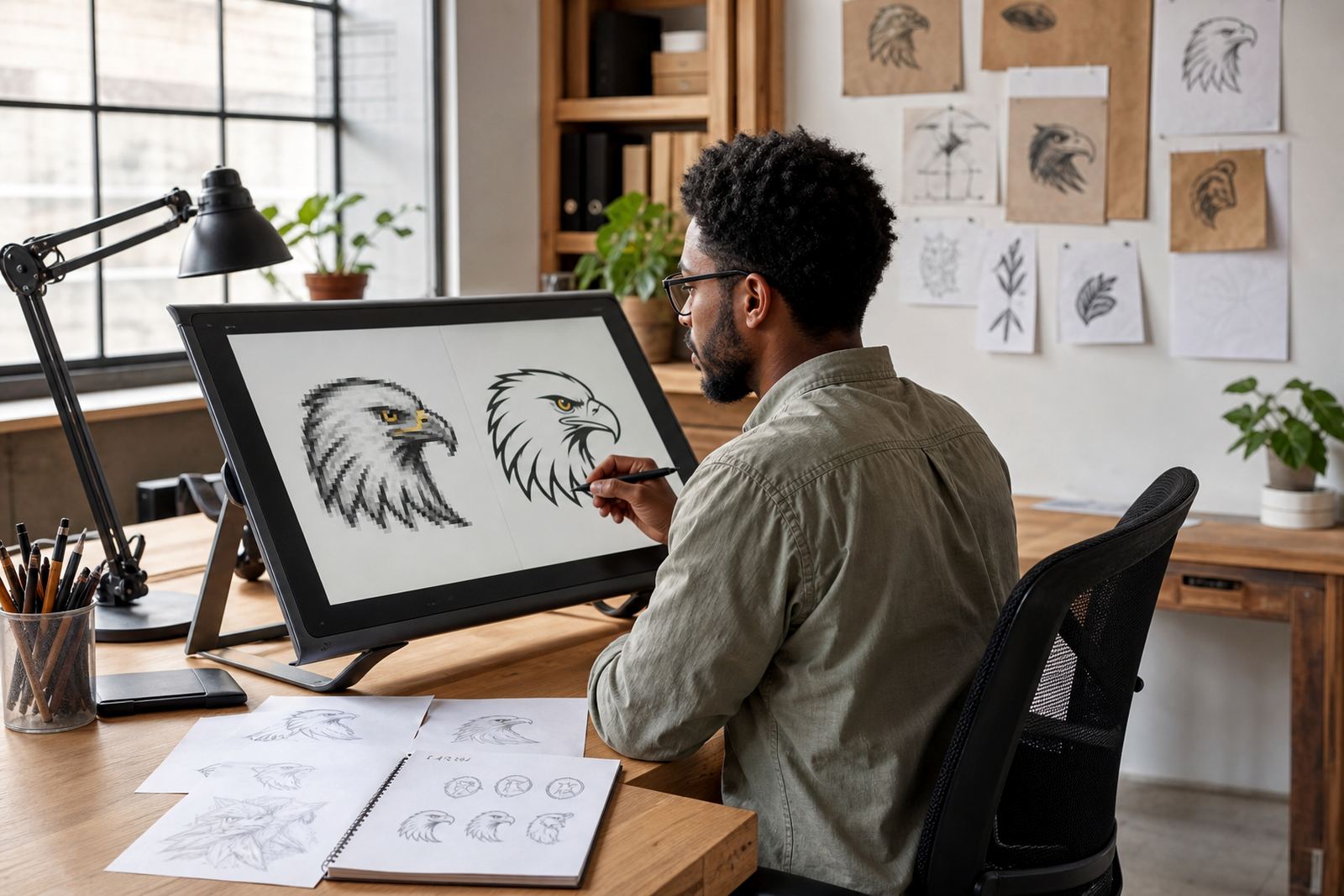
Bitmap tracing starts with an existing raster image, such as a JPG or PNG, and converts its shapes into vector paths. It can work well for simple artwork, but if the source is blurred, pixelated or full of rough edges, those flaws often carry through. It is a practical option for basic marks and older files that still need a cleaner digital version.
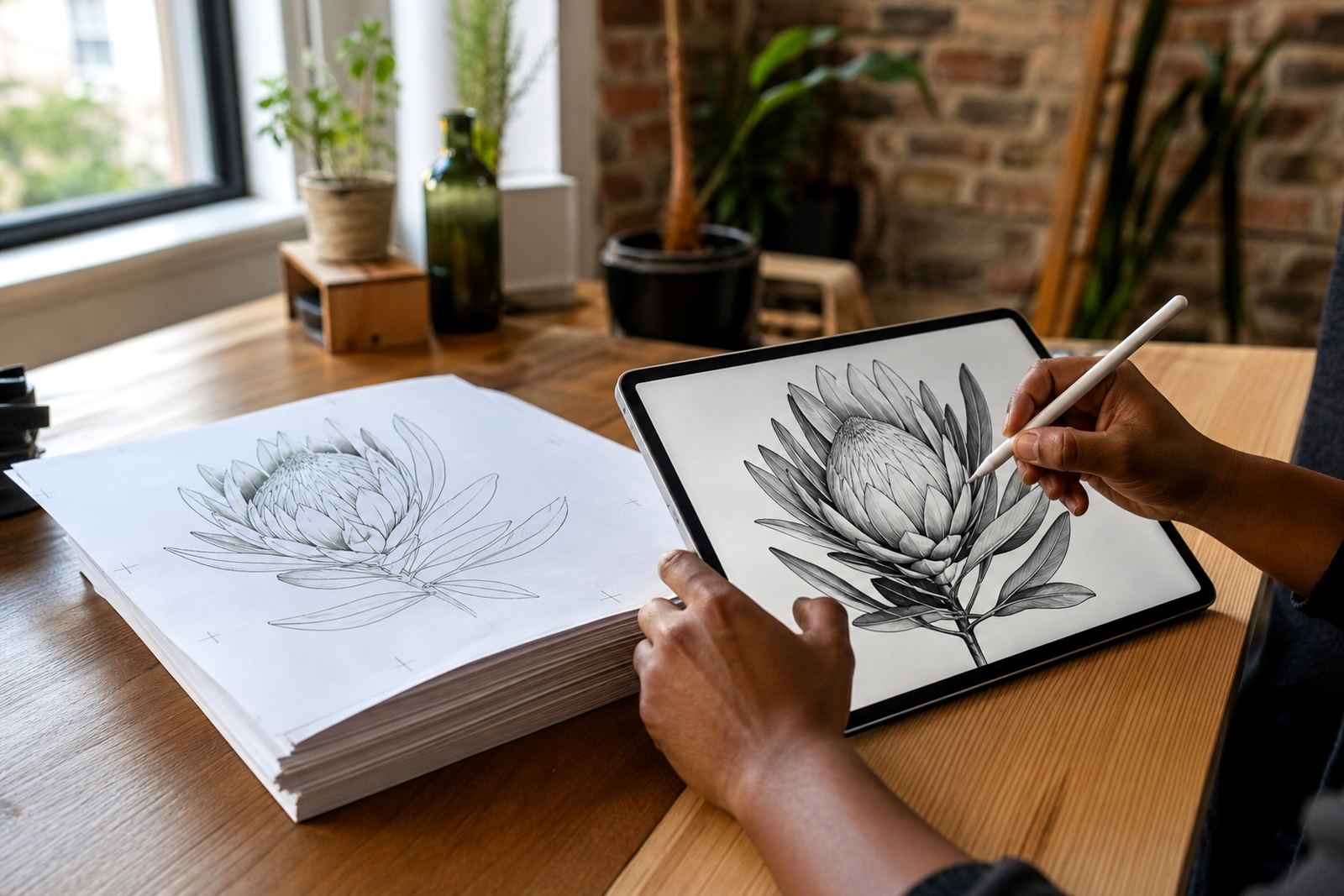
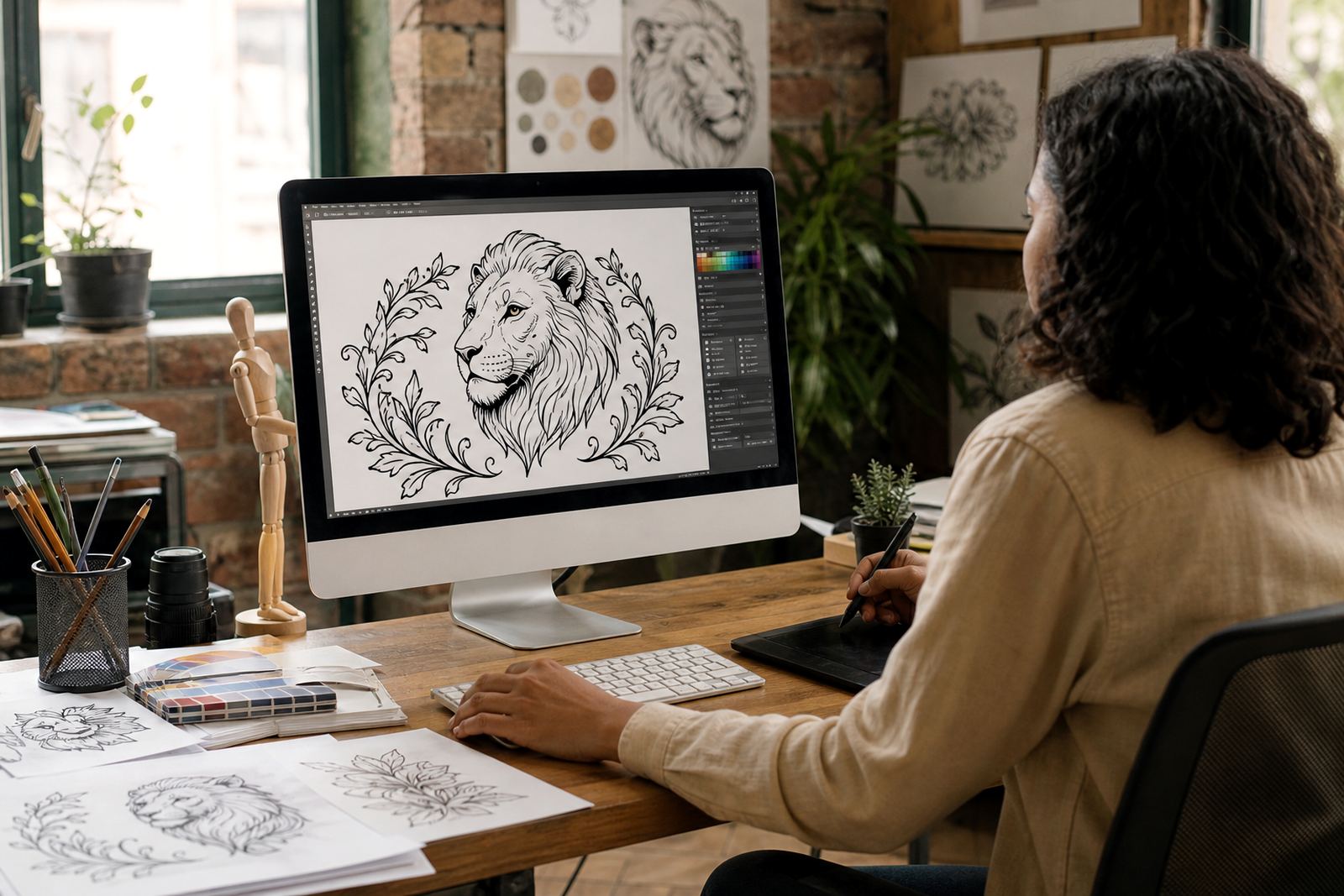
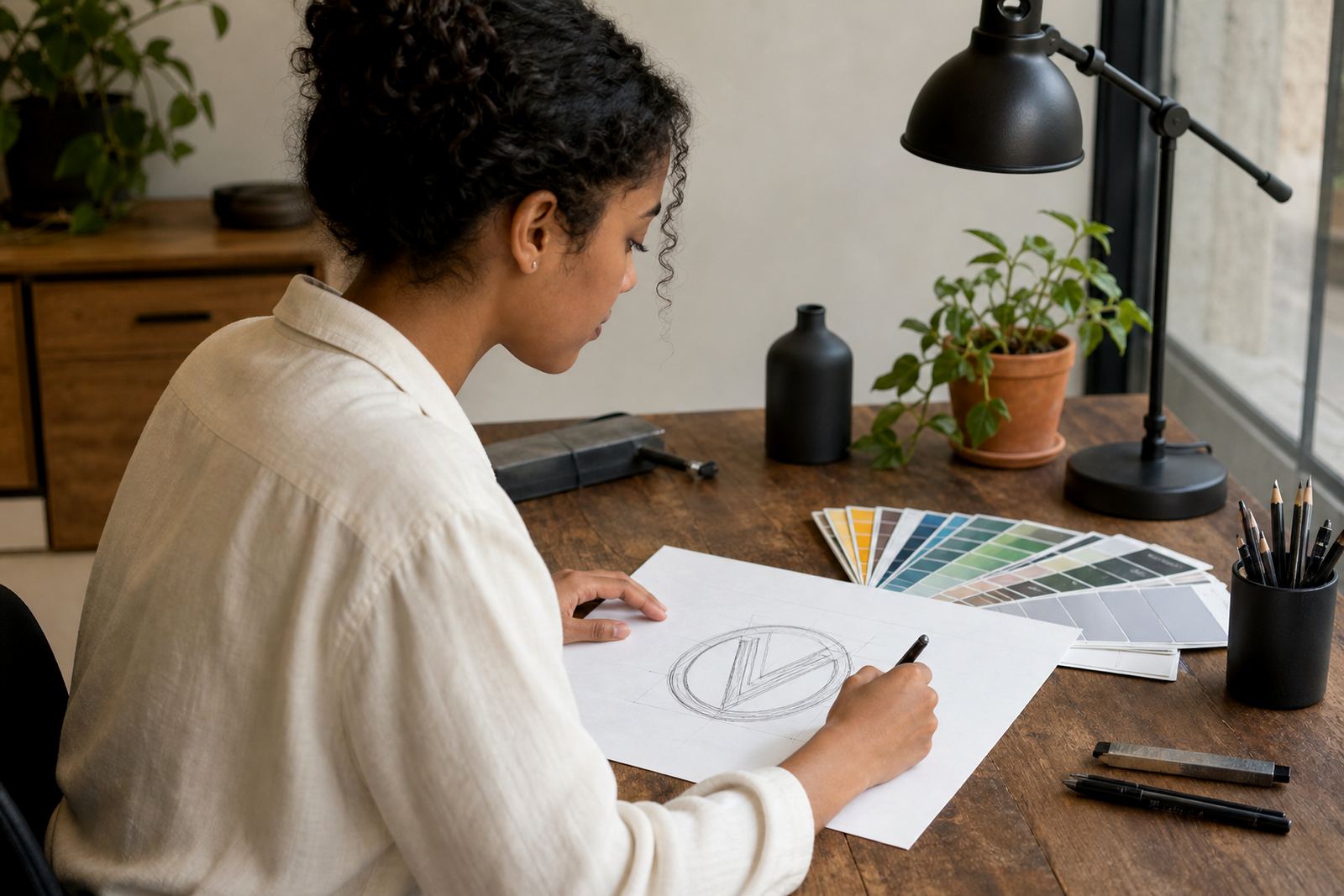
Hand redraw is different. The artist rebuilds the artwork manually, which gives better control over curves, spacing, line weight and small details. That is usually the better option where the logo is intricate, the source is poor, or the final use demands a sharper finish. A hand redraw also helps when a mascot, badge or scene illustration needs more careful interpretation.
- Use bitmap tracing for simple marks with clear edges.
- Use hand redraw when the source is damaged, fuzzy or incomplete.
- Choose hand illustration when you need a more refined, original look.
- Check whether fine text, symbols and small shapes can be rebuilt cleanly.
Which file format should you ask for?
For most professional use, vector files are the safest choice because they scale without losing quality. Common editable formats include SVG, EPS, PDF and AI. The right one depends on where the artwork will be used, who will open it, and what software your supplier or printer can handle. If you work with a sign writer, a packaging printer or a web team, ask what they prefer before final sign-off.
- SVG is useful for web and digital use, and can stay sharp at any size.
- EPS is widely used for print and sign work.
- PDF is handy for sharing and proofing, and can preserve vector information.
- AI is the native editable file for detailed source artwork.
If you only receive a flat image file, you may be limited later when colours, sizes or text need updating. Editable files make that much easier.
What to send before a redraw or illustration starts
Good source material helps the redraw move faster and reduces the chance of guesswork. The clearest file is not always the newest one, so send whatever is most accurate, even if it is an old scan, a photo of a sign board or a rough sketch. If you have style notes, send those too, especially for mascots, map illustrations or product graphics.
- The best available version of the logo or artwork
- Any text that must be copied exactly
- Colour references, if available
- Notes about what must stay the same
- Any parts that can be simplified or changed
It also helps to confirm that you own the artwork or have permission to use it. If a client, supplier or previous designer created it, make sure you have the rights before asking for a redraw. That avoids problems later, particularly if the file is being used for packaging, signage or commercial print.
A simple checklist for approving your new vector file
Once the artwork has been redrawn, check the file carefully before it goes into print or production. Small issues are much easier to fix at this stage than after a batch of stickers, menus or labels has already been run. A good check should cover both the look of the artwork and the technical side of the file.
- Zoom in and check curves, corners and joins
- Confirm spelling, spacing and line thickness
- Check that colours are set correctly for the intended use
- Make sure all text has been outlined or converted if needed
- Ask for the correct formats for print, web and archive use
- Test the file at a small size and a large size
If your business works across several branches, one approved master file can save a lot of back-and-forth. It keeps every site using the same artwork, whether it is a menu update in Stellenbosch or a vehicle graphic for Pretoria. Consistency is usually worth the extra check.
When to choose a redraw, and when to start fresh
Not every project needs a full redraw. If the original logo is clear and only needs tidying, a clean vector conversion may be enough. If the mark is old, badly scanned or too simple for the job, a hand redraw is often the better route. For illustrations that need more character, such as badges, patterns, mascots or scene art, a fresh hand-drawn approach can give the artwork more life and better control over the final result.
At Vectorization Studio in Observatory, Cape Town, we work with businesses across South Africa on logo redraws, brand icons, line art, packaging illustration, menu illustration, map illustration and social graphics. The main aim is practical: give you editable artwork that is tidy, printable and ready for use, without losing the feel of the original. Sometimes the file only needs a careful cleanup, and sometimes it needs to be rebuilt from the ground up.