What a bitmap file is and where it causes trouble
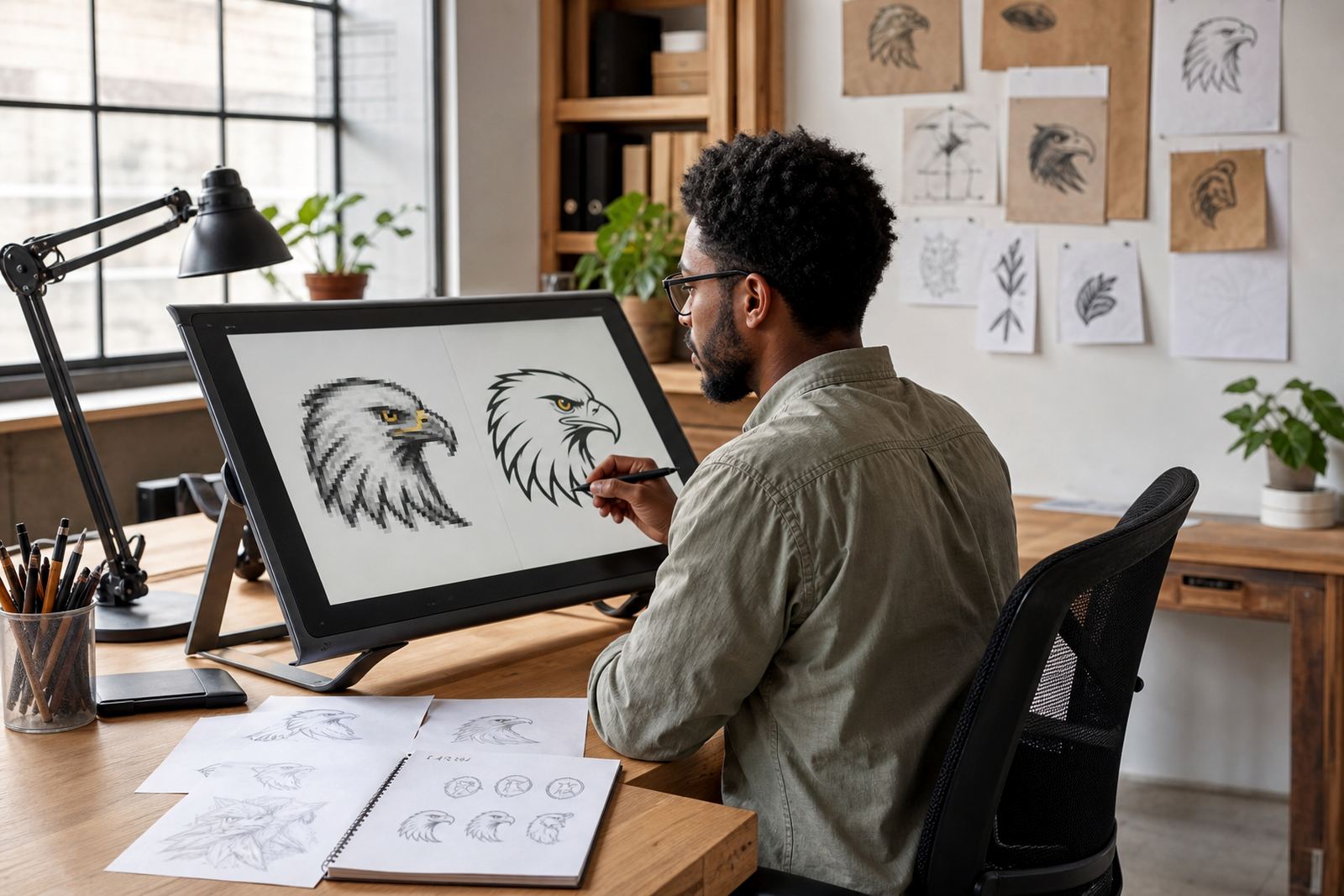
A bitmap image is made from fixed pixels, so it works well at the size it was saved for, but quality drops when it is enlarged. This is why a logo copied from a screenshot, WhatsApp image or old scan can look soft, jagged or broken once it is used on signage, stationery or packaging.
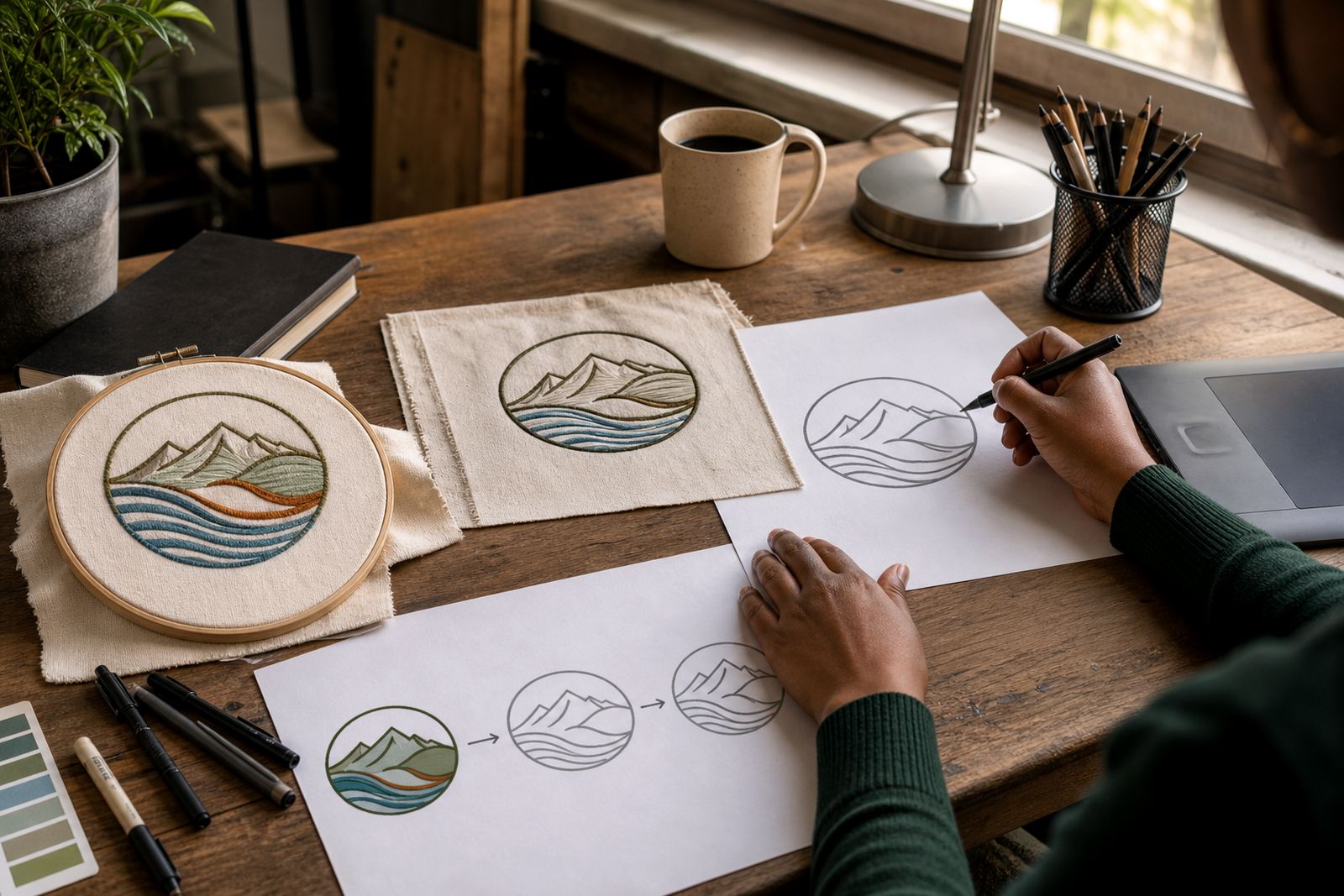
For small online use a bitmap may be fine. For larger print work, embroidery, laser cutting, vehicle markings or municipal signage, the artwork often needs vector rebuilding so the edges stay clean and the file can be scaled without loss.
- Common bitmap sources: JPEG, PNG, GIF and TIFF
- Common issues: blur, blocky edges, uneven colour, background noise
- Best use: quick reference, web use at fixed sizes, rough source material
Bitmap tracing versus hand redraw: what is the difference
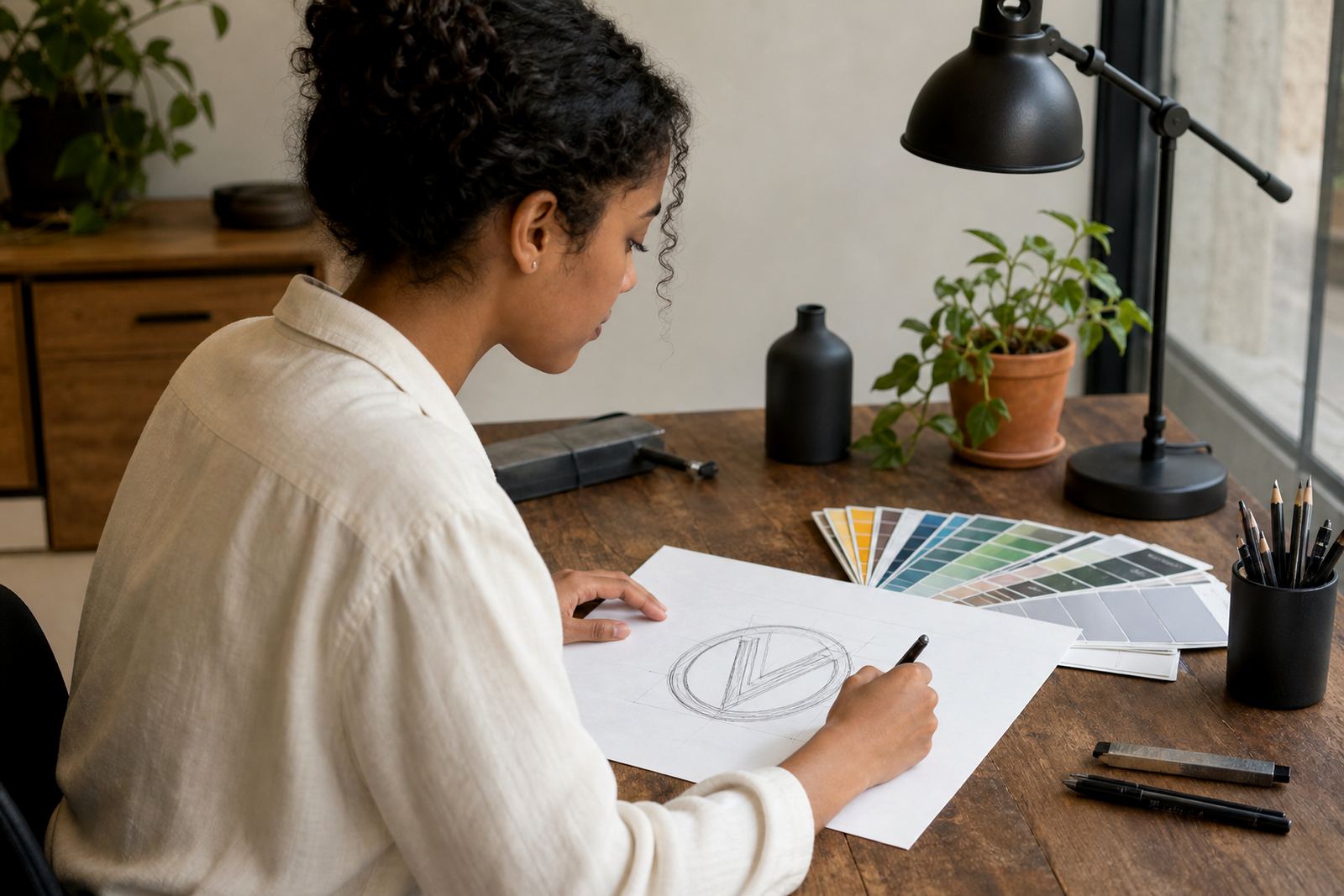
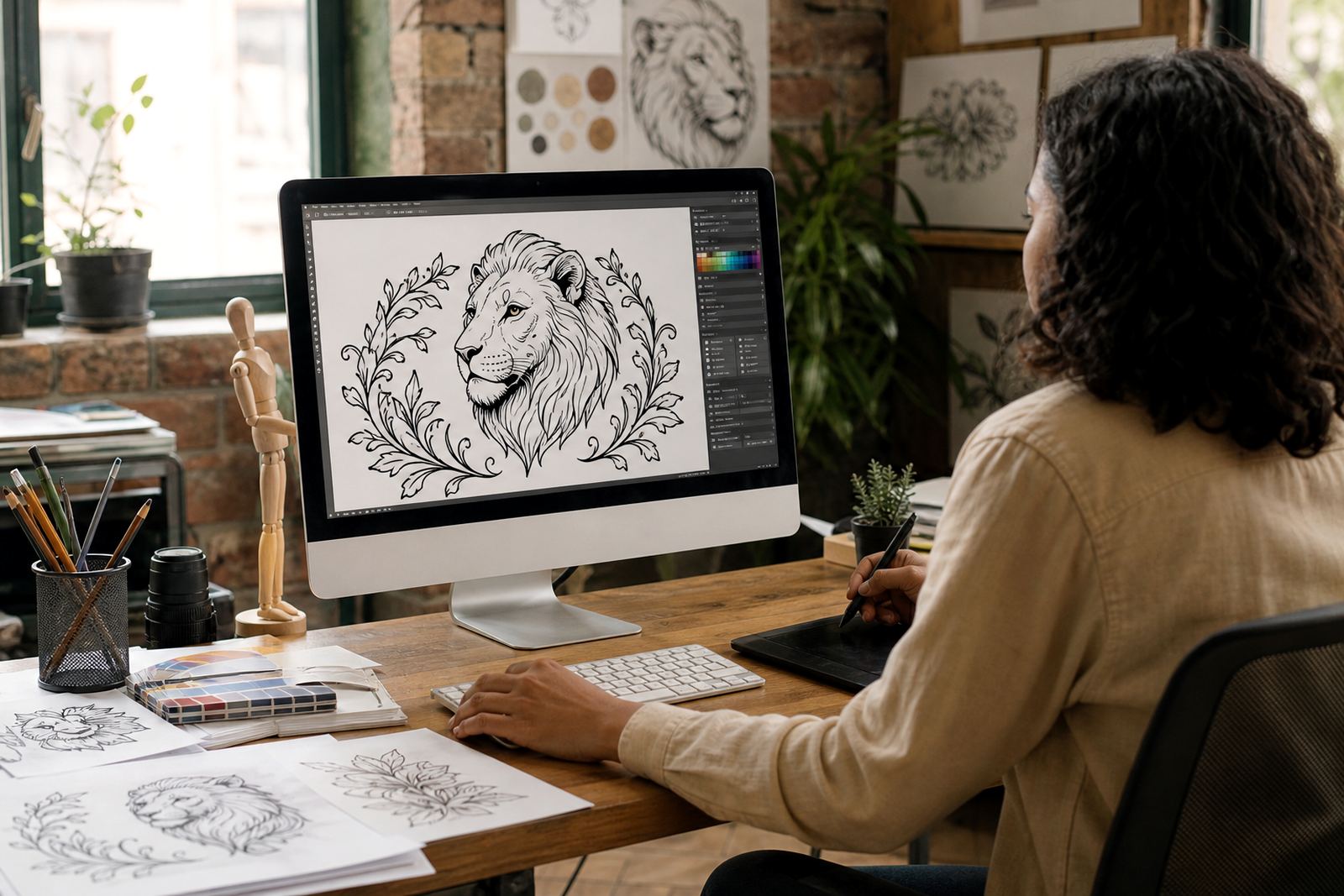
Tracing is the process of following the bitmap shape with vector paths. It can be useful when the original artwork is simple and clear. A hand redraw goes further. The artist rebuilds the logo or illustration from scratch, adjusting curves, spacing, proportions and line weight so the final file is tidy and practical.
For a logo with faded edges, low contrast or small text, a straight trace can copy the flaws in the source. A hand redraw gives better control, especially when a business needs a polished mark for print, signs or long term use across several formats.
- Use tracing for simple shapes with clear edges
- Use hand redraw for damaged, blurry or uneven artwork
- Choose rebuilds when the logo must be redrawn for production use
What to send before a redraw starts
The better the source, the cleaner the result. If you only have a bitmap, send the biggest version you have, even if it is a scan, a photo or a screenshot. A clear sample makes it easier to match colours, letterforms and details accurately.
Customers must own the artwork they send or have the right to use it. If there are old files, previous versions or printed samples, include those too. In some cases a simple note about what must stay exact, and what may be improved, saves time later.
- Best files: the original artwork, a high resolution scan, or the largest image available
- Helpful extras: old printouts, colour notes, brand guidelines, reference sketches
- Important: only submit artwork you own or have rights to use
File formats after the artwork is rebuilt
Once the artwork is rebuilt, it can be prepared in file formats that suit different uses. SVG is useful for digital and web use. EPS is often used in print production. PDF is handy for sharing and proofing. AI is the editable working file used for future changes.
Depending on the job, the final pack may include a combination of these formats so the client can use the artwork across print, online and supplier handovers. If a printer in Cape Town, Johannesburg or Durban asks for a specific file, it helps to have the right version ready from the start.
- SVG for scalable web and digital use
- EPS for print and production workflows
- PDF for review, approval and general sharing
- AI for editable master artwork
A practical checklist for South African businesses
If your artwork is going to be used across branches, packaging, menus or signs, check the file early.A neat vector rebuild avoids awkward surprises when the printer or sign maker asks for a clean file.
Use this short check before sending anything through:
- Is the image sharp enough to read at actual size?
- Does the file contain all important details, including small text?
- Do you have the rights to use the artwork?
- Do you need the file for print, web, signage or all three?
- Do you want a straight trace, or a full hand redraw?
If the answer to any of those is unclear, it is usually worth rebuilding the artwork properly rather than forcing a bitmap into production.
How Vectorization Studio handles bitmap rebuilds
From Observatory in Cape Town, Vectorization Studio works on logo redraws and hand drawn vector illustrations for businesses across South Africa, including Cape Town, Johannesburg, Durban, Pretoria, Bloemfontein, Port Elizabeth, Stellenbosch and Paarl. The team rebuilds artwork with care, whether the brief is a simple logo cleanup or a detailed illustration for packaging, menus, badges or social graphics.
Luyanda Mthembu leads the studio, supported by Ayesha Mafokeng, Pieter Skosana, Zanele Kajee, Teboho Molefe and Megan Khoza. Each project is checked for clarity, file readiness and practical use across print and digital formats. The aim is to hand over artwork that is easy to use, simple to scale, and suitable for real production work.