Start with the rights, not the file
A file arriving in your inbox does not always mean it can be redrawn, traced or adapted. The person sending it may be the owner, a staff member, a printer, a designer or a former supplier, and those are not always the same thing. Before any vector work begins, confirm who created the artwork, who paid for it, and whether the brand owner has the right to use and change it.
If you are a business in Cape Town, Johannesburg, Durban, Pretoria or Bloemfontein, the same rule applies whether the file is for a new logo, a signboard, a menu, packaging or a social graphic. We work on a practical basis: if the rights are clear, the redraw can move forward. If not, the safest step is to pause and sort consent first.
What counts as permission to redraw
Permission is more than saying, “go ahead”. It should come from the person or business that owns the artwork or has written rights to use it. That is especially important when the file was supplied by a previous designer, a printing shop, a marketing assistant or an agency that is no longer involved.
- Brand owners should confirm they control the logo or illustration
- Staff should check whether the company has a signed licence or assignment
- Resellers should not pass on artwork unless the rights allow it
- Clients should keep any approvals in writing for their own records
When rights are uncertain, we may ask for a short written confirmation before starting. It saves time later and avoids disputes over who may use the final vector files.
Bitmap tracing and hand redraw are not the same thing
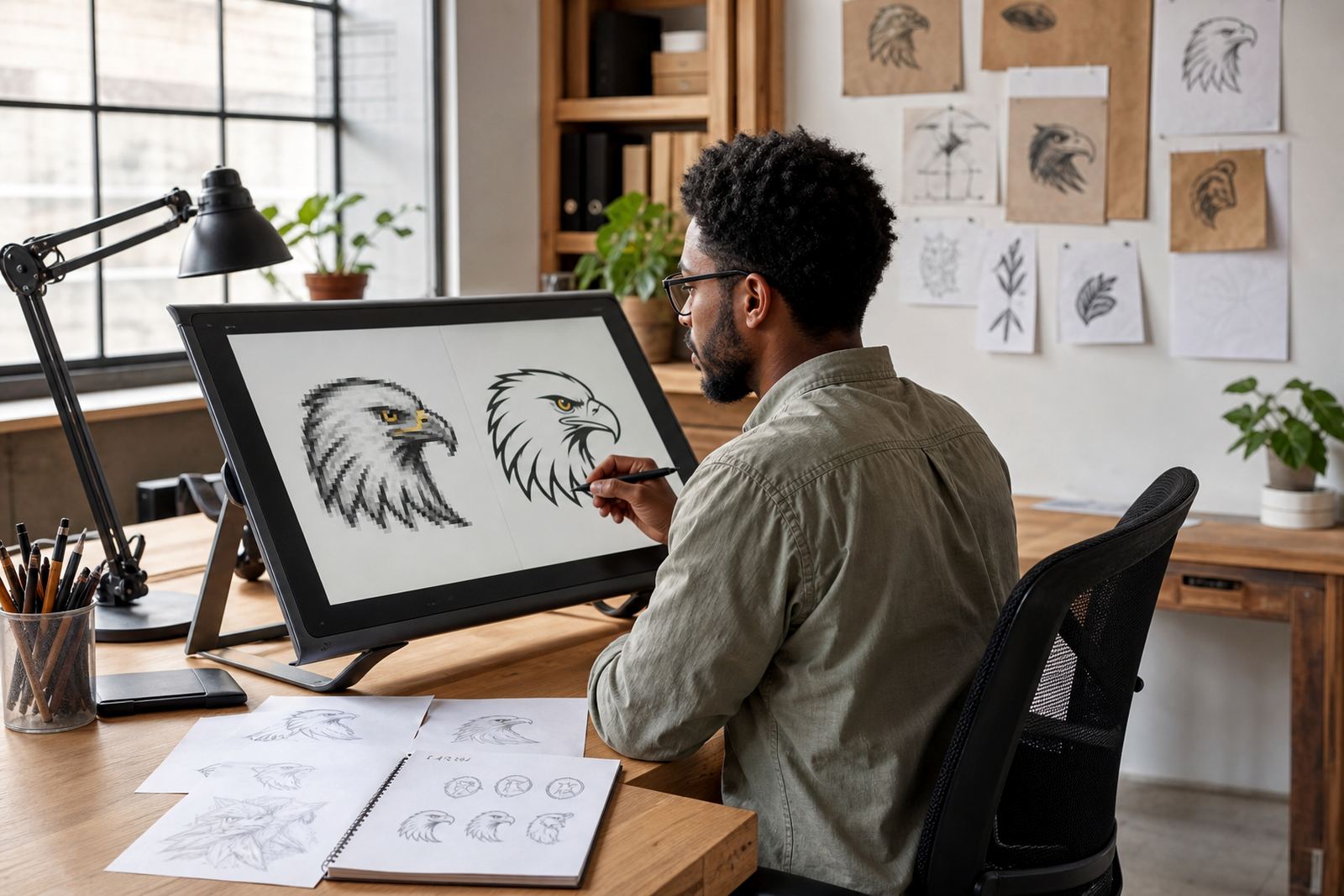
Many people ask whether an image can simply be traced. Sometimes a bitmap image can be traced into vector paths, but tracing a low resolution file can also carry over blur, rough edges and distortions. In those cases, a hand redraw is often better because the artwork is rebuilt cleanly from the source and adjusted for neat curves, balanced spacing and solid line weight.
For logos that must work on a truck decal in Durban humidity, a small menu icon in Stellenbosch or a billboard proof in Pretoria, file quality matters. A clean redraw can be delivered in SVG, EPS, PDF or AI format, depending on how the artwork will be used. If the source file is not yours, or you do not have permission to adapt it, the safest route is to get clearance before any tracing or redraw begins.
A simple checklist before you send the file
Use this checklist before sending artwork through the enquiry form on our contact page. It helps us work faster and protects you if there are later questions about ownership.
- Confirm you own the artwork or have written permission to use it
- Keep the original file, plus any licence or handover agreement
- Tell us what the artwork will be used for: print, web, signage or packaging
- Say whether you need a faithful redraw, a cleaned-up vector version, or a new hand-drawn illustration
- Let us know if the file must stay within brand rules, municipal sign limits, or print size requirements
If the artwork came from an older supplier or a freelancer, ask for the rights paperwork before sending it through. One missing document can slow a job more than a typo ever will.
Files we can prepare once the rights are clear
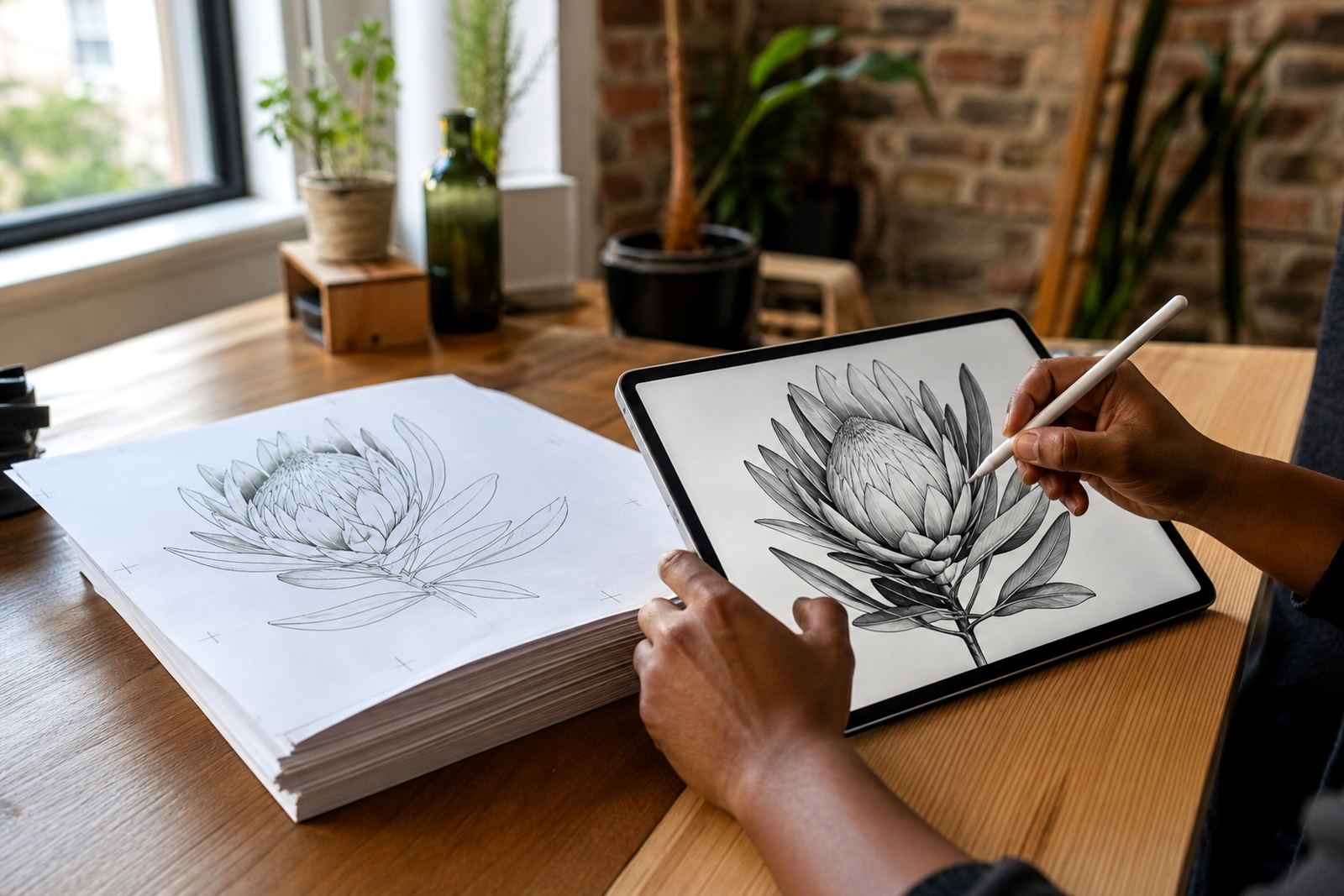
Once permission is sorted, the job can move into practical production. That may include a logo redraw, custom brand icon, mascot illustration, packaging illustration, map illustration, menu illustration, sticker illustration or pattern illustration. We also prepare badge illustration, line illustration, scene illustration and social graphics for clients across South Africa.
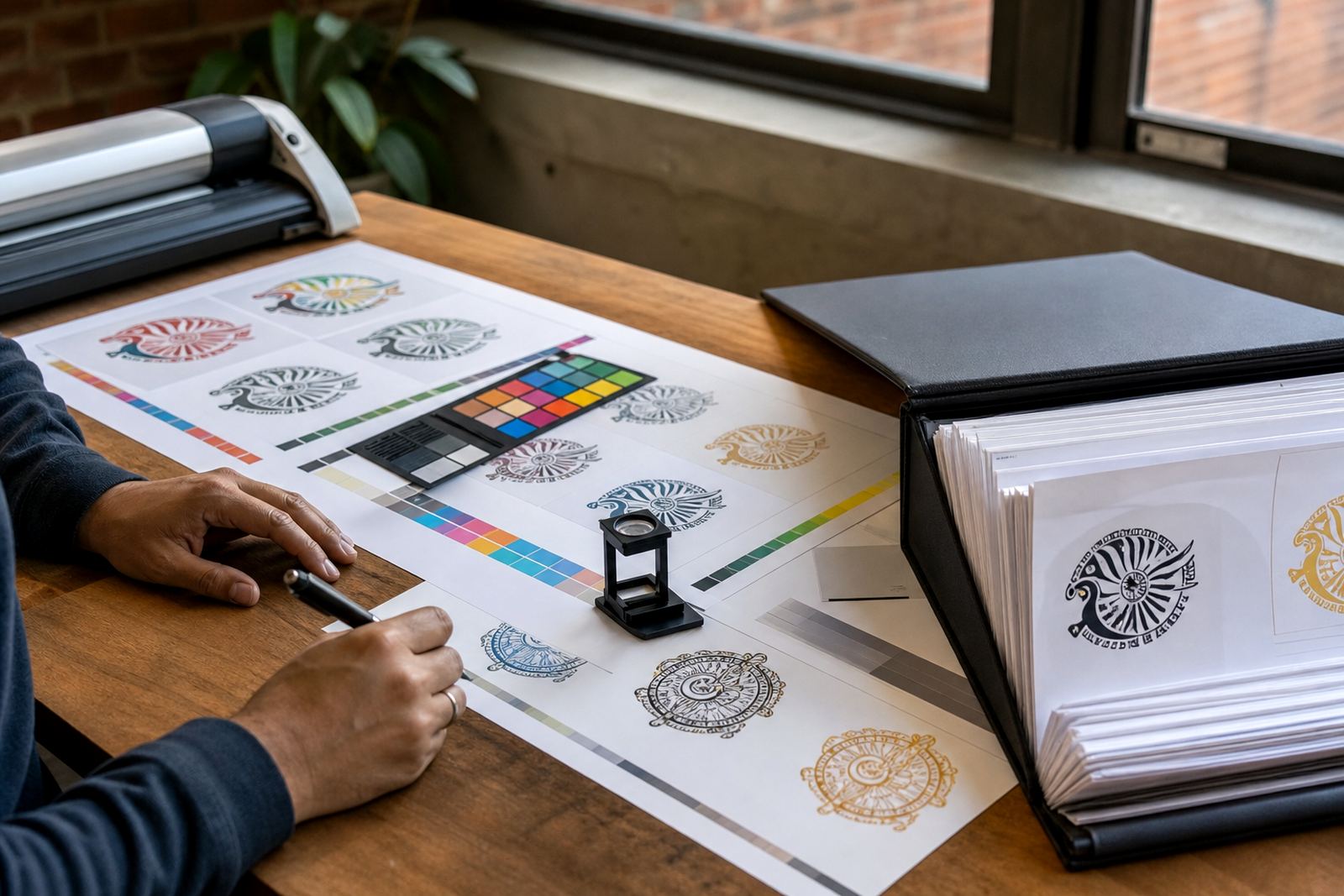
For print teams, we can supply vectors that hold up well in prepress and on coated or uncoated stock. For digital use, we can set files that are easier to scale without jagged edges. If a client in Port Elizabeth or Paarl needs artwork for a label, a fleet door or a website graphic, the format should match the finish and the size. Clean source rights make that process straightforward.
When a redraw should be declined or paused
Not every file should be redrawn straight away. If there is a dispute over authorship, a trademark problem, or a request to copy another business’s logo too closely, the job should stop until the issue is resolved. We do not want a client spending money on artwork that cannot be used safely.
- No proof of ownership or right to adapt the file
- Artwork supplied from an unknown source with no licence details
- A request to reproduce another brand’s identity too closely
- Missing approval from a partner, franchisor or company director
We understand that many South African businesses move quickly, especially when a launch, reprint or municipal submission is pending. Even so, clean permission first is cheaper than fixing a rights problem after print. If in doubt, pause, verify and then proceed.